To understand the urgency of a shift to fact-based decision making, we must look at the disconnect between industry gatekeeping and genuine consumer appeal.
By Damien Wilson, Ph.D.
As I stated in my column last month, the wine industry should be using metrics based on empirical evidence to implement successful strategies that will counter popular-but-unproven claims. For example, wineries and tasting rooms are quick to claim the warmth of their welcome, yet asking how they measure that warmth usually results in a change of topic or the use of metrics that aren’t actually reliant on the quality of that welcome.
Meanwhile, in terms of business success, the guest welcome is one of the first parts of the holistic service experience in the winery tasting room or retail environment. Wine businesses that improve this experience see a direct increase in both conversion rates and average purchase value.
Ideas from the next generation
To understand the urgency of this need to shift to fact-based decision making, we must look at the disconnect between industry gatekeeping and genuine consumer appeal.
We see this friction when an innovator such as Jess Dreuy, creator of the Whiny Baby brand, feels the need to all but apologize for her rapid brand success despite only recently entering the wine business. This very scenario played out at the recent Unified Wine & Grape Symposium in January, as this successful brand owner deferred to more wine-experienced heads in an audience full of national wine professionals. Watching a member of Forbes’ recently announced “30 under 30” business leaders for 2026 in Food & Drink feel the need to justify being onstage was a cringeworthy reminder of wine’s impatience for those who don’t follow the unspoken rule to eschew commercial success in lieu of some esoteric definition of authenticity.
That exact example illustrates a recurring roadblock, where the idea of wine courting a younger, vibrant demographic is seen as a disrespectful pursuit. It is a public symptom that “wine people” talk about embracing customers while acting the complete opposite in practice. The industry risks missing massive cultural tailwinds because of such entrenched culture. It already overlooks the data needed to pivot quickly, so if the mindset and willingness to adapt are also absent, the future for wine could be dim indeed.
Not so Swift
Consider that wine is already at risk of missing the “Swiftization” opportunity due to the apathy (bordering on disdain) with which wine enthusiasts and critics typically treat Taylor Swift’s favorite wine variety, Sauvignon Blanc. The Sancerre brand, producing this wine, Domaine de Terres Blanches, famously sold out after Swift included that wine in her documentary. Yet for more than a decade the wine trade has collectively wished that the interest in that grape would just move aside for “better wines,” as these images from 2016 and 2020 show.
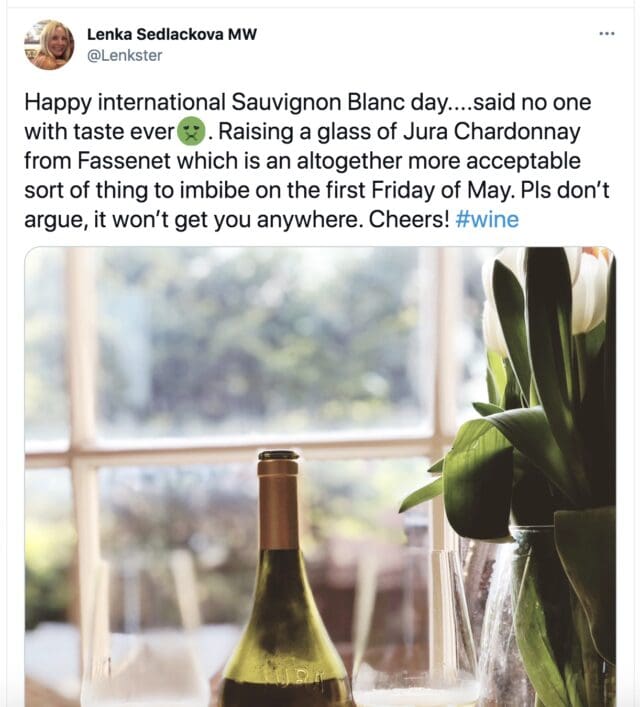
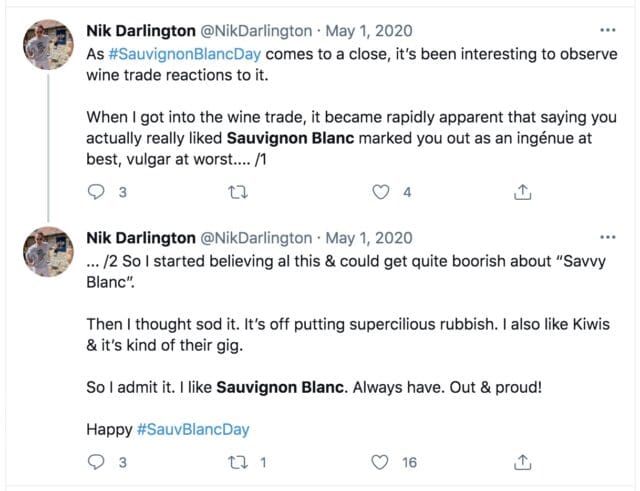
Examples like these continue to reinforce the image that the wine industry has been dismissive of or, at best, slow to strategically capitalize on such influence. From the press craze behind “Brangelina” buying Miraval to the infamous Jay-Z slight by a major Champagne house that led to a rise in prominence for Ace of Spades. Whispered criticisms and collective wine noses in the air left the potential leverage of celebrity impact as wasted money on the table.
Welcome everyone
Wine needs to adjust its mindset and make more decisions using evidence. My entire career has been working in or for the wine industry and, in my 40 years of experience (across time and continents), I can only remember one winery that did more than just remember my name when I visited. I’m no celebrity, and I certainly don’t expect any VIP treatment, but if wineries are genuinely wanting to explore ways to engage consumers more effectively, the prospect of making the customer the center of the experience really is a case of picking the low-hanging fruit.
As a wine business professional with a wealth of experience, it’s insane to me that I could leave any tasting room without the service team at least knowing why I chose their establishment — let alone my name, interest in wine, sensory preferences or suggestions for where else in the region I could visit during my stay in the area. Just imagine how that kind of attention would feel for someone just discovering wine: to be asked such questions in the tasting room environment? Suddenly, the image of wine as elitist withers with every sip.
It’s not enough to focus on capturing numbers of visitors, conversion rates and/or wine club sign-ups. Yes, those data are valuable, but none of them do anything to improve the disparity between the wine industry’s view of itself and the waning customer base’s preference for beverages that better reflect who they are as consumers.
The current model must adapt. Personalizing experiences and using evidence to measure what works and what doesn’t should be the benchmarks on which wine producers aim to tackle the challenges faced by the wine market in 2026.
Damien Wilson

In June 2025, Damien Wilson was appointed to the new role of Faculty Director with the Wine Business Institute at Sonoma State University. This appointment follows his arrival in August 2015 as the inaugural WBI Hamel Family Chair Professor.
Dr. Wilson arrived in California following 20+ years working in the wine business, and transitioning to leadership roles at Burgundy’s School of Wine and Spirits Business and the Wine Marketing Research Group of the University of South Australia.Wilson’s research broke ground through a series of projects investigating wine consumer adoption patterns, purchasing motivations and retailing strategies. His professional and research interests have realized an extensive list of trade, consumer and academic publications. He also writes prolifically on regionality and conjunctive labeling, tourism and technology. Contact him at wilsodam@sonoma.edu.