When I assumed the role of Faculty Director of the Wine Business Institute, the weight of expectation to solve the wine industry’s mounting challenges was immediate. Having spent my entire working life navigating wine businesses across three continents—riding both stratospheric rises and roller coaster plummets—I have learned what it takes to right the vinous Titanic. The current malaise in the U.S. wine industry is a heavy lift, but it is far from an impossible chore. Traveling extensively up and down the West Coast, I have encountered an array of wine producers who continue to thrive simply by executing leading business practices.
If we want to escape the doom spiral of discounting and move away from outdated practices built on loud, ineffective opinions, we must follow a path illuminated by marketing science, big data, and evidence-based decision-making. This article outlines a three-step turnaround blueprint rooted strictly in market reality rather than tradition and gut feelings.
Step 1: Acknowledge and Research the Extent of the Challenge
To instigate meaningful change, an organization must first evaluate the true breadth and depth of the market shift. When sales trend downward, the immediate instinct for many managers is to slash prices to recover lost volume. However, band-aid solutions will not fix a fundamental shift in the market. The U.S. wine industry’s nearly 30-year era of continuous organic growth officially concluded in 2021 when the following year was marked by a sharp 10% year-over-year drop in Direct-to-Consumer (DtC) sales volumes. This decline has persisted ever since. We are no longer dealing with a minor cyclical dip as we are into our fifth year of profound structural contraction. According to the Wine Institute, national grape production was already sliding prior to the market’s value peak in 2021. U.S. production plummeted from nearly 900 million gallons in 2017 to just over 700 million gallons in 2025. That’s a massive contraction of more than 20% affecting nearly all price points and winery sizes.
Using this grim macro environment as a benchmark, producers need to realistically evaluate where they stand. Yet, even in such an overcast business climate, top-tier operators are thriving by substituting failing practices with timely innovation, adaptation, and evidence-based operational updates.
Step 2: Ignore the “Premiumization Mirage”
Once you comprehend the scale of market contraction, your goal as a responsible business operator is to outline a clear strategy for generating new business. Raising prices has long had an intuitive theoretical appeal for boosting profitability, but since 2021, price hikes have correlated directly with a corresponding loss of wine consumers.
Arguably, wine’s appeal to new consumers has been waning since 2015. Compounding the issue, the number of U.S. wine producers has increased over the same time, from roughly 8,000 in 2015 to a peak of over 12,000 in 2023. With total wine production volume shrinking to 700 million gallons over that same time, the industry has effectively stopped refreshing its market with new drinkers, choosing instead to cater with productions of low-volume, high-value offerings to a shrinking, evasive pool of wealthier buyers.
The evidence is damning. The 2026 Sovos ShipCompliant report highlights that DtC sales plummeted from 8.7 million cases at an average bottle price of $38 in 2020 to just 5.3 million cases at a steep average of $57 a bottle. Economics 101 comes to the fore, confirming that when prices rise, demand drops.
While critics may argue that the fine wine market behaves like a luxury asset on a Veblen demand curve, luxury markets require demand to consistently exceed supply. Jon Moromarco’s 2025 BW166 report shatters this defense, revealing a volume decline for grapes in all price categories above $1,500 a ton. Even the ultra-premium tier exceeding $10,000 a ton dropped by 10% in 2025. The fine wine market has firmly hit a ceiling. ‘Premiumization’ was simply a defensive label applied to a short-term tactic and attempt to squeeze out profits.
Step 3: Customize Wine’s Appeal to Secure New Customers
A fatal error in a downturn is trying to “squeeze more juice” out of your existing customer base through aggressive wine club retention. Empirical evidence across geographies and eras demonstrates that five out of six brands grow through net customer acquisition, not through customer relationship management (CRM).
The post-pandemic drop in customer churn rates created a seductive illusion, leading loyalty advocates to prematurely celebrate. However, this brief surge in customer loyalty was an anomaly born of artificial conditions. Because the on-premise restaurant channel was effectively closed for nearly two years, wineries focused their entire sales teams on direct retention, and consumers temporarily mirrored that behavior. When the market normalized and that hyper-focus faded, churn rates climbed again in 2023, and consumer behavior quickly regressed to the historical mean.
The lasting consequence of this period is that wine prices are now heavily inflated, creating significant barriers to entry with very little operational avenue left to onboard a fresh generation of consumers.
Conclusion: A Framework for Enduring Recovery
Ultimately, navigating these market hurdles requires wine producers to abandon rigid traditions in favor of an evidence-based roadmap. True brand turnarounds demand that we acknowledge the structural reality of market contraction, collectively reject the premiumization mirage, and pivot our efforts toward net customer acquisition. By actively dismantling steep pricing structures, lowering entry barriers, and personalizing wine’s appeal for new consumers, forward-thinking producers can successfully break their addiction to discounting and secure long-term business recovery.

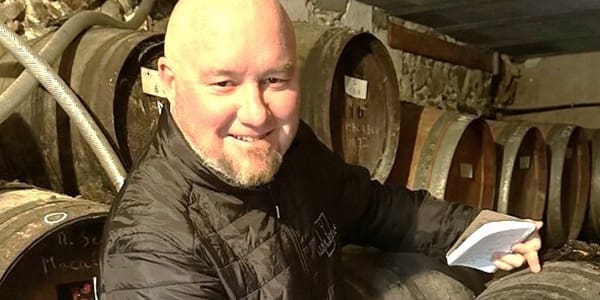
In June 2025, Damien Wilson was appointed to the new role of Faculty Director with the Wine Business Institute at Sonoma State University. This appointment follows his arrival in August 2015 as the inaugural WBI Hamel Family Chair Professor.
Dr. Wilson arrived in California following 20+ years working in the wine business, and transitioning to leadership roles at Burgundy’s School of Wine and Spirits Business and the Wine Marketing Research Group of the University of South Australia.Wilson’s research broke ground through a series of projects investigating wine consumer adoption patterns, purchasing motivations and retailing strategies. His professional and research interests have realized an extensive list of trade, consumer and academic publications. He also writes prolifically on regionality and conjunctive labeling, tourism and technology. Contact him at wilsodam@sonoma.edu.