Just because it’s a popular claim that wine is welcoming doesn’t make the claim correct.
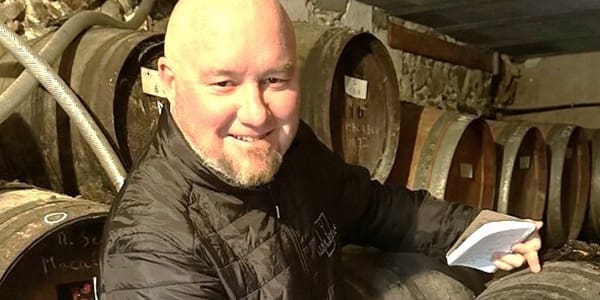
By Damien Wilson
When two wine people meet at a social event — say, following a trade day or conference of some type — the meeting is very likely to start as a discussion about their wine business experiences and their industry knowledge. Assuming these people are representative of those responsible for navigating the challenges we’re facing in today’s wine industry, we need these exchanges of professional experiences to be the correct drivers of change for business success.
Familiar challenges
The outside perception that wine is elitist is a primary reason that today’s contracting wine market needs a more engaging approach to recover from its current malaise.
The irony is that the claim that wine needs to be more welcoming and inclusive is ever-present. We’ve all heard a version of that statement repeated, across the wine world, for generations. As a 40+ year veteran of the wine industry, it was one of the first statements I remember hearing from a sales representative when I asked how wine could become more popular.
The manifestation of how the wine industry has responded over that time is a stark contrast between members of the industry’s collective insistence that wine is more approachable than ever, while real prices in the last decade (along with the modern cost of entry to wine consumption) illustrate the exact opposite. Just because it’s a popular claim that wine is welcoming doesn’t make the claim correct.
In recent years, most U.S. wine producers have improved profitability through increases in their average selling price, but just as standard market economics dictate, once market growth stalled, and prices continued to increase, demand declined. Proponents of the idea that the fine wine market follows the demand curve for luxury goods will cite evidence that demand for wine sold at price points above $100 continues to grow. However, the volume of wine sold in those price categories represents only around 1% of total production. And almost all the people now buying wines in that pricing stratosphere started with wines at market entry points. It’s these types of wines — ones that attract new consumers — that we need now.
Another (not unrelated) challenge we’re facing in the wine business is the use of spurious evidence to justify an action or claim. How often do we hear that everyone in the wine industry needs passion, or that they’re working “so hard” at the moment? No one doubts the veracity of either of those claims, but neither passion nor working hard can predictably lead to wine business success. The logic follows that success can be attributed to those two traits, but business success is not a predictable outcome without knowing how effectively those traits are put into action.
Follow the evidence
The evidence for business success can be attributed to a number of factors, from increases in market reach, effective improvements in service provision and cost efficiencies in distribution, to name a few. The businesses monitoring and improving their metrics from those traits of successful wine people are the examples we should all look to emulate. We need those of us working in the wine industry to identify and communicate the knowledge and skills that work.
As wine industry professionals look for direction to take in the coming year, instead of listening to the loudest wine voice (or agreeing on an untested claim that everyone recognizes as true), let’s look at why we should all make 2026 the year for using evidence-based decision making as our compass for wine business success.

Damien Wilson
In June 2025, Damien Wilson was appointed to the new role of Faculty Director with the Wine Business Institute at Sonoma State University. This appointment follows his arrival in August 2015 as the inaugural WBI Hamel Family Chair Professor.
Dr. Wilson arrived in California following 20+ years working in the wine business, and transitioning to leadership roles at Burgundy’s School of Wine and Spirits Business and the Wine Marketing Research Group of the University of South Australia.Wilson’s research broke ground through a series of projects investigating wine consumer adoption patterns, purchasing motivations and retailing strategies. His professional and research interests have realized an extensive list of trade, consumer and academic publications. He also writes prolifically on regionality and conjunctive labeling, tourism and technology. Contact him at wilsodam@sonoma.edu.