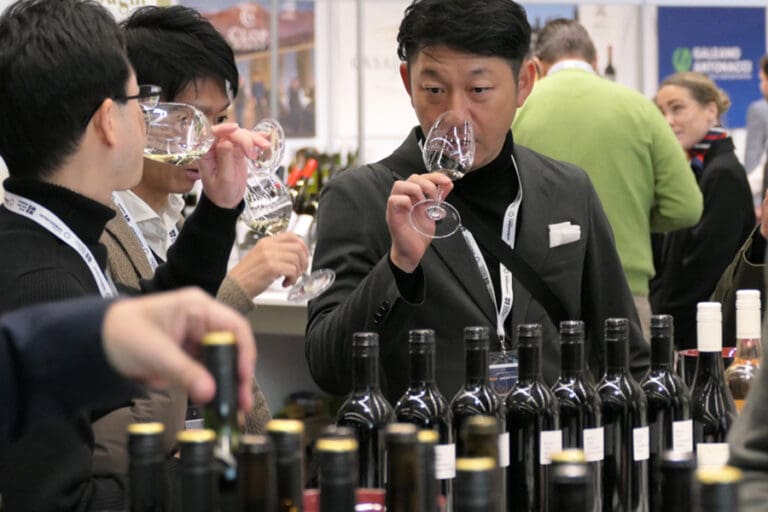
As we reach the end of 2025, focus on auditing your DTC touchpoints.
By Damien Wilson
December is the wine industry’s marathon of hope. We hope our wine club members’ gift orders arrive on time. We cross fingers for steady streams of tasting room traffic, and we hope those seasonal wine club shipments don’t trigger a wave of cancellations.
But, to paraphrase the sage words of Mark Wahlberg’s character, Mike Williams, from 2016’s disaster movie, Deepwater Horizon, “Hope is not a [successful] strategy.”
Supporting club members
From a wine business perspective, the festive season is a true test of your direct to consumer (DTC) model and infrastructure. While you cannot control the postal service backlog or the consumer’s fluctuating power bill, you have total agency over the roadblocks within your own sales funnel. So, as you prepare for the new year, working through your wine club aims of maximizing sales revenue during the festive season, now is the time to prepare to implement changes in the new year. Start by stopping those diminishing wine club returns, and focus instead on managing the manageables that work.
Many DTC managers focus heavily on up, down and cross-selling of holiday deals to existing wine club members as the main focus on revenue generation at this time of year. However, despite the long-held belief that this existing customer base is a more efficient source of revenue, the data tells us that the acquisition “manageable” is a more profitable source of revenue. With that knowledge in mind, let’s start the new year with a focus on addressing changes in wine club management as a first-step to conclude this festive season.
Firstly, your management decisions should be recognizing that wine club members are under immense time pressure. Instead of just trying to sell them more wine, focus on managing the variable they most value throughout the year: convenience. Is your e-tailing platform set up to make it easy for them to add gift notes? Is there a “one-click” option to ship your pre-selected bundle to theirs or new addressees? By reducing the cognitive load for your loyal customers, you increase your brand’s “share of wallet” without having to make wholesale changes to your wine club model.
Make it easy
In the tasting room, the most common unmanageable cited by staff is “being too busy to sell.” This claim is actually a fallacy of task management. High traffic should not be an obstacle to conversion because it is the engine of it. Managing the manageable here means moving away from a leisurely 90-minute flight model towards a sales preparation model. Instead of waiting until the end of a tasting to ask for a purchase, change the focus on managing the interaction at the point where the customer first shows enthusiasm for a wine within the tasting flight. Research has shown that such timing increases sales conversion rates. For example, try a script like this:
“So, given that you really enjoyed the Reserve Pinot, I should mention that we’ve pre-packed our ‘<brand name> Three-Pack’ at the counter. Most guests today have grabbed one for their holiday parties so they don’t have to stop at the grocery store later.”
By taking the initiative to invite this sale, you are catering to a problem of time scarcity with the guest, and providing an immediate, manageable solution before the guest has to contend with consideration overload, at the end of the tasting. You’re also increasing sales opportunities, while concurrently reducing sales transaction delays. These are primary pain-points for tasting room visitors. Implementing this small improvement in the tasting room experience is thus a wine-win-win for everybody.
Collect all the data
Another consideration as we prepare for 2026 is that the festive season can bring a surge of new visitors to your tasting room. Take the time in the new year to focus your tasting room resources on learning the different sources of value for your customer bases. Try categorizing your wine club members into collective groups based on preferences, as well as buying behavior. If I had a dollar for every email or text message trying to sell me Cabernet Sauvignon, when I pretty much lead with ‘I don’t really drink Cabernet Sauvignon any more,’ I wouldn’t need to turn up for my day-job. Such messages become missed sales opportunities.
Every person who walks through your door is a data point. Even if they aren’t ready to “join a club today,” capturing their contact information ensures your festive season adds value to your wine club strategy that lasts into the Q1 slump. If your staff is “too busy” to collect emails, or note down what your guest likes or doesn’t like, it’s your process that is the problem. Simplify the process of data capture by using a QR code on the tasting flight menu or create a digital guestbook to ensure that no lead is wasted.
Keep growing
Success in DTC is an “iterative process,” meaning we learn from doing, adjusting and refining our actions to continually improve results. Don’t try to solve all of the challenges you face in a single go. The wine industry often gets romantic about the wine tasting experience, but the business of wine is built on the mastery of small, repeatable actions. So, as we reach the end of 2025, don’t try to reinvent your brand or text-bomb wine club members with endless promotions that just cost you more profit.
Instead, focus on auditing your DTC touchpoints. Find out where the friction is in your process. Start with those missed opportunities to solve a customer’s problem and work through managing all those small, internal variables. They all add up and will contribute positively to that mountain of reports in the C-suite conference room. These holidays, take that initiative and be the change your customers want instead of just hoping for renewed uptake from a blanket of unopened emails.
Happy holidays to all from the Wine Business Institute.
____________________________________________________________

Damien Wilson
In June 2025, Damien Wilson was appointed to the new role of Faculty Director with the Wine Business Institute at Sonoma State University. This appointment follows his arrival in August 2015 as the inaugural WBI Hamel Family Chair Professor.
Dr. Wilson arrived in California following 20+ years working in the wine business, and transitioning to leadership roles at Burgundy’s School of Wine and Spirits Business and the Wine Marketing Research Group of the University of South Australia.
Wilson’s research broke ground through a series of projects investigating wine consumer adoption patterns, purchasing motivations and retailing strategies. His professional and research interests have realized an extensive list of trade, consumer and academic publications. He also writes prolifically on regionality and conjunctive labeling, tourism and technology. Contact him at wilsodam@sonoma.edu.