This is an active and evolving situation. For the latest updates, please visit:
https://www.cdfa.ca.gov/pdcp/gwss-costco-plants.html
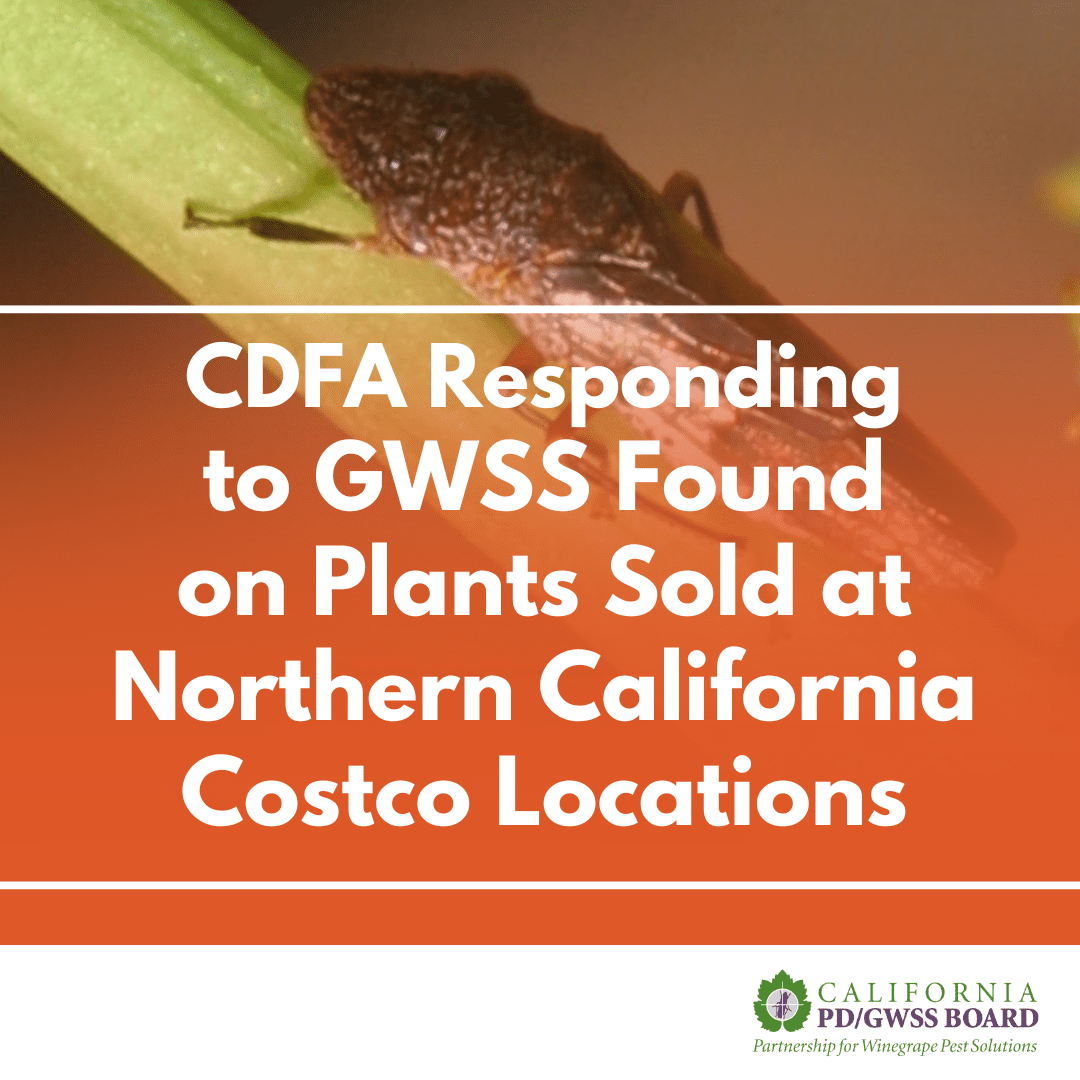
May 28, 2026 — The California Department of Food and Agriculture’s Pierce’s Disease Control Program (PDCP) is working with Costco Wholesale and county agricultural officials after invasive glassy-winged sharpshooter (GWSS) insects were found on grapevine shipments sold at select Costco locations in Northern California between April 21 and May 19.
GWSS is an invasive insect pest that spreads the bacterium that causes Pierce’s disease, a fatal grapevine disease that threatens California vineyards. The pest can also damage citrus trees, landscape plants and other crops. Early detection and rapid response are critical to preventing the pest from spreading further.
State and local agricultural officials identified the issue quickly and immediately began response and containment efforts. The infested nursery stock came from Burchell Nursery in Fresno, and Fresno County Agricultural Commissioner staff and CDFA personnel have been working on-site since May 19 to stop shipments, investigate the situation and determine corrective actions.
Costco has been cooperative in notifying customers, issuing refunds and helping connect purchasers with local county agricultural commissioner offices for inspection and disposal guidance.
GWSS has been confirmed on plants shipped to the following counties:
- Alameda
- Marin
- Placer
- Sacramento
- San Mateo
- Solano
- Stanislaus
- Yolo
Officials are still evaluating additional suspect samples from several other counties, including:
- Butte
- Contra Costa
- Humboldt
- Merced
- Napa
- Sonoma
WHAT TO DO IF YOU PURCHASED A PLANT
People who purchased a grapevine from Costco in an affected county between April 21 and May 19, should take the following steps:
- Isolate the plant:
- Keep the plant in its original pot or container and away from other plants.
- Do not put the plant in the ground if you have not already done so.
- If possible, place the plant(s) in two trash bags, one inside the other, and seal them closed.
- Do not return, transport or relocate the plant.
- Do not place the plant in the trash or compost bin.
- Contact your local County Agricultural Commissioner’s Office right away:
- An agricultural inspector will come to look at the plant and other nearby host plants.
- If inspectors find GWSS on the grapevine, they will safely remove and dispose of the plant.
- GWSS monitoring traps may be placed on the property.
For more information, visit the California Department of Food and Agriculture.
About the PD/GWSS Board
In the face of increasing risks of invasive pests and diseases, California’s winegrape growers can turn to the innovative grower-government partnership created over two decades ago to help protect their vineyards. The PD/GWSS Board ensures winegrape grower assessment funds are spent wisely and productively to find solutions to PD, GWSS and other designated winegrape pests and diseases. Since 2001, the Board has invested $62.1 million in 320 research grants addressing key challenges, including PD, grapevine viruses and the insects that spread them. For more information, visit bit.ly/PDGWSSboard.