Brands that are able to tell stories that resonate with younger consumers will be set up for success in an evolving landscape.
By Kathleen Willcox
Younger generations are ready to embrace wine, but some strategies are more effective than others at winning them over.
Gen Z and younger millennials, in particular, want wines to reflect their own values and needs. These buyers are seeking out sustainable, organic, regenerative wines packaged in light bottles, cans and boxes, according to a recent, comprehensive study of wine consumers conducted by the Wine Market Council.
WMC’s conclusion? Brands that are able to tell stories that resonate with younger consumers will be set up for success in an evolving landscape.
Catering to the Changing How and Why of Consumption
The most important—and difficult—obstacle in the current market is standing out.
“One of the main challenges for wine producers is pushing through the noise to make their wine stand out in relevant ways that matter to their brand,” says Maggie Zeman, SVP of beverage practice at PR and communications agency Double Forte. “Today’s younger consumers are imbibing alcohol in completely different ways than the boomer generation. For one, they are much more thoughtful about how and why they imbibe.”
They’re reducing their intake, and they’re sober-curious, she explains —and many are engaging with new categories of non-alcohol and low-alcohol wine, spirits and beers. But, it’s important to note, they’re reducing consumption, not eliminating it. And that, Zeman argues, is an important distinction requiring a nuanced approach.
“One concept that has recently caught on is the idea of zebra-striping, when consumers start with a cocktail then follow up with a non-alcoholic option, before going back to the cocktail while at a party or event,” Zeman says. “One of our clients, Amaretto Adriatico, just launched Zero, a non-alcohol offering to accompany their standard options in response to requests from mixologists for quality non-alcohol spirits.”
Zeman notes that, while that example is specific, it’s indicative of the need to be creative and respond to consumer desires with new product launches.
Marlow Bruce, founder of Vine and Venture Communications, agrees that younger consumers buy wine differently than older generations.
“They’re curious, but they don’t automatically see wine as part of their lifestyle,” Bruce says. “Keep it simple and keep it real. Younger buyers don’t want long-winded emails, they’d much rather get a quick text reminder about a pickup party. And while they’re not usually excited to sit through a lengthy description on the technical breakdown of a wine, they do respond to experiences that feel personal and shareable.”
But be wary: catering to younger consumers doesn’t mean you want to abandon your loyal base.
“You can still host the classic winemaker dinners, just balance them with something more casual that draws in a different crowd, like a Pizza & Pinot happy hour,” Bruce suggests.
How to Resonate and Feel Relevant
Appealing to younger consumers doesn’t (necessarily) require choreographing wine-soaked dances for TikTok.
“Most wineries think cultural relevance means chasing whatever 25-year-olds are doing on TikTok,” says Adam Bird, a partner and director of strategy at Highway 29 Creative. “I don’t agree with this. Cultural relevance means understanding that every generation needs fresh vessels for familiar, evergreen truths.”
But a creative and authentic presence on social media is never a bad idea.
“When considering strategies for social media, step back and consider the message your brand wants to deliver — and to which audiences,” Zeman says. “For starters, be approachable and fun. Lose the wine-speak and jargon unless that educated wine consumer is your target.”
While you’re at it, Zeman recommends setting aside a budget for paid engagement, critical when trying to increase your visibility.
“Staying engaged with your followers will drive conversation and user-generated content (UGC), which is key for organic growth,” she says.
Zeman also advises easing up on the chatty email blasts.
“The best approach is adding thoughtful touches that feel relevant without losing who you are. I’d think about initiatives that can scale,” Bruce notes. “Not every idea needs a big budget. Some of the most effective examples I’ve seen are really simple and clever, things any winery can pull off with a little creativity.”
Larger efforts require more investment, such as national partnerships supporting both DTC and wholesale, Bruce says. “But there’s also a lot of power in local collaborations with like-minded businesses, where you can swap audiences and create something mutually beneficial without major expense.”
“If the effort feels authentic and meets people where they are, that’s what makes it resonate.”
Stay True to Authentic Roots
Authenticity is more than a buzz word.
Brands that use marketing and communications to tap into universal human patterns and truths aren’t “masks that you switch based on market conditions,” Bird says.
Your team may talk about the technical aspects of wine a lot. That’s important. But they should also talk about the story behind the label. “It’s about understanding why someone would choose you over doing nothing,” he says. “For the wine industry, apathy is the enemy, not competition. Train your team to talk about the people who grow and make the wine.”
Most of all, stay focused on who you are if you want authentic engagement.
“Don’t try to boil the ocean,” says Zeman. “Concentrate on your brand ethos and the consumers that relate to who you are as a brand. That north star will keep you from jumping on the wrong cultural trends as you build your community of fans. Reward that community and stay engaged.”
Finding Answers
Navigating today’s wine market requires more than intuition; it demands new strategies, tools and insights. For wineries seeking to navigate these challenges, the 2025 Wine Industry Expo presents an opportunity to learn directly from experts who are helping brands thrive in this new landscape, and provides attendees with actionable strategies for success in a rapidly evolving marketplace.
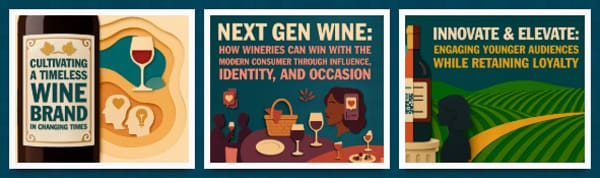
Attendees will find hundreds of exhibitors showcasing innovative products and solutions, plus 12 in-depth workshops focusing on Winemaking & Production, Sales & Marketing, Business Strategy & Leadership, and Vineyard & Growers.
Zeman, Bruce and Bird will be making presentations that delve into contemporary sales and marketing challenges with scalable, effective solutions. Find out more and learn how to sign up for the Expo scheduled for December 4, 2025, here.
____________________________________________________________

Kathleen Willcox
Kathleen Willcox writes about wine, food and culture from her home in Saratoga Springs, N.Y. She is keenly interested in sustainability issues, and the business of making ethical drinks and food. Her work appears regularly in Wine Searcher, Wine Enthusiast, Liquor.com and many other publications. Kathleen also co-authored a book called Hudson Valley Wine: A History of Taste & Terroir, which was published in 2017. Follow her wine explorations on Instagram at @kathleenwillcox