Whether it’s about Blue Nuns gliding through vineyards or funky wines that don’t meet market expectations, consumers are always dropping huge hints about where they want to go.

Wine trends don’t always make sense. Then again, they don’t have to. You just have to pay attention to them.
I distinctly remember, for instance, the meteoric rise of White Zinfandel in the early to mid-1980s because I was there, as a working sommelier. In those days we were all flush with enthusiasm for the type of California Chardonnays and Cabernet Sauvignons that had bested grand crus in the 1976 Judgement of Paris.
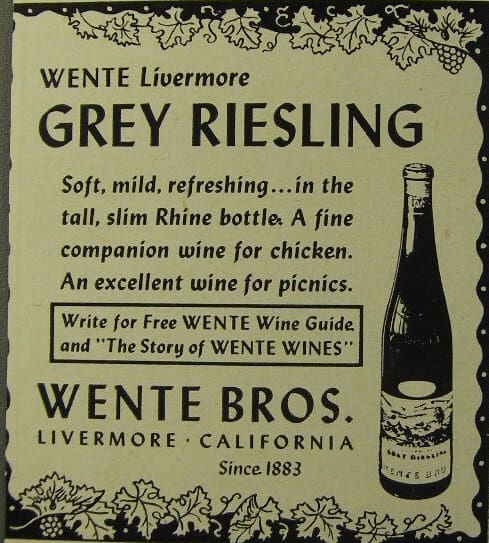
But guess what: In the beginning we couldn’t give a Chateau Montelena or Stag’s Leap away. Instead, when I started as a sommelier in the late ‘70s, the vast majority of consumers preferred fruity wines such as Blue Nun, Mateus Rosé or Wente Grey Riesling. There were nights when a good quarter of my guests were drinking one of those wines, and I was working in a formal, white tablecloth French restaurant!
Is it any wonder that, by the mid-‘80s, many of the same consumers became addicted to White Zinfandel?
Grey Riesling, incidentally, was never a Riesling. It was a fictitious varietal name given to whites made from Trousseau gris, yet indicative of consumer tastes for wines similar to Riesling. Therefore, I did the next best thing and specialized in authentic German qualitätswein: Great, great Rieslings from classic growths such as Scharzhofberger, Wehlener Sonnenuhr, Ürziger Würzgarten and the like. For a few short years in the early ‘80s this strategy actually worked. If they liked their wines fruity, to my way of thinking, I should give them the best fruit-driven wines in the world.
Whenever you upgrade your guests’ taste, you are upgrading the appeal of your restaurant.
Alas, by the mid-1980s the market for German wines in general was dead in the water. Instead, domestic brands such as Kendall-Jackson and Glen Ellen had saturated the market with $4.99 or $5.99 Chardonnay, ushering a crushing tidal wave of soft, fruity, butterball whites that would take at least twenty years to subside. Remember “cougar juice?” That wasn’t too long ago!
The third part of the 1980s’ “fighting varietal” formula hoisted upon us by the domestic wine industry was Cabernet Sauvignon; which was great, except for the fact that not every dish is ideal with White Zinfandel, oaky Chardonnay or Cabernet Sauvignon.
Instead, by the early 1990s I had the staffs in my multi-unit restaurant group pushing hard on Pinot Noir, a far more food-versatile red. I think we were extremely successful but face it: Pinot Noir did not become mainstream until the movie Sideways came out in 2004. That should tell you a lot about consumer obsessions. They are not always about actual taste. A lot of it is perception, whether real, fictitious, or a little of both—like Grey Riesling, beautiful Blue Nuns gliding through vineyards, or whatever the Kardashians are doing.
A couple of years ago I was struck by a thought brought out in a New York Times column about efficiency, reflecting on the “sheer joy” of setting a “vinyl record carefully on the turntable” despite the obvious convenience, and infinitely cleaner sound, of digital music. Yet no one has to guess why vinyl records have returned with a vengeance—there is something compellingly organic about music coming off a needle, rife with static and imperfection.
By the same token, it should not be hard to understand the current madness for imperfection in wines; particularly natural wines, murky or prickly wines, anything smacking of organics or even a seemingly irrational spirituality. The positive thing about trending wines, even when inconceivable, is that they are usually indicative of some kind of evolution in consumer tastes.
The craving for natural wines, after all, is not too far off from the appreciation of terroir-driven all-time classics such as Domaine de la Romanée-Conti, Domaine Tempier, Château Musar or Vega Sicilia. Wines that are often raw or as unpredictable as can be. To my mind, natural wines are just a gateway drug to that higher (one can hope!) level.
Many of today’s consumers don’t necessarily want technically clean, consistent products that fit neatly into market expectations. They are practically screaming for something a little more “real.”
Ergo, what I always advise the on-premise industry: Recognize market trends for what they are⏤strong hints of where your customers want to be. The next step is taking guests already leaning into those trends to places you want them to be. Wines that take them into realms of higher or more interesting quality, with a higher percentage chance of bolstering your brand and, ultimately, your business.

Randy Caparoso is a career wine professional, wine journalist and photographer living in Lodi, California. He is author of Lodi! The Definitive Guide and History of America’s Largest Winegrowing Region (2022), and Editor-at-Large/Bottom Line columnist for The SOMM Journal. Between 2010 and 2025 he composed online blogs and social media posts for the Lodi Winegrape Commission (lodiwine.com). In 2024 he was named Old Vine Hero for Communications by the UK-based Old Vine Conference. Prior to his current residency in Lodi wine country, he was the multi-award winning founding partner, vice president and corporate wine director of the Roy’s family of restaurants. He can be reached at randy@caparoso.com.