The future of wine country is being written by
the brands innovating customer experiences and community tie-ins.
By Kathleen Willcox
Wineries don’t need people to just buy their wines — particularly if it’s a one and done experience, straight off the shelf.
Rather, what wineries need is to nurture a community of long-term enthusiasts. They need people to visit their properties, enjoy their experience and form an emotional connection to the product being sold, thereby ensuring ongoing consumption patterns. It’s an old model, as effective in theory as it is broken in practice.
To be clear, global wine tourism is set to expand at a compound annual growth rate of 12.7% through 2035, according to a report from Future Market Insights. However, that growth will be fueled not by tastings, but by experiences around the tastings.
For decades, wine country’s bottom line was consistently fattened on a steady stream of enthusiasts eager to simply taste wine in the vines. But amid an increasing proliferation of wineries and an increasing thirst for novel experiences, estates that don’t deliver more than “just” wine are getting left behind.
Thriving on Immersive Experiences
Temecula Valley Wine Country, which relies primarily on direct-to-consumer (DTC) sales, has become ground zero for experimentation. Wineries deliver an estimated $905 million in spending annually to the region, according to the most recent Economic Impact Report.
“Because of Temecula’s close proximity to about 20 million people in San Diego, Orange County, Los Angeles and the Inland Empire, Temecula Valley’s business model has always been heavily direct-to-consumer,” says Devin Parr, brand marketing partner for the Temecula Valley Winegrowers Association (TVWA). “This not only fosters stronger customer loyalty, but also ensures that wines are enjoyed close to home, reinforcing a sense of community around the region.”
In Temecula, standard tastings start at $25, with elevated experiences topping out around $150, Parr notes. Unique experiences that often sell-out and inspire new wine club memberships, Parr says, include Doffo Winery’s Cork ‘N Torque Tour and Tasting ($80), Danza del Sol’s Grapes & Gears UTV Vineyard Tour ($90), Wilson Creek’s Regenerative Agriculture Tractor Tour ($50), Bottaia’s Wine Blending Lab ($135), Wine & Wellness classes at Akash ($25 pp), South Coast Winery’s Executive Production Tour ($95 pp), and Baily Winery’s Library Tasting (a vertical of 6 vintages with cheese/charcuterie, $40 pp).
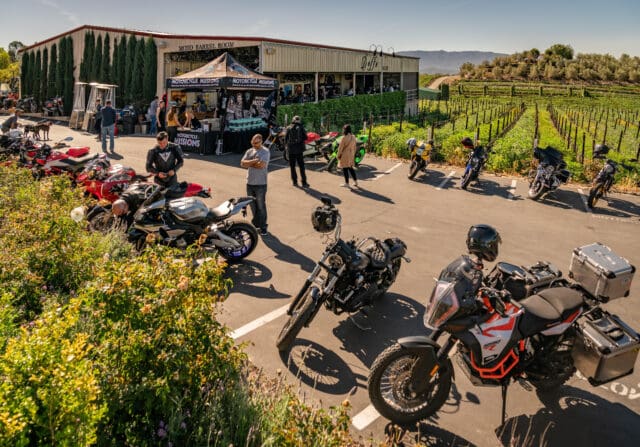
Wineries have also gotten great traction by offering perks to members. Bottaia, for example, has discounted or complimentary entry to its pool, which is set among its estate vineyards (admission starts at $40 for everyone else), and a members-only lounge with prime views of the vineyards.
Without the pressure of the three-tier system, the vintners are more free to experiment with grape varieties and styles, ensuring a steady stream of new releases which, in turn, keeps customers coming back for the latest. So far this year, current wine club members have accounted for 61% of all visitors, according to Temecula Valley’s numbers.
“Our DTC revenue is up 2.4% year-over-year,” says Chaela Ciongoli, director of marketing and PR for TVWA. “We’re outperforming industry averages across the board.”
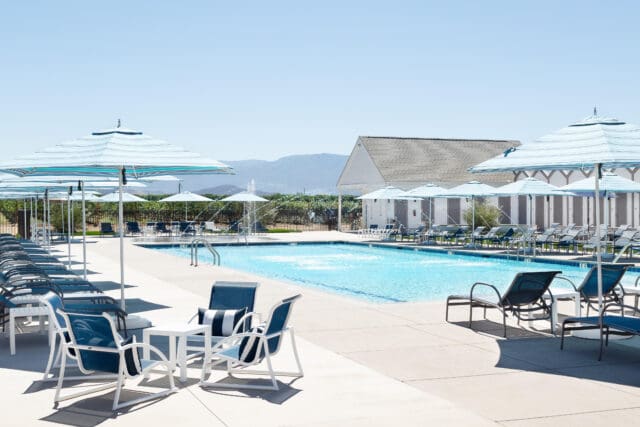
Serving Up Iconic Celebrations
Other producers find that a bracing cocktail of appealing to loyalists while luring newcomers can deliver outstanding results for the bottom line. How? Building out exceptional, highly specific festivals with mass appeal is one way.
Post-COVID, the team at Dr. Konstantin Frank Winery in New York, which produces around 60,000 cases annually (counting its second line, Salmon Run), notes a “significant shift in guest preferences, with strong demand for experience-driven offerings,” says Brand and Marketing Manager Brandon Thomas. Hospitality Manager Holly Fusco says the team began designing unusual one-off and annual events, as well as food-centric seated events that guests can access regularly.
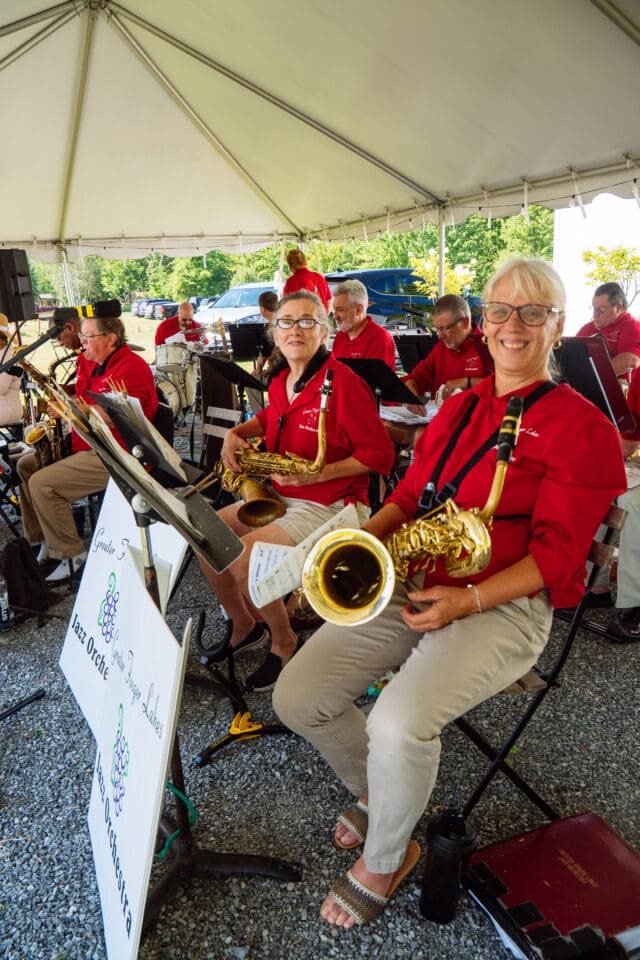
Recent standout events included the Austrian Heuriger, with Emmy-award winning chef Erwin Schrottner of Cafe Katja and featuring a menu that included Frickadellen, linzer torte and schnitzel, alongside the Grammy-nominated musician Alex Meixner on the accordion and alphorn. At $45 a head, 300 people showed up. Holiday Markets in November, which started out with around 150 attendees four years ago, now bring in 1000+ over two days, and frequent wine club only Socials, at $20 a pop with wine and food pairing, bring in 350 people on average.
As other wineries in the Finger Lakes region report declines, Dr. Frank saw 27,000 visitor reservations last year, with walk-ins exceeding 15,000. So far this year, reservations are up 3%, Thomas says, and wine club membership has grown 250% in the last two years since focusing on special festivals and member-only events.
At Opus One Winery in Napa, the team has found that leaning into the natural connection with music has yielded unexpected fruits, says VP of Global Communications and Marketing Christopher Barefoot. (Opus One refers to a composer’s first work). During a visit to the Chateau de Fontainebleau in 2023, Barefoot learned about Les Écoles d’Art Américaines de Fontainebleau, a music and fine arts school that was founded after World War I as a Franco-American collaboration and exchange between France and the United States.
As longtime supporters of all things art and music — Opus One is a founding sponsor of the Festival Napa Valley, and supports the di Rosa Center for Contemporary Art in Napa and the Tonhalle Orchester in Switzerland, among others — the team wanted to help the next generation of composers, while also introducing music aficionados to the wine brand.
The result was the Opus One International Prize for Composition, which would be awarded to an emerging artist participating in the 2025 Les Écoles d’Art Américaines de Fontainebleau (EAAF) summer program at Château de Fontainebleau. The winner, Sofia Jen Ouyang, was named Composer in Residence at Opus One, where she and fellow musicians recently performed her piece, “In Air, On Stone.”
While the audience was private, with just 50 invited guests, the winery anticipated it would generate significant reverberations in both the musical and wine-loving communities. “The private concert [was] recorded and photographed for social media channels and for Opus One Moments on our website,” says Barefoot. “We have a very large following, with significant engagement.”
On Instagram alone, Opus One has north of 91,400 followers.
“Music transcends borders and languages, so we do hope it will be a bridge for those who may not be familiar with Opus One,” Barefoot continues, explaining that the bridge will extend from wine lovers who are less familiar with contemporary classical music. “Beginning in 2026, all RFID chips on our bottles will link to a page that will have this music available to listen to as the wine is being enjoyed.”
Partnerships Beyond Wine
Wineries across the board are finding that working with wine-adjacent businesses drives significant traffic.
“We actually don’t currently belong to a wine trail, but we did decide to join the South East Seneca Business Alliance,” says Lynne Fahy, winemaker at Hillick & Hobbs in the Finger Lakes, explaining that the alliance brings together 30+ businesses that occupy a 12-mile stretch along Seneca Lake. “There are craft beverage producers, restaurants, hotels, stores and tourism companies, and we all cross-promote each other through word-of-mouth and formal events and promotions. We’re all so busy, but we are all working together to drive visitorship in the region and to each other’s businesses.”
Fahy says that, by broadening their appeal beyond people “just” drawn to wine-centric experiences, they are hoping to cast a wider net and draw visitors who might not otherwise visit a relatively small (2,000 cases in production annually) Riesling-centric producer on Seneca Lake.
Hillock & Hobbs also collaborated on a Sunset Series at the tasting room with local chefs and musicians. Every Thursday from May through October, a local chef brings out a food truck, and a musician performs from 4 to 8 pm. Through social media posts and word of mouth, the series has brought in dozens of local families and new visitors every week, introducing the relatively new winery (its first release, a 2019 Riesling, debuted in May 2021) to new wine lovers.
Eventually, Fahy hopes the cross-promotions and events will drive more sales to DTC, which is more profitable for small wineries.
Rick Rainey, managing partner at Forge Cellars, which is also a member of South East Seneca Business Alliance, says tasting room visitations have become an increasingly essential part of its sales strategy.
Its first tastings, introduced in 2015, were appointment only. But during COVID, Rainey realized that the wine community needed a safe and convivial place to gather without appointments. Plus, the experience needed to include options beyond just the wines produced onsite. With Louis Barrual as a partner in the business, that felt not only doable, but almost like a moral necessity amid a time of incredible stress and tumult. Barruol, a winemaker whose family has been producing critically beloved wines in Gigondas since 1570, is still most famous for his work at Chateau de St.-Cosme, but is a strong advocate of his perch in the Finger Lakes as well.
Rainey expanded the tasting area with enough room to comfortably seat a few dozen people and still observe COVID-era spacing needs.
“There were so many people who wanted to reconnect,” Rainey says. “I realized it was an opportunity to do something truly different.”
Rainey created a living-room like environment with tinned fish and cheese to pair with the wines, and a curated selection of Inspiration Bottles from benchmark producers across the world (including from its own sister winery) that can be purchased at shockingly reasonable prices for consumption onsite.
“We bring in fun sommeliers such as Pascaline Lapeltier, and we host events that focus on other regions — for example, Spanish cheese and Sherry nights,” Rainey says. “They sell out in minutes. Our Frenchie Fridays are also hugely popular, because we’ll open up great bottles that retail for $90+ and charge just $40 entry. We serve onion tarts and everyone just hangs out. First-timers love it, and we get a lot of repeats, because it feels like a party.”
Which is kind of the point, right?
According to BMO’s 2025 Wine Market Report, more than half of the revenue of U.S. wineries — about 56% — comes from DTC sales. An increasing number of those sales are from younger Gen Z or millennial consumers who want a lot more than a flight of wine paired with a plate of cheese.
The future of wine country is being written by the brands thinking well outside of the bottle when it comes to consumer engagement.

_____________________________________________________________________
Kathleen Willcox
Kathleen Willcox writes about wine, food and culture from her home in Saratoga Springs, N.Y. She is keenly interested in sustainability issues, and the business of making ethical drinks and food. Her work appears regularly in Wine Searcher, Wine Enthusiast, Liquor.com and many other publications. Kathleen also co-authored a book called Hudson Valley Wine: A History of Taste & Terroir, which was published in 2017. Follow her wine explorations on Instagram at @kathleenwillcox