Every year, the New York Wine Classic celebrates the quality of wines produced across our state. The medals recognize craftsmanship, terroir, and the dedication of New York’s winemakers.
For the past ten years, I’ve collected New York Wine Classic pricing data. Originally, it was simply a benchmark to help guide pricing decisions at my own winery. Today, by combining that history with artificial intelligence, the data tells a much bigger story—not just about individual wines, but about how New York wines are valued in the marketplace.
Instead of asking, “Who won?” I asked:
“What are New York’s best wines actually selling for?”
Using the publicly available results from the 2025 New York Wine Classic, I compiled the retail prices of hundreds of medal-winning wines from wineries across New York. While the analysis isn’t a scientific survey of every wine produced in the state, it provides an interesting snapshot of how award-winning wines are positioned in the marketplace.
AI didn’t simply calculate averages. It helped identify patterns, compare regions, organize hundreds of wines by category and, perhaps most importantly, generate questions I hadn’t considered asking. Rather than replacing human judgment, it became a tool for exploring the data from new perspectives.
Excellence Doesn’t Always Command Premium Prices
One of the first things that stood out was how affordable many of New York’s highest-rated wines are.
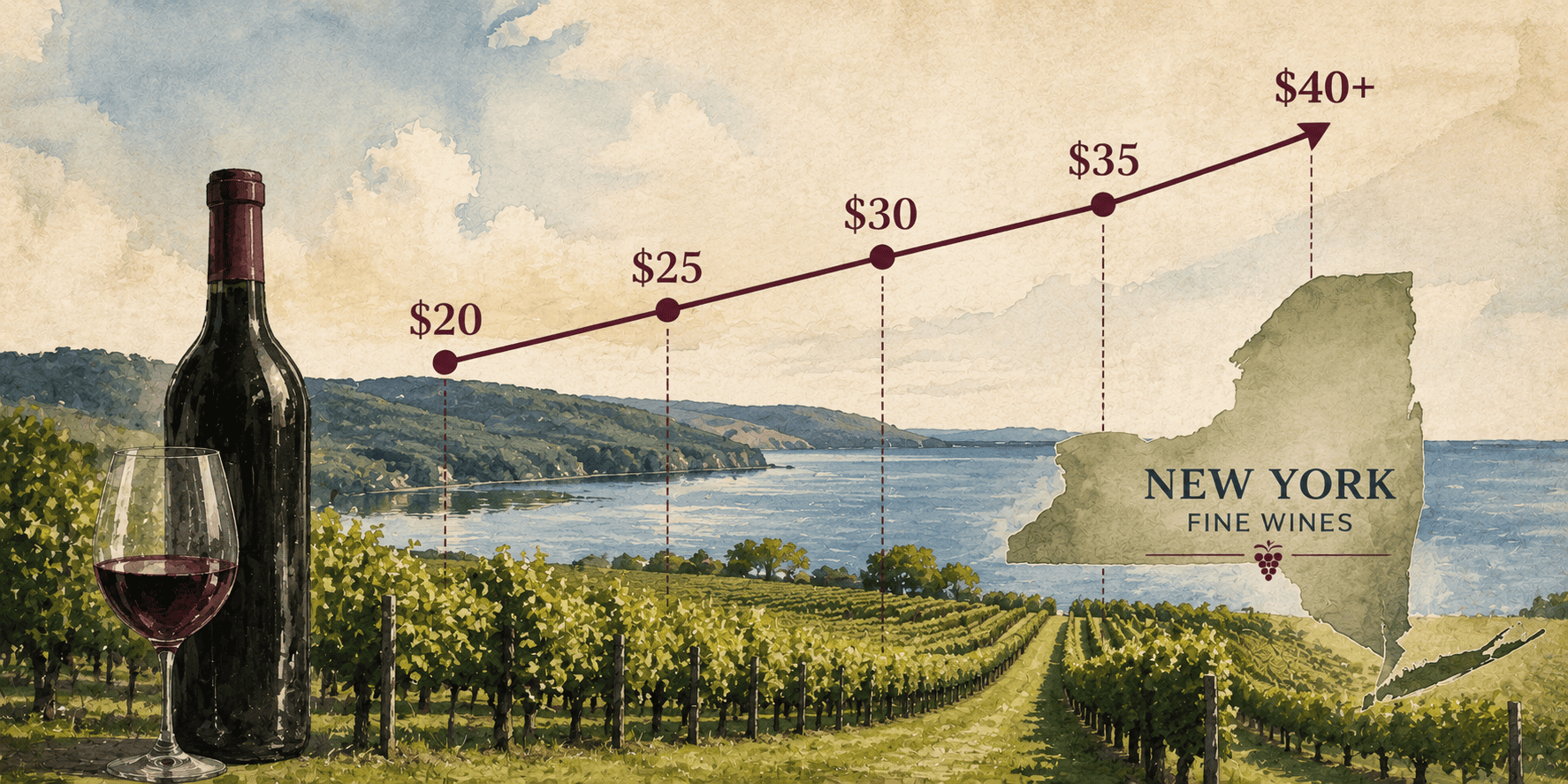
Among the competition winners were Best of Class and Platinum Medal wines selling for around $20–$25 per bottle. Outstanding Rieslings, Chardonnays, Sauvignon Blancs, and Cabernet Francs often fell into this same range.
That raises an interesting question:
Are New York wineries pricing for quality or for consumer expectations?
Are Wineries Leaving Money on the Table?
One pattern that immediately stood out was how frequently prices clustered around familiar retail price points. Rather than being evenly distributed, award-winning wines tended to be priced in $5 increments: $15, $20, $25, $30, and $35 per bottle.
This suggests that many wineries may be pricing within established market tiers rather than optimizing price based on consumer willingness to pay.
One of the questions the data made me ask was whether wineries are leaving money on the table. If customers are comfortable paying $25 for a bottle, would they also be willing to pay $27?
That’s the type of question data analysis can help answer. By analyzing historical sales, customer purchasing behavior, and pricing trends, wineries can make more informed pricing decisions. Sometimes a modest price increase has little impact on sales volume while making a meaningful difference in profitability.
The real question isn’t whether your wine is worth $27 instead of $25. It’s whether you have enough data to know the answer.
Price Appears to Follow Region as Much as Quality
Another pattern emerged when comparing wine regions.
Long Island wineries routinely command higher prices for red wines, with many Merlots, Bordeaux blends, and Cabernet Sauvignons selling for $40–$75 or more. At the same time, medal-winning Finger Lakes reds often remain in the $20–$30 range despite earning comparable recognition.
The difference isn’t simply quality.
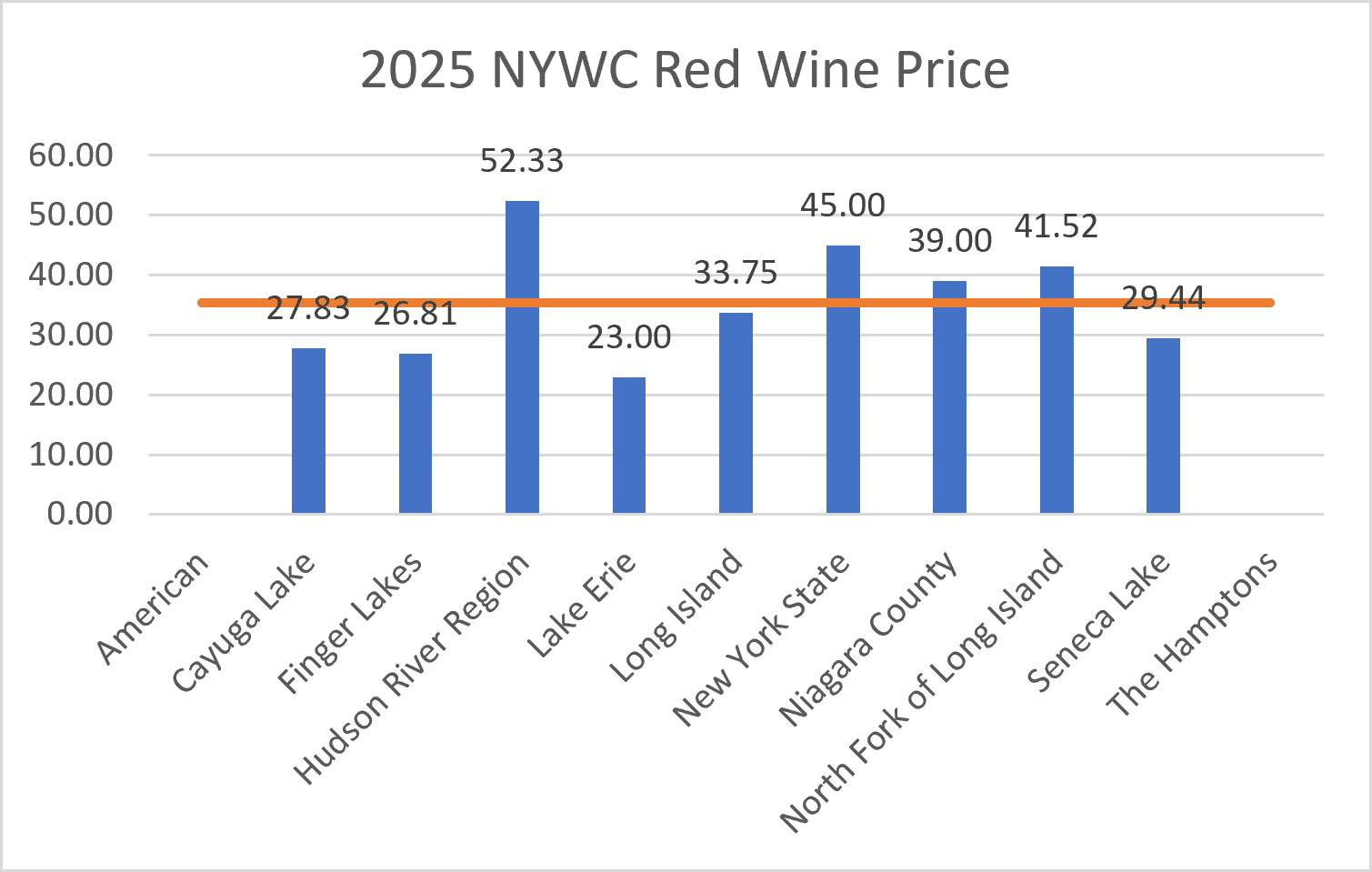
When interpreting data, understanding the underlying sample is just as important as the results themselves. In this analysis, sample size provides important context. The Hudson River Region average is based on just three medal-winning red wines, while the North Fork of Long Island average is based on 50 entries.
Although the Hudson River sample is small, it immediately caught my attention and was the most thought-provoking. As a winery owner, it made me stop and ask a simple question: Am I underpricing my own wines?
Sometimes the most valuable insights don’t come from the averages; they come from the questions the data encourages us to ask.
The results suggest that consumers are willing to pay different prices depending on a wine’s origin, reputation, and market positioning.
White Wines Have Settled Into a Narrow Price Range
Perhaps the biggest surprise was how consistently priced New York white wines have become.
Regardless of grape variety, many award-winning dry whites clustered in a relatively narrow range around the low- to mid-$20s. Riesling, Chardonnay, Sauvignon Blanc, Grüner Veltliner, Pinot Gris, and Seyval Blanc all appeared repeatedly within a similar price band.
Competition judges clearly distinguish among these wines. The relatively narrow price range suggests consumers may perceive them more similarly.
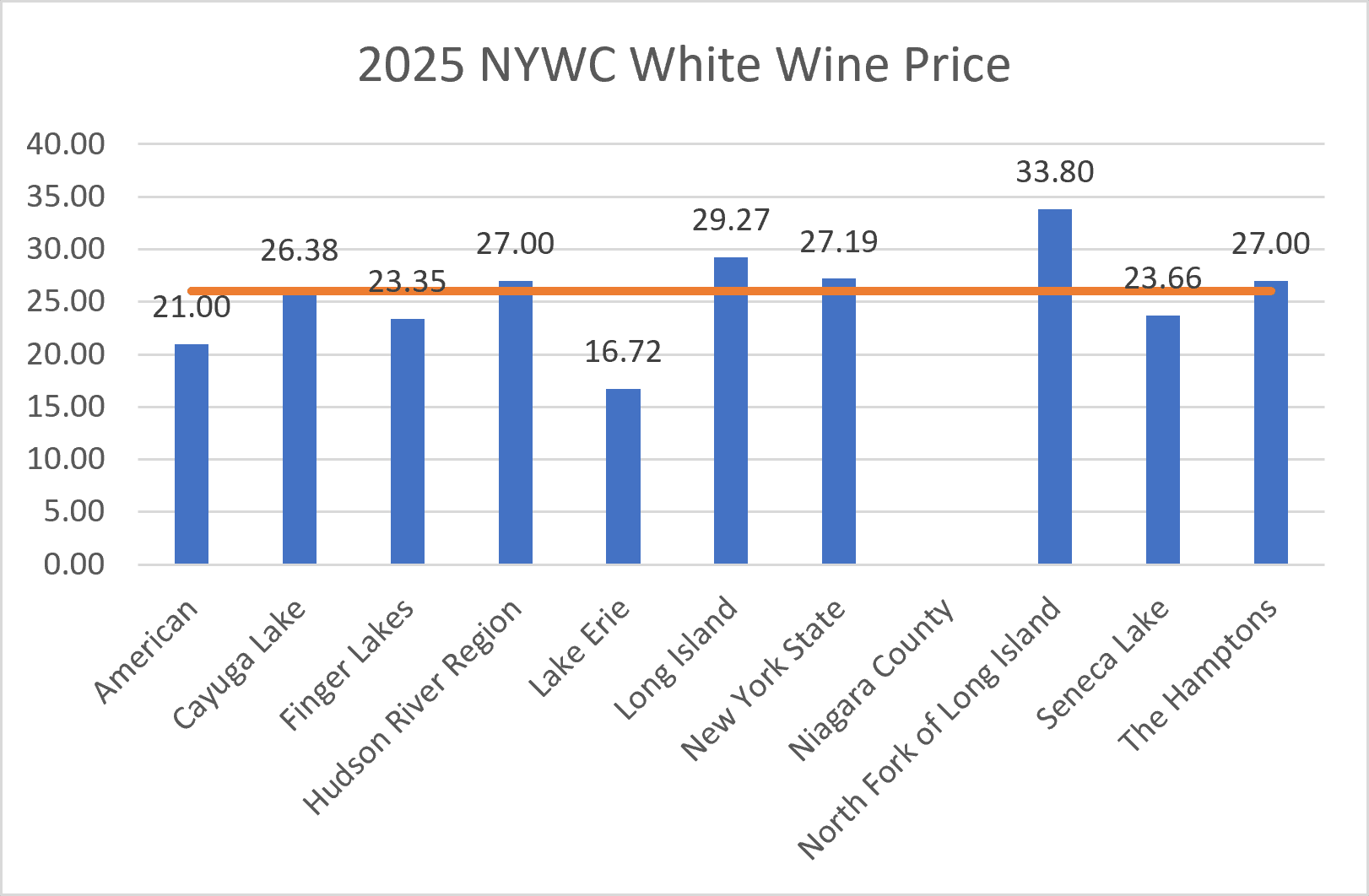
The narrow range of white wine prices suggests that New York wineries compete within well-established market price points. Whether this reflects genuine consumer willingness to pay or simply an industry tendency to anchor prices to competitors is an important question—one that AI and historical sales data are well suited to investigate.
This finding suggests a promising area for future research into pricing behavior within the New York wine industry.
Medals Alone Don’t Determine Price
If medals alone determined value, we’d expect the highest-scoring wines to always command the highest prices.
They don’t.
Some Platinum Medal wines sell for less than wines receiving Silver medals.
That doesn’t diminish the importance of competitions. Instead, it highlights something every winery understands:
A bottle of wine represents much more than what’s in the glass.
Consumers also purchase the winery’s story, reputation, tasting room experience, packaging, vineyard setting, and emotional connection to the brand.
I’ve often said that every time I look at data, I learn something new. This was the first time I learned something from the absence of data. Two of New York’s newest American Viticultural Areas (AVAs), the Upper Hudson AVA and the Champlain Valley of New York AVA, had no entries in the 2025 New York Wine Classic.
As the founder of the Upper Hudson AVA, I don’t view that as a disappointment. I see it as a reminder that building a wine region takes time. Every established AVA started somewhere. Recognition, participation, and reputation are earned over many years as wineries mature, vineyards expand, and consumers discover what makes a region unique.
The Opportunity
For New York wineries, this may represent an opportunity rather than a problem.
Many wineries invest years improving vineyard practices, refining winemaking techniques, and earning competition recognition. Yet pricing often changes slowly, if at all.
As more wineries begin using data analytics and artificial intelligence to better understand customer purchasing behavior, we may discover that perceived value—not just production cost or competitor pricing—deserves a larger role in pricing decisions.
Pricing is one of the few decisions a winery makes that influences revenue, profitability, and brand perception at the same time. Every bottle price tells customers where you believe your wine belongs in the market. Price your wine at the market average, and customers may perceive it as an average offering, even when its quality and story suggest otherwise.
AI and data analysis can help wineries determine whether price reflects customer value rather than simply industry convention.
The question may no longer be:
“What should this wine cost?”
Instead, we may begin asking:
“What value does this wine create for the customer?”
That may be one of the most important pricing questions New York wineries will face in the coming decade.

Andy Weber is owner and winemaker at Northern Cross Vineyard and the founding force behind New York’s Upper Hudson AVA and the Upper Hudson Wine Trail. A pricing executive with more than two decades of experience leading pricing strategy and competitive intelligence for global industrial companies, he is exploring how artificial intelligence can help wineries improve pricing, profitability, and customer understanding. His work bridges advanced analytics with the practical realities of running a vineyard.