Just because things aren’t going right, it doesn’t mean we have to point fingers.
When we get irritated, we get snarky— it’s natural.
Nowadays, there is a lot to be irritable about the wine industry. Large proportions of the adult populace are simply refusing the grape-derived drink. Especially, or mostly, those who used to nonchalantly plop down $8 or $9 bottles into their shopping carts on their way from the fresh produce to the dairy aisle. It’s their choice. You don’t tell consumers what to do, or what they should be doing.
But is that any reason to get snarky? If anything, people in general are regressing to a mean. Overall, at the moment American wine consumption is at approximately the same level as it was in 2014, which is still well over three times higher than when I started in the business in 1978, as a tastevin-wearing sommelier in a white tablecloth French restaurant.
But just because things are not going exactly the way we think it should be, it doesn’t mean it’s time to start forming circular firing squads and start squawking about who is doing the wrong thing.
I’ll just say this: We should be thankful to be working in an industry with such diverse points of view. There is a reason why the market is now so incredibly diverse: Consumers want it that way. There is just not any one way to grow, produce, market, or sell wine. If anything, it is the market itself that will sort this all out, not snarky pundits or self-appointed experts.
Let’s talk about some of the gripes recently popping up among industry insiders…
Natural or low intervention wine
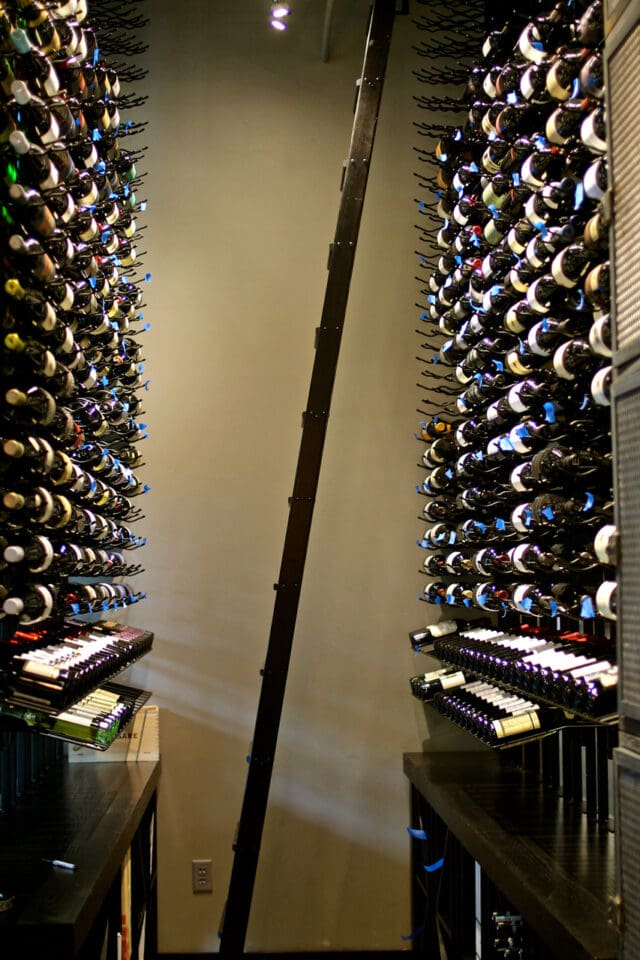
You may hate “natural” style wines. But stop, think about it. Do you think low intervention, or funky or even flawed wines, would be in demand if there weren’t a sufficient number of consumers who actually prefer wines that way?
The entire concept of “natural,” of course, is ill, or loosely, defined. Another non-issue. The only people to whom a definition matters (apart from the French, who unsurprisingly have already come up with their own official categorizations) are people who buy them, and they seem to be just fine with the category’s wide range of methodologies and conceptions. “Wildness,” or dearth of expectation, are all part of the appeal.
This, of course, is all part of the consumer perception of anything natural, from fibers going into clothing to leavening of breads. It’s a preference built on taste. You can naysay all you like, but you are simply not going to stop consumers from going in this direction.
If anything, the tiny, growing faction of “natural” wine lovers and producers are absolutely no threat to the conventional wine industry making a perfectly good living producing technically cleaner, more predictable wines meeting far more popular, commercial expectations. Natural style wines are oppressing no one; least of all, consumers who used to, but no longer, seem to be buying value priced commercial wines.
And besides, any market category showing growth, even if modest, has got to be a positive, especially if it is employing people, inspiring vintners, fueling brands, capturing new consumers, driving restaurant wine programs and entirely new bar concepts.
Biodynamic (and now, regenerative) farming
For some reason, to many parts of the conventional wine industry, Biodynamic farming is scary. Like hocus pocus. The anti-Biodynamic hysteria used to be worse, ten or fifteen years ago; a lot of it because of its founder Rudolph Steiner, whose spiritual beliefs were never exactly mainstream.
All the same, some of the prestigious wines in the world, such as those of Domaine de la Romanée-Conti or Littorai in West Sonoma Coast, are Biodynamic grown. Try telling them, and their legions of followers who will pay any amount of money for them, that what they are doing is baloney.
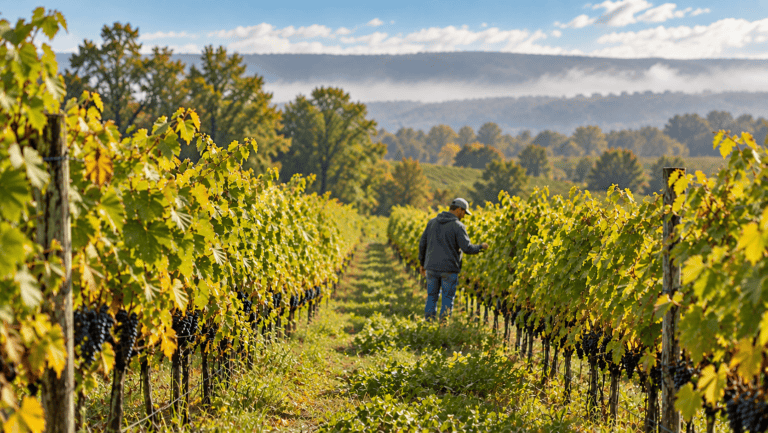
Over the past five, ten years the latest bugaboo has been regenerative farming; similar, though less codified, to the Biodynamic approach in that it focuses on soil health and biodiversity. Yes, you can call it just another “latest trend,” but regenerative farming has grown to the point where it is clearly more than a trend.
Followers around the world practicing techniques such as no-till, indigenous plant cover cropping, crimping (i.e., rolling over, rather than mowing, of growth between rows) and integrated flora and fauna management are reporting dramatic increases in vineyard health, productivity and wine quality. The proof, as always, is in the pudding. Consciously regenerative farming is here to stay.
Terroir as a subject
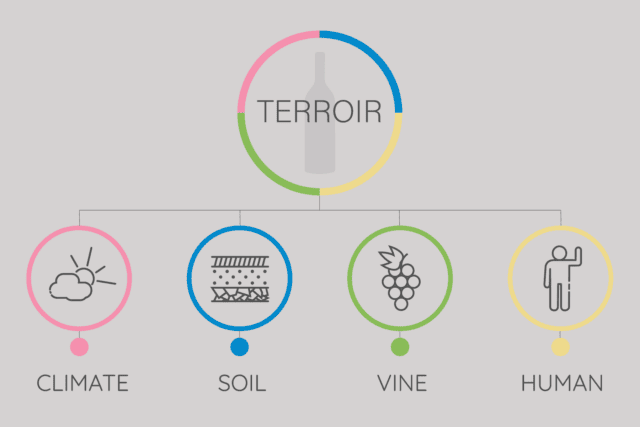
Terroir has probably become a bugaboo because suggesting it as a factor distinguishing a wine is associated with some kind of elitism, turning off potential consumers. The concept may be French in origin, but it is far from elitist. Terroir, broadly defined, simply means “sense of place.” Wines that express terroir taste like where they come from. Saying “ordinary” consumers can’t possibly grasp terroir is, in a way, like suggesting consumers are too stupid to grasp that a wine may taste like its origins.
Yet lovers of California wine, for instance, need no specialized knowledge to know that they might prefer wines grown in California, a state acclaimed for its warm climate producing wines with vivid fruit profiles. This is exactly why over 60% of all wine sold in the U.S. (including imports), comes from California. This is exactly what terroir is all about⏤appreciating wine for the sensory qualities most likely to be produced because of where it is grown. There is nothing confusing, or elitist, about it.
It is the same for wines of Europe. Not all of them are the same, of course, just like not all California wines are alike. Nonetheless, most consumers of European wines appreciate them because they are less likely to taste “fruity” than, say, California wines. Many European wines are earthy, many lighter, many a little more tart or drier than the products of California. In this case, inveterate buyers of European wines are making a choice based on the broadest conceptions of terroir sensory qualities associated with where wines come from.
Terroir, of course, can become a more complicated concept when wine lovers become consumed with the tastes of more specific wine regions within regions, individual villages, vineyards or even blocks within vineyards. Nothing wrong with that, of course, because that’s what appreciation of wine is all about.
From the simplest and most everyday priced wines, to the most glorified, rarest and priciest of wines, terroir plays a part in the choices consumers are making every day. It is not the only factor a consumer considers, but it is most certainly not a barrier. It is an inevitable conduit.
Food and wine
Just within the past few months I have heard the subject of wine and food combinations described as anything from “nonsense” to “pseudoscience.” The current fear among many a wine cognoscente, it appears, is that the mere suggestion of a good match of a wine and a dish is either off-putting or overly intimidating to would-be wine consumers.
Let me try to parse this apprehension in a way anyone can understand: When a cook, or chef, recommends an ingredient to enhance a dish, it is neither nonsense nor pseudoscience. It is based on simple tried-and-true experiences. Certain ingredients have a way of making a dish taste better.
It does not mean, of course, that there is only one ingredient that is likely to enhance a dish. Everyone knows, for instance, that there are a gazillion ways to cook a chicken, most of them delicious, many of them different for the sake of being different. We love our variations.
It is the same with wines. There will always be wines that make dishes taste that much more delicious.
Citing those wines, and describing the reasons why the combinations work, is neither nonsense nor pseudoscience. Almost always, it is based on simple tried-and-true experience. You make conscious choices of wines with dishes for the same reason you choose certain ingredients to go into a dish. Quite often, we talk about it. That’s the intelligent thing to do.
Ergo, there is absolutely nothing wrong with making wine and food suggestions. The average consumer expects it because the vast majority of the time, wine is consumed with food, just like it has been for thousands of years.
Wine marketing
Since the wine market’s recent crash, it’s wine industry consultants who have really come out of the woodwork. It may stand to reason why, but when times are tough, who can afford ‘em?
I’m a journalist, not a marketing consultant, but as Yogi Berra once said, “You can observe a lot just by watching.” What I’ve been observing, at least during my nearly 50 years in the business, is a wine industry that used to sell wine as a lifestyle and entertainment beverage. Bottles used to recommend dishes on their back labels, and entertainers such as Lucille Ball and Orson Welles hawked brands in the same fashion as Joe DiMaggio’s Mr. Coffee.
But when wine appreciation began to get “serious” between the 1970s and early 2000s, it became all about concepts such as vineyards and varietals, sense of place and history of regions, star winemakers and their barrels, prestige brands and their noble lineage. Somewhere along the line, sommeliers, and anything having to do with “mastery,” became sexy, and many an unsuspecting consumer (like industry insiders themselves) fell under the sway of 100-point scores—considering their arbitrary conception, accorded an absurd amount of weight.
Now, of course, we are told that this “old way” the very approach to marketing that increased yearly wine sales in the U.S. from some 260 million gallons in 1970 to well over a billion by 2020 is all wrong. Evidently, younger generations could care less about vineyards, history, barrels, scores or lineage. “Sommelier” has gone back to being synonymous with “snob.”
Instead, the way to communicate wine right now is by putting it in contexts such as emotional attachment, personal values, meaningful experiences, human connection. I don’t know about you, but that sounds a lot like the lifestyle, entertainment and celebrity approach of the ‘50s, ‘60s and ‘70s. While selling wine based on “feelings” may seem shallow, at least it’s not pretentious or cynically manipulative. While consumers are smarter than ever, who can blame them for trusting their feelings over what they’re being told?
There is, of course, no resemblance between the print/broadcast communication of just 30 years ago and the digital and social media marketing of today. There is actually a lot of lifestyle communication of wine going on as we speak, done mostly by that fully realized coterie of intelligentsia we now call influencers, and many wineries have been duplicating their approach in their Direct to Consumer sales.
Thank goodness for the influence of influencers. Where would we be without them? They’re telling the meaningful “stories” that we only used to get through bumbling corporations—test-marketed to death by marketing departments and dumbed down by advertising agencies—but with a great deal more of the enthusiasm, spontaneity, originality and innovation that we actually appreciate in real life.
Today’s consumers, influencers such as Georgia Panagopoulou (@wine.gini), constantly remind us, “don’t remember information, they remember what the information means to them.” Like the taste of wines themselves. Imagine that⏤it still is all about the wine.
Despite all the recent grousing, maybe things are looking up after all!

Randy Caparoso is a career wine professional, wine journalist and photographer living in Lodi, California. He is author of Lodi! The Definitive Guide and History of America’s Largest Winegrowing Region (2022), and Editor-at-Large/Bottom Line columnist for The SOMM Journal. Between 2010 and 2025 he composed online blogs and social media posts for the Lodi Winegrape Commission (lodiwine.com). In 2024 he was named Old Vine Hero for Communications by the UK-based Old Vine Conference. Prior to his current residency in Lodi wine country, he was the multi-award winning founding partner, vice president and corporate wine director of the Roy’s family of restaurants. He can be reached at randy@caparoso.com