As harvest approaches, wineries are seeking interns for the upcoming months. Now is the time to start your search, keeping in mind that harvest work requires a strong commitment: it can be hard, sometimes dangerous, and is governed by labor laws and safety regulations.
Harvest and Cellar Internships
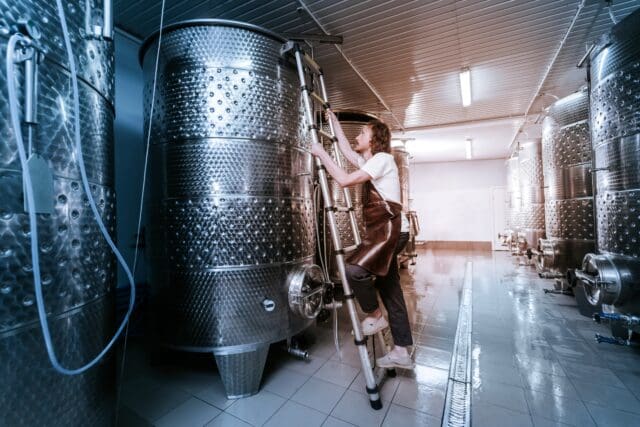
Harvest and cellar internships support winery production during the busiest time of year. Interns help receive and process large volumes of grapes quickly, safely and efficiently.
Common responsibilities include:
- Grape receiving, crushing, pressing
- Fermentation management
- Juice racking
- Barrel filling, pump overs
- Winery sanitation
Experience, Qualifications and Physical Requirements
Most roles value reliability, teamwork and a strong work ethic more than formal education. Requirements may include:
- Ability to read, write and speak English
- Basic math skills
- Ability to follow instructions through completion
- Willingness to work long, flexible hours
- Team-oriented attitude
- Ability to climb stairs, stand or walk for long periods, lift at least 50 pounds, and work in varied conditions
Harvest Laboratory Internships
Harvest lab roles are best suited to applicants with a high school diploma who have, or are working toward, a degree in chemistry, enology or related field.
Responsibilities include:
- Running and tracking harvest analyses for grape maturity and chemistry
- Collecting samples from tanks and barrels
- Conducting daily analysis
- Entering data accurately
- Cleaning and sanitizing tanks, barrels, cellar equipment
- Inoculating juice for fermentation
- Assisting with routine cellar tasks
Compensation and Opportunities
Compensation for harvest, cellar and lab interns varies but typically ranges from $14 to $26 per hour. Some roles may also offer overtime, meals, housing or housing allowances, and a path to permanent employment.
First-Hand Perspective: Daniel Kennedy

To offer a first-hand perspective I spoke with two-time intern Daniel Kennedy. His first internship was as a Cellar Hand at Valor Wines in Connecticut, where he handled general winemaking tasks such as racking barrels and tanks, filtering, bottling, and blending wine.
Taking the Next Step
Seeking greater opportunities, Daniel searched wine job boards for intern roles in established wine regions and connected with Dunham Cellars in Walla Walla, Washington. After some negotiation, he took a leap of faith and moved across the country to join the team.
What Internships Are Really Like
His responsibilities were similar to the tasks described earlier. Daniel emphasized that “being an intern is hard work with long hours,” and that “90% of an intern’s time is spent cleaning, as sanitation is crucial in any winery.”
He also noted that conditions can range from cold and wet to hot and sunny, so interns should invest in good work boots, UV-filtering long-sleeve shirts, and a wide-brimmed hat.
Where the Experience Led
Daniel is now a full-time Tasting Room Lead at Zerba Cellars, in Oregon, and credits his internships with giving him the foundation to succeed. He also co-hosts the fun and informative We Bring the Wine Podcast with Melanie Eitel.
Note, as I write this article, there are currently a few seasonal roles posted to our Wine Industry Careers job board. Search using key search words such as harvest, cellar, or intern, and be sure to check back often as new roles are continually being added.

Karen Wetzel is a seasoned veteran of the wine industry, currently serving as a Wine Industry Career Coach, Wine Educator, Guest Experience Specialist, and Public Speaker. To schedule a one-on-one career coaching session with Karen, click here.
The views expressed in this article are those of the author and may not reflect the views of Wine Industry Network.