Why the wine industry’s outward gaze is costing us the next generation of drinkers and what to do about it
By Carrie A. Boyle, CSW
For decades, the wine industry has told its story the same way.
Viticulture. Terroir. Winemaker pedigree. Critical scores.
It is a story told with genuine expertise and it works magnificently for people who are already on the journey. For the uninitiated, however, it communicates something else entirely: you don’t know enough to be here yet.
New wine drinkers are disappearing. Many have asked for the industry to give them meaning and connection. Instead, we offer declarative knowledge. We are losing potential enthusiasts to alternatives like cannabis and seltzer, not because wine isn’t extraordinary, but because we are not crafting compelling stories about what wine can do for the individual.
The industry’s response has been reflexive: flashier labels, gimmicks, and price adjustments. These answers treat the symptom — declining participation — without addressing the disease: a culture that has unintentionally made new drinkers feel unqualified to enjoy wine.
We built a cathedral and forgot to leave the door open.
The Industry’s Blind Spot
Walk into almost any tasting room or consumer education event and observe what happens. The conversation often begins with technical explanations — chemistry, vineyard practices, fermentation decisions.
A new drinker tries to absorb it. They preface every question or opinion with the same phrase: “I don’t really know wine, but…”
They apologize before they even begin.
This is the outward gaze in action. The drinker looks outside themselves to the expert, the tasting notes, the score, for permission to have an experience. When authority always lives somewhere else, confidence never develops. The drinker remains permanently one lesson away from enjoying wine without apology.
The problem is not curiosity — it is where we ask people to begin.
A Different Question
What if the first experience of wine wasn’t about the wine at all? What if instead of teaching new drinkers what wine tastes like, we helped them discover their own sense of taste?
Over the past six months, I’ve been running sensory experiments at small-group wine events designed not to teach people about wine, but to reveal something true about themselves.
The PTC Paper Experiment
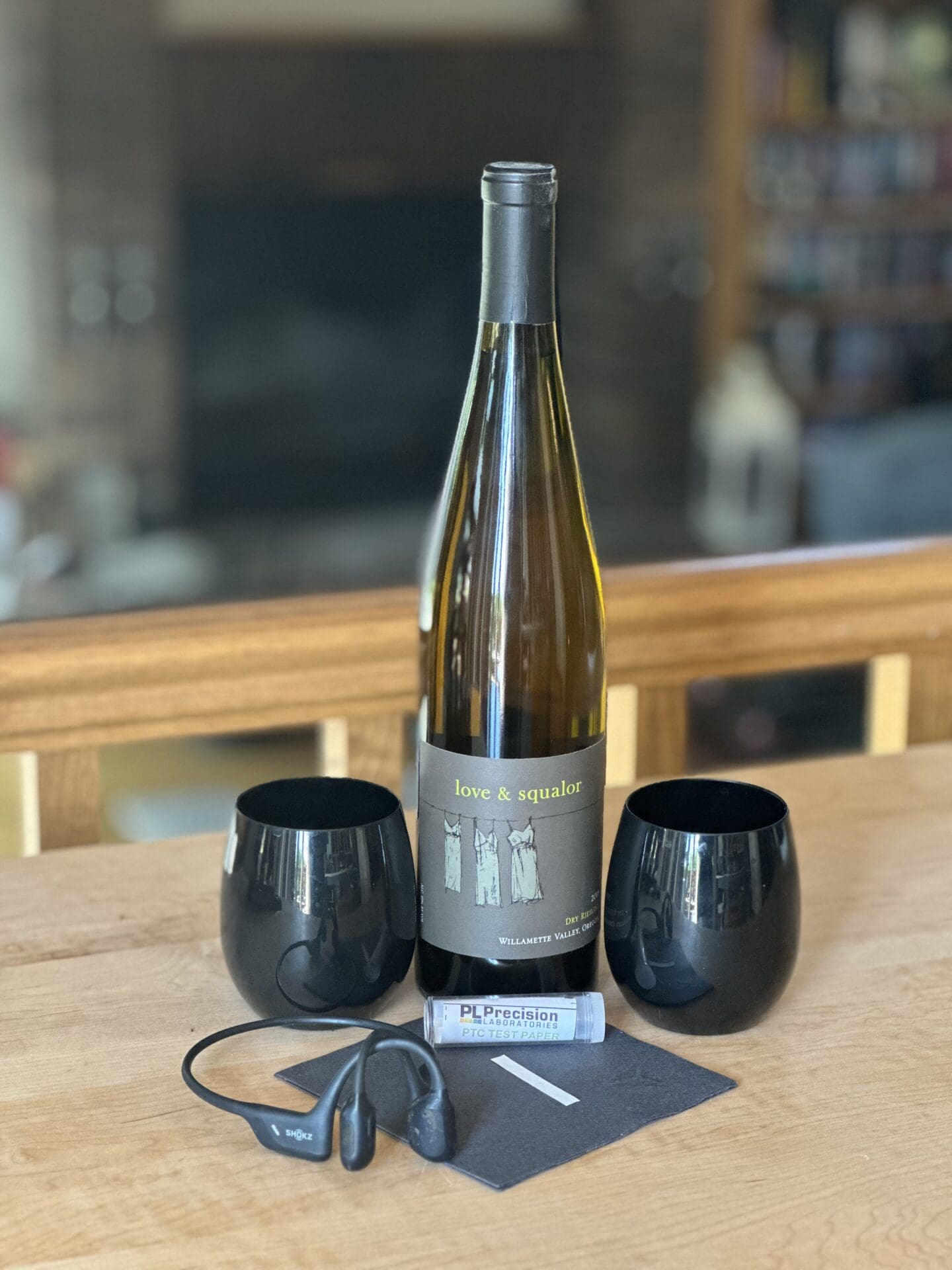
Participants taste a strip of PTC paper, a genetic screening tool that detects variation in the TAS2R38 gene, which encodes a bitter taste receptor. Some recoil immediately. Others detect mild bitterness. Some taste nothing unusual.
The reveal: those with the most intense reaction may be supertasters — individuals with heightened taste sensitivity written into their biology, not their experience. The person who walked in apologizing for only liking sweet wine suddenly has a biological explanation for their palate. Within sixty seconds, they are explaining their genetics to everyone in the room — confident, lit up, the most vocal person in the space.
I did not teach them a single thing about wine. I helped them discover something true about themselves.
The Music Experiment
Participants taste the same wine while different styles of music play. High-pitched, energetic music amplifies acidity and fruit in a crisp white; bass-heavy music deepens the body and weight of a full red.
Faces fill with disbelief, then delight. The wine hasn’t changed — but their perception has. Their senses are not passive receivers. They are active, interconnected, and constantly respond to the environment.
These are just two of many experiments designed to slow people down and help them notice what is happening inside them.
What Emotional Connection Actually Does
In these moments, something shifts.
People stop grasping for knowledge they don’t have. They stop apologizing. Instead, they turn inward, noticing what surprises them, what resonates.
Then they want to share it.
The quiet participant becomes the storyteller. The hesitant beginner becomes the authority on their own experience. This is what authentic engagement looks like and it is the most reliable way to convert a curious newcomer into a lifelong wine lover.
Wine offers far more than the liquid in the glass. It can facilitate mindfulness, creativity, memory, confidence, cultural curiosity, and play. It lowers the drawbridge between people.
None of these entry points require expertise. All of them create emotional resonance and emotional resonance is what builds a lasting relationship with wine.
A Call to the Industry
The drinker who feels something during their first encounter will come back curious to understand why and eager to experience it again.
The drinker who feels judged or unqualified will not return.
The solution is not another marketing campaign. It is a shift in philosophy.
Stop asking new drinkers to earn their place at the table.
Start showing them they were always welcome.
Stop teaching wine first.
Start revealing people first.
Once curiosity and emotional connection are established, learning follows naturally. When people truly love something, they will eventually seek to understand everything about it.
But that conversation comes later. First, let them fall in love.
Key Takeaways
- Lead with self-discovery, not education
New drinkers engage when they discover something authentic about themselves through wine. Design first touchpoints around personal revelation rather than product knowledge. - Replace the outward gaze with the inward turn
Put yourself in the place of the potential enthusiast and ask: What’s in it for me? Design experiences that reveal the answer. - Use experiential tools
Simple experiments like PTC taste tests, music pairings, and blending sessions create genuine “aha” moments that convert hesitant newcomers into emotionally inspired wine lovers. - Open the door first
Technical knowledge is compelling only after a relationship with wine has begun. Remove the barriers to entry — everything else will follow.
Carrie A. Boyle is a Certified Specialist of Wine, wine judge, speaker, and 25-year veteran of the wine industry with experience across retail, wholesale, and broker sales in Northern California. She is the author of The Mindful Glass: Hands-On Wine Lab (2025), a beginner-friendly wine workbook built on the belief that self-discovery is the most powerful gateway to a lifelong love of wine.