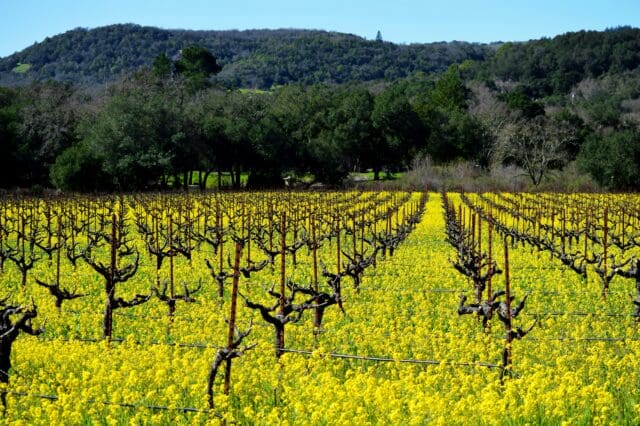
Anyone involved in California’s wine industry knows how dramatically the vineyard market has changed. Grape demand remains soft, contracts are harder to secure, farming costs continue to climb, and vineyard values have declined across many regions, with some areas experiencing much steeper declines than others.
That raises a question I’ve been hearing more often from vineyard owners:
If my vineyard is worth substantially less today than it was a few years ago, am I still paying property taxes based on yesterday’s market?
For some owners, California’s Proposition 8 may provide an opportunity to temporarily reduce their property’s assessed value when its fair market value falls below its Proposition 13 factored base-year value. The comparison is based on the property’s fair market value as of January 1.
The potential savings can be meaningful. Say a vineyard is currently assessed at $3 million but would realistically sell for $2.5 million today. If the county assessor agrees, that could reduce property taxes by roughly $5,000 per year at the basic 1% tax rate. If market conditions remain weak for several years, those savings can add up.
One important point: a Proposition 8 reduction is temporary. Once a property receives a decline-in-value assessment, the assessor reviews it annually. If market values recover, the assessed value can increase again—even by more than the normal 2% annual Proposition 13 adjustment—until it reaches the property’s factored base-year value.
The Real Challenge: Determining Market Value
The real challenge isn’t understanding Proposition 8, it’s determining what a vineyard is actually worth in today’s market. While many owners believe their property is worth less than it was a few years ago, determining exactly how much less has become one of the biggest challenges in today’s vineyard market.
In a typical real estate market, recent comparable sales provide a solid foundation for estimating value. Today’s vineyard market is different. Transaction activity has slowed considerably in many wine regions, leaving relatively few recent sales to analyze. Without a meaningful number of comparable transactions, establishing fair market value becomes far more challenging. That doesn’t mean a property’s value can’t be determined, it means arriving at a well-supported opinion of value often requires considerably more analysis than it did in a more active market.
County assessors generally rely first on comparable sales because they provide the strongest evidence of market value when sufficient data exists. But when comparable sales are limited—as is often the case in today’s vineyard market, they may also consider other accepted appraisal approaches, including the income and cost approaches, together with other available market evidence. The appropriate valuation approach depends on the type of property and the quality of the market evidence available.
That complexity is especially true for vineyard properties.

Every vineyard is different. AVA, varietal, vine age and condition, water availability, grape contracts, farming infrastructure, and, where applicable, winery facilities, production capacity, hospitality entitlements, and use permits can all influence market value. Two vineyards with similar acreage located just a few miles apart may have substantially different values because of those differences.
That’s why broad headlines about declining vineyard values don’t necessarily answer the question for your property. For purposes of a Proposition 8 review, what matters isn’t what happened to the market overall—it’s whether your property’s fair market value on January 1 was below its assessed value.
Don’t Wait to Understand Your Options
If you believe your property’s market value has declined, start by contacting your county assessor’s office and asking about an informal decline-in-value review. Filing deadlines and procedures vary by county, so don’t assume your county follows the same process as another.
Formal appeals generally must be filed during a filing period that runs from July 2 to either September 15 or November 30, depending on the county. Because deadlines can shift when those dates fall on a weekend or holiday, always confirm deadlines and procedures directly with your County Assessor and the Clerk of your county’s Assessment Appeals Board.
Don’t Overlook the Bigger Picture
Before pursuing a lower assessment, consider how the decision fits into your overall financial picture.
If your vineyard or winery serves as collateral for a loan, a Proposition 8 reduction doesn’t determine how your lender values the property—that remains a separate appraisal and underwriting decision. Still, if you’re telling the county your property’s value has declined significantly, it’s worth considering how that information could be viewed during future loan reviews or renewals.
If you have significant property-backed debt, it’s wise to discuss the decision with your lender, CPA, or financial adviser before filing.
Is It Worth Pursuing?
Not necessarily.
If you’ve owned your vineyard for decades, your Proposition 13 assessed value may already be well below today’s market value, leaving little or no opportunity for additional tax relief.
However, if you purchased during stronger markets, invested significantly in improvements, or simply believe your assessed value no longer reflects today’s market, it’s worth taking a closer look.
More importantly, don’t let Proposition 8 be the only reason to understand your property’s current value.
Whether you’re considering a tax appeal, refinancing, succession planning, a potential sale, or simply trying to understand where you stand in today’s market, having a realistic understanding of your property’s value is an important first step. In today’s market, that’s often easier said than done—but understanding your property’s current market value may be one of the most important business decisions you make.
For more information about Proposition 8 and decline-in-value assessments, contact your County Assessor or visit the California State Board of Equalization.

George Christie is a Vineyard & Winery Specialist with Golden Gate Sotheby’s International Realty (CA DRE #02282499). With more than 30 years of experience across nearly every facet of California’s wine industry, he specializes in vineyards, wineries, and wine country properties. Learn more about George’s background by visiting his full bio. This article is provided for informational purposes only and should not be considered tax, legal, or financial advice.