An artificial intelligence system once confidently told Daniel Webber that winemaker Philippe Melka makes Casa Piena. There was just one problem. He does not.
Webber, Wine Director at Wrigley Mansion in Phoenix and a Certified Sommelier pursuing his Advanced Sommelier Diploma, recognized the error, although someone without his wine knowledge might not have.
“That’s the danger: incorrect information can be presented just as confidently as correct information,” Webber says. “If you’re using AI professionally, you still have to know the subject well enough to recognize when something doesn’t look right.”
As generative AI finds its way into the wine industry, much of the conversation focuses on what the technology might eventually do. Wine professionals, however, are already incorporating AI into their daily work, from sales analysis and staff education to research, marketing and administrative tasks.
Their experiences raise a more immediate question. Where does AI make an experienced wine professional better at what they already do, and where should the technology stop?
More Capacity, Not Just More Speed
Mark Yaeger, Vice President of Stem Wine Company, Advanced Sommelier, GuildSomm International board member and AI technology entrepreneur, uses AI as what he calls a “working partner.”
In distribution, he may use it to turn scattered emails and business information into summaries and next actions. In education, AI can help transform detailed wine information into explanations appropriate for different audiences.
The principal benefit, Yaeger says, is not simply saving time.
“The biggest value is capacity: moving from information to useful action more quickly,” he says. “I think of that as augmented intelligence: extending what I can do with my experience.”
That experience remains critical. Yaeger cautions that AI can present generalizations as facts or draw from information that has not been adequately verified.
“Access to information and professional expertise are different things,” he says.
Expertise, he argues, comes through study, tasting, experience and having assumptions challenged. AI may make information easier to retrieve and compare, but the professional still needs to determine whether that information is accurate, relevant and applicable to a particular situation.
Efficiency Has a Human Limit
For Certified Sommelier and wine sales executive Greg Shepard, AI has become a practical business tool. He uses it to refine emails, analyze distributor sales data, prepare reports, identify billing inconsistencies, format pricing sheets and verify margins and markups.
The greatest benefit for Shepard is time, but he also sees a danger when efficiency begins replacing the relationships on which the wine business depends.
“AI can improve meeting preparation, target selection, and go-to-market strategy,” he says. “It can cause damage when efficiency replaces personal communication, listening, follow-through, and trust.”
AI may improve routing, follow-ups, emails and order verification, Shepard says, but it cannot replicate a strong representative’s emotional intelligence, lived experience and adaptability or the ability to make wine meaningful to another person.
There also remains one particularly stubborn technological limitation.
“Until it has a nose and mouth, it cannot taste,” Shepard says.
Giving Hospitality Time Back
Webber sees similar opportunities inside the restaurant. He uses AI for administrative work, training materials, marketing copy and as a study companion, while also seeing potential applications across research, education, wine-list management and even pairing.
He becomes more cautious when AI moves into direct interaction with guests.
“The guest experience should ultimately be a human one,” he says.
Webber believes AI could eventually become highly capable at interpreting winemaking styles, climate and vintage variation. It could also become particularly useful in preparing servers and sommeliers for guest interactions. Hospitality, however, requires more than access to information because it also requires reading a person in real time.
For that reason, Webber is most enthusiastic about AI working behind the scenes.
“The more technology can handle the repetitive work behind the scenes, the more time we can devote to the parts of hospitality that actually require human connection.”
Human Expertise in an AI-Enabled Industry
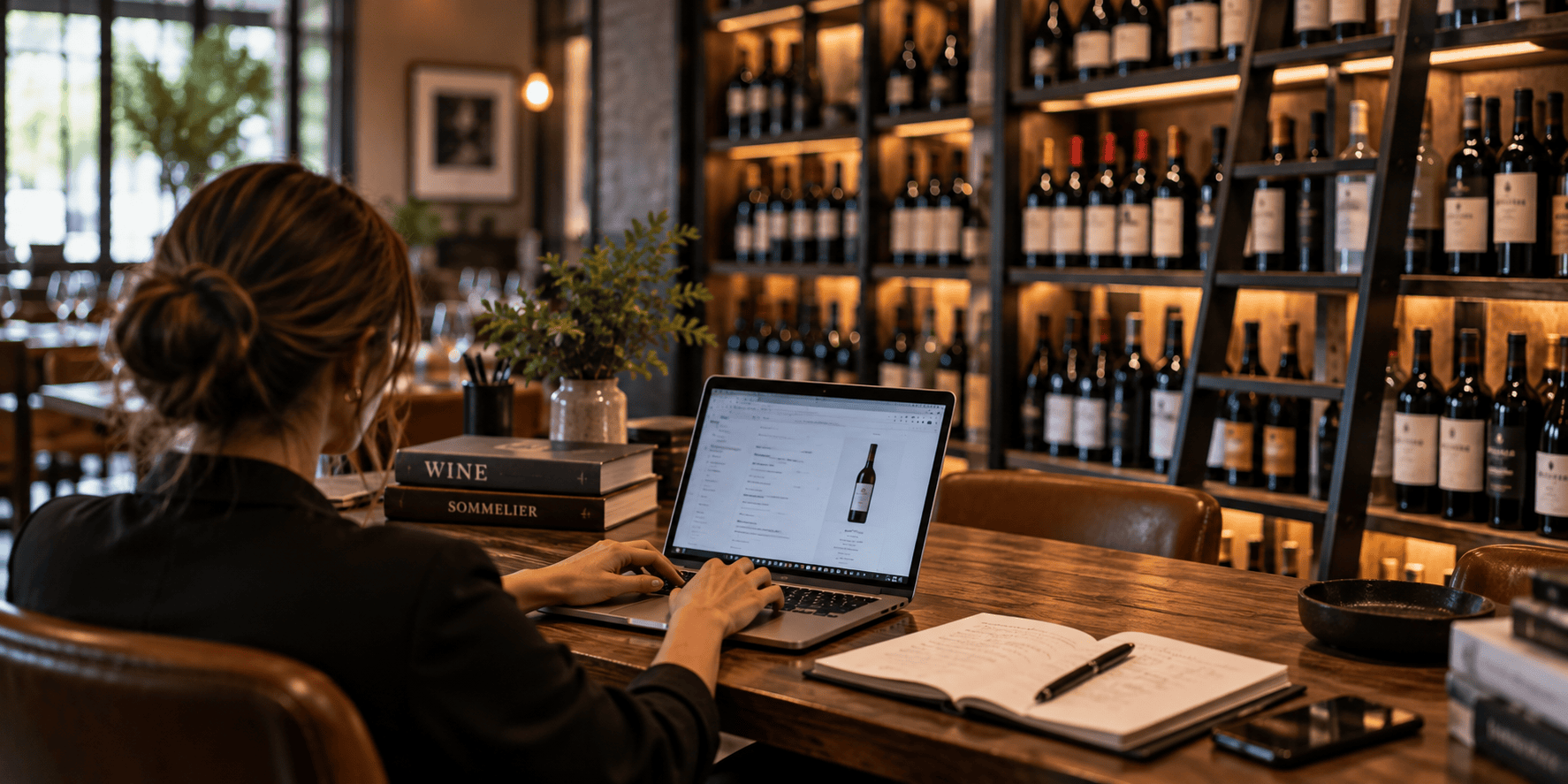
The experiences of Yaeger, Shepard and Webber reflect a central question in my doctoral research on human-AI collaboration. Does AI augment human thinking and expertise, or does it begin to replace the cognitive work through which expertise is developed and exercised?
The distinction is important in wine. AI can retrieve information in seconds, organize complex data and produce a convincing answer, but access to information is not the same as understanding it. A novice and an experienced wine professional may have access to the same AI system, yet they do not bring the same sensory memory, contextual knowledge or professional judgment to its output.
Webber recognized incorrect wine information because he knew enough to question it. Yaeger describes AI as augmented intelligence because his experience remains part of the process. Shepard reviews, verifies and refines what AI produces rather than surrendering professional responsibility to it.
Yaeger draws the boundary clearly.
“I would not delegate my palate, responsibility for a recommendation, or ownership of a relationship,” he says. “AI can help me prepare, but I still need to taste the wine, understand the person buying it, and stand behind the decision.”
This is where human-AI collaboration may offer the wine industry something more valuable than automation alone. Used as a substitute for thinking, AI risks distancing professionals from the knowledge, judgment and relationships that created their expertise. Used after human knowledge enters the process, AI can extend that expertise by increasing capacity, improving access to information and removing repetitive work.
The future of AI in wine therefore may not be a choice between technology and tradition. Winemakers, sommeliers, distributors and sales professionals have always adopted new tools while relying on knowledge accumulated through experience. Generative AI is another tool, although a remarkably powerful one.
The professionals interviewed here are not handing their expertise to AI. They are putting their expertise in front of it. AI can help analyze the information, organize the work and expand what a professional can accomplish, but humans still determine what is credible, what matters and what should happen next.
In wine, that final judgment still belongs to the person who can taste the wine, understand the customer and stand behind the recommendation.
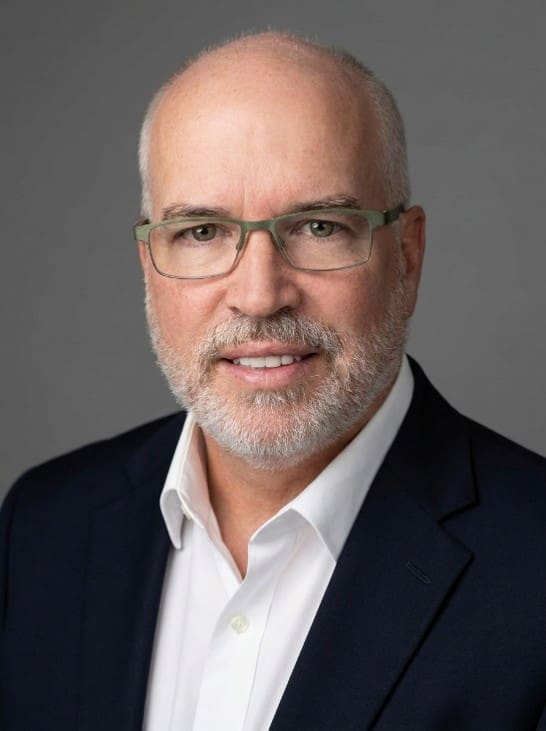
Paul C. Ringgold, MSc, is Head Sommelier at Lincoln Steakhouse at JW Marriott Scottsdale Camelback Inn Resort & Spa in Paradise Valley, Arizona, and Adjunct Faculty in the College of Humanities and Social Sciences at Grand Canyon University. He is a doctoral student and researcher in General Psychology, focusing on human-centered AI, learning, metacognition, and human-AI collaboration. An international lecturer on AI in education and hospitality, Ringgold is also the founder of Ringgold Digital, where he develops and implements applied AI solutions for hospitality, wine professionals, and education. His current work includes research, educational AI applications, and a book manuscript exploring human expertise and cognition in the age of artificial intelligence.