Making a case for high quality box-to-glass wine programs
By Stephanie Cuadra
Can you hear the incessant grumble? If you have a stake in the food and beverage value chain, it’s inescapable. What was once a subtle crescendo of murmurs and laments is starting to sound more menacing. It’s unsettling, yes. But let’s be honest: we knew this day would come. So here we are, collectively bearing witness to a hospitality industry in distress.
For those of us who produce wine, the plight of restaurateurs, sommeliers and GMs is cause for alarm. Any barrier to their success is naturally a threat to our own livelihoods. It’s therefore in everyone’s interest to start thinking differently. Relying on worn-out solutions to present-day problems will no longer do.
Redefining BTG
We know beverage alcohol keeps venues viable, with by-the-glass wine being a prominent fixture of most drinks menus. Yet the bottle-based model is riddled with inefficiencies — oxidation, waste, baroque margin tactics — and an even more subtle form of decay: cultural fatigue. When we say BTG, we invoke a system that has calcified around the glass bottle.
It’s time to adopt a functional paradigm, which begins with that familiar acronym — strategically reframed from “by the glass” to “box to glass.” This isn’t mere wordplay, either. It’s an invitation to reconsider the entire delivery system, from cellar to customer, while clearing the path to profitability.
The premise is simple: wine by the glass should delight guests while generating revenue. But the operational implications run deep. Consider the lifespan of conventional on-premise wine: the server opens a bottle, pours one or two glasses, and then begins a quiet race against spoilage. Within three days, if not sooner, what remains in the bottle is past the point of acceptable service.
Boxed wine alters this equation. With 30+ days of freshness after opening, the urgency is gone. A three-liter box (the equivalent of four standard bottles) can be poured at whatever pace the guest flow dictates. For the food and beverage manager tracking inventory, this means predictability. For the wine director curating a list, it offers freedom to make more adventurous selections. For the bartender working a midweek shift, it lessens the workload.
Quality wines available
A reasonable skeptic will ask, but is the wine any good? The question is fair, and the stigma around boxed wine is real. But this has nothing to do with the format itself. What had been missing, for too long, was commitment from serious producers to put serious wine in alternative packaging. Today, a growing cohort of respected wineries recognizes that well-crafted boxed wine represents an opportunity — a way to reach consumers where bottles are missing the mark, while still upholding the standards that define their brands.
In the quest to put this model to the test under the pressures of real-world service, we found the perfect proving ground in the Intermountain West — where Utah’s fast-paced, ultra-diversified economy is giving rise to a new demographic that is neither burdened nor jaded by the way things have always been done, particularly with respect to wine consumption. Thanks to a cadre of noteworthy establishments — from James Beard-nominated fine dining destinations to craft-conscious neighborhood watering holes — the box-to-glass thesis is working.
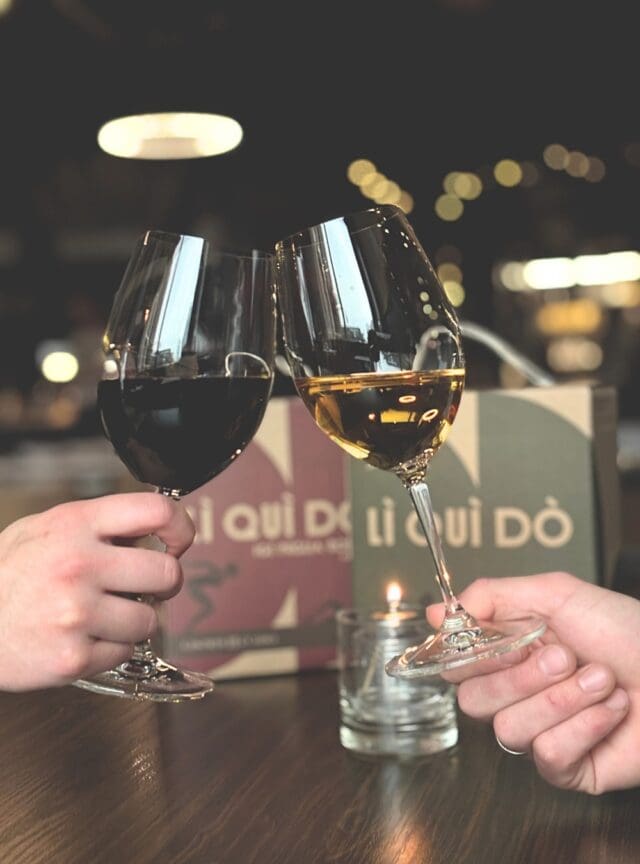
And the numbers stand up to scrutiny. A recent Terrestoria Wine Imports poll of Utah bars and restaurants featuring Lì Quì Dò Rosso and Lì Quì Dò Bianco (boxed wines produced in Puglia) reveals consistent markups at around 500%. This indicates sustainable margins built on a format that eliminates the most common sources of erosion.
Customary BTG scenarios operate on a rough heuristic where a single glass pour should cover the cost of the bottle, assuming the residual contents amount to profit. But when the pours that never happen are taken into account, effective margins shrink substantially. Boxed wine, by contrast, lets the house monetize nearly every ounce.
“Pouring Lì Quì Dò lets us offer a lower price point while maintaining high quality throughout our wine menu,” says Josh Van Gorden of Felt Bar & Eatery in downtown Salt Lake City. “For our bar program, which strives to be approachable yet sophisticated, it’s a perfect fit.”
Appealing to new consumers
There is also an environmental dimension worth noting. The carbon footprint advantage of boxed wine over glass bottles is undeniable — more efficient to pack, lighter to ship and increasingly recyclable. For companies that factor sustainability into their choices, this matters. Eco-friendliness needn’t be the central theme, but it is a genuine ancillary benefit that aligns with popular consumer sentiment.
If the operational case speaks to today’s needs, the generational case speaks to tomorrow’s survival. Younger drinkers aren’t necessarily avoiding wine, but they aren’t inclined to trouble themselves over it, either. While the ceremony of uncorking and swirling still enchants some, it alienates many more. But the barriers we put up can just as easily come down. Boxed wine, unburdened by formalities, is a step in that direction.
This is not an indictment of bottled wine. Great bottles will always have their place, their context, their moments of transcendence. Premium boxed wine fortifies that timeless tradition by ensuring more people remain engaged with wine at all — in a format that is easy to share and even easier to like. Consider it an insurance policy for the future of wine, with an immediate return on the investment.

____________________________________________________________________
Stephanie Cuadra
As co-founder of artisan winery Lasorte Cuadra located in the Valle d’Itria of Puglia, and owner of Terrestoria Wine Imports in Salt Lake City, Stephanie Cuadra writes not as a neutral observer, but as an active practitioner across diverse areas of the global wine industry.