Making a winery website more accessible is not just a legal or ethical imperative. It’s also good business.
By Mike Madaio
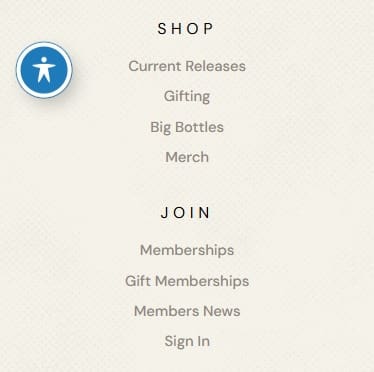
Perusing many winery websites (as the web design and wine geek in me is wont to do), I’ve recently noticed the increasing prevalence of accessibility widgets: those little pop-ups, overlays or buttons in the corner of the page that promise to make a website ADA compliant and easier to use for anyone with visual or motor skill impairments.
The appeal to wineries is obvious: a quick, low-effort solution to a complex issue. But research and expert opinion suggest that these tools often do more harm than good, both for website visitors and for wineries themselves. In fact, the available evidence strongly suggests these widgets should be avoided entirely.
New Barriers for Users
While accessibility widgets are marketed as a way to help website users, they often create new barriers, particularly for those who rely on assistive technology. Some, for example, introduce incompatible or primitive screen-reader modes that conflict with popular software such as JAWS or NVDA. Others disrupt keyboard navigation, making it even more difficult to navigate simple forms or menus. These widgets also struggle with creating meaningful alt text, which offers descriptions of online images for blind or low-sight users.
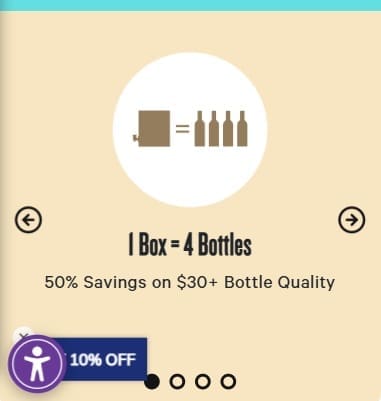
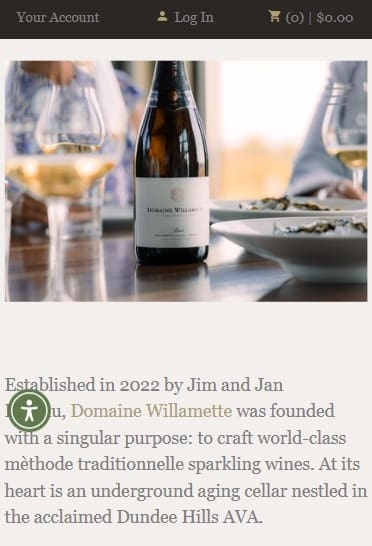
On smaller screens, such as phones or tablets, these overlays can even obscure content for all users — not just those using assistive technology — creating frustration and reducing usability for everyone.
Expert and User Impressions
Real-world research and feedback confirms these concerns. In a study conducted by the ACM Digital Library, for example, blind participants reported that “the increasing prevalence of overlays, alongside the accessibility barriers in the overlays themselves, interrupted their day-to-day activities.”
Similarly, a WebAIM survey showed that 69% of web accessibility practitioners rated widgets as “not at all” or “not very” effective, and 72% of respondents with disabilities reported the same, with only about 2% of the latter group choosing “very effective.”
Online commenters have been even more blunt. One wrote, on the accessibility subreddit, “anything that sells you an overlay or a quick solution to fixing accessibility issues should be avoided at all costs… you’re never going to fix accessibility issues with a plugin.”
Another aptly described widgets as “accessibility theater,” pretending at accessibility without benefiting the end user.
A third summed things up succinctly: “[They’re] modern-day snake oil. You either need to learn how to fix things or hire someone to help you.”
The Risk of Misleading Winery Owners
These widgets can foster the mistaken belief that websites using them are fully accessible, while significant gaps often remain. In a 2022 study that compared several popular tools, some offered partial improvements — accessiBe, for example, enhanced keyboard navigation — but none fully complied with WCAG Level AA standards, the bare minimum measure.
It’s particularly frustrating, as a design professional, to come across a site that features an accessibility widget, yet fails even the most basic design check, such as having sufficient text contrast. But this at least is further illustration that these widgets alone are not enough.
Relying solely on these widgets can also increase legal risk, as regulators have often found them to be insufficient under the ADA and similar laws. AccessiBe, for instance, was fined $1 million by the U.S. Federal Trade Commission in early 2025 for misleading claims that its product could make any site compliant. Looking at just the first half of 2020, as another example, UsableNet’s research team found that nearly 100 companies whose websites featured these widgets were sued over failures to provide adequate accessibility.
A Better Approach: Built-In Accessibility
The fundamental problem here is that these tools are superficial band-aids. They do little to address the underlying causes of inaccessible websites: insufficient contrast, broken keyboard navigation and unlabeled form fields among them. Without addressing these foundational issues, widgets cannot deliver meaningful accessibility.
Now, the twist: integrating accessibility directly into website design, it turns out, benefits all users, not just those with disabilities. A study published in 2025, for example, found that enhanced website accessibility — such as adjustments to letter, word and line spacing or the removal of distracting content — significantly improved cognitive engagement, even for users without disabilities. This can be especially true for older users who have even slightly diminished eyesight or motor skills, which remains a key demographic for the wine industry, despite our tendency to fret about younger consumers.
What Wineries Can Do
For winery owners, the takeaway is clear: don’t rely on quick-fix widgets. Instead:
- Ensure proper text size and contrast. Foreground text should always stand out clearly from the background and be easy to read, even for those with reduced eyesight.
- Provide meaningful alt text for images. Wine labels, tasting notes and event photos should be described in ways that convey context for those who can’t see them.
- Check keyboard navigation. Users should be able to move through the site logically using only the keyboard.
- Scan with free tools. WebAIM offers several easy-to-use tools that point out common accessibility issues.
- Hire a web developer who understands and values proper accessibility. If they suggest installing a widget instead of addressing the underlying issues, that’s an obvious red flag.
In sum, making a winery website more accessible — the real way, not the shortcut — is not just a legal or ethical imperative. It’s also good business. Accessible sites attract more visitors, improve user experience for everyone and protect companies from unnecessary legal exposure.
Mike Madaio
Mike Madaio is a longtime user experience and ecommerce pro focused on helping wine businesses improve key website metrics such as conversion rate and abandonment. To connect with Mike further, check out his vlog on winery websites or his UX consulting business.