One of the first things to do (if you don’t know this stat already) is put the position of tasting room manager in perspective. If your tasting room were a distributor, how would it rank in terms of dollars earned, not bottles sold? Frequently, the profits from the tasting room and its wine club place it in the top tier of distributors, usually in the top three.
There are a few caveats to this statistic. For example, it applies to small and medium-sized wineries, not the big companies like Beringer or Domaine Chandon. But most wineries in the U.S. are small and medium-sized. Second, you must have a track record of over five years.
I’ll never forget a person who was in my one-day class at UC Davis. They didn’t listen to this last point, and when they asked their financial controller where they ranked, he said, “Dead last.” Why? Because the tasting room and wine club were less than one year old.
My point is that you’re not just hiring a tasting room manager; in essence, you are hiring the president of your second-biggest distributor (or first or third). This puts hiring a new manager into a whole new perspective.
Often, I’ve seen wineries replace a tasting room manager who is moving out of state with the assistant manager. “Well, she has been a great manager, but Ellen, the assistant manager, has been a good fit for the last four years, and we can bring her up to speed on any areas where she is inexperienced. So, let’s hire her as manager.”
Maybe that’s true, but you would be upset if you found out the owners of one of your biggest distributors were that casual about picking a new president. Maybe Ellen is the right choice, but make sure you interview other great candidates, not just Ellen.
The second thing to do is let the candidates know ahead of time that, in the in-person interview, you want them to be as specific as possible, using real-life scenarios from their past if they can.
I have long contended that the most important component of a well-run tasting room (besides the wine quality) is the staff. So, my interviews for a manager start with staff-related questions.
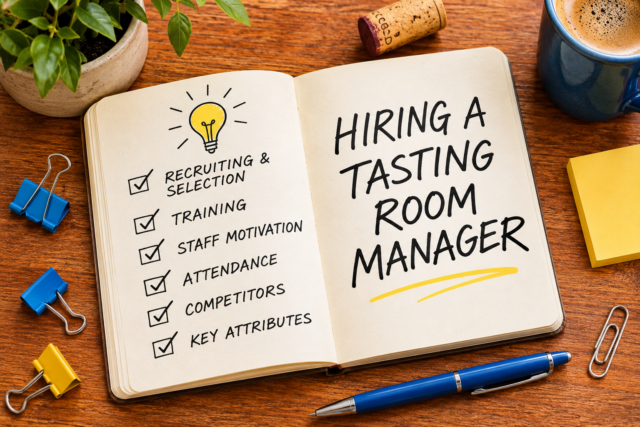
“How would you recruit and select staff?”
Again, I’m looking for detail. For example, the candidate reels off a list of recruiting companies and mentions that they are personally always recruiting, not just in the community but also among people in other businesses who work with the public, like waiters or bank tellers.
People who are exceptionally gregarious in other fields can successfully work in tasting rooms. Remember my old mantra, “I can teach you wine, but I can’t teach you friendly.” The extra answer makes them a more appealing prospect.
In addition, the candidate mentions interview questions they like to use and why. These are the kinds of specific, involved answers I’m looking for. Chances are Ellen is the right fit, but now you have more certainty with your selection.
“What kind of training would you use?”
Again, I want lots of detail about training for new staff and ongoing training for the whole staff. What kind of written or verbal training do they prefer? How hands-on are they with new staff? The list is endless.
“What would you do to keep staff motivated?”
The many answers to this would range from little things like acknowledging staff birthdays to bigger topics like the best, most effective incentives.
“What techniques would you use to increase and maintain quality attendance?”
There are various replies to this vital question, and you should really expect a candidate to know as many as possible, especially since your ad for the position mentions that the candidate needs at least two to three years of experience as a manager at another tasting room.
“What tasting rooms in our area are doing a great job and why?”
I’m testing how knowledgeable they are about your area and your competitors. Again, the extent of their insider knowledge is an important component of your final selection.
“What are the attributes of a great tasting room manager?”
Ask for their thoughts on this and encourage them to use examples from their own history as a tasting room manager.
Evaluating the candidate in your tasting room
Lastly, give the candidate a pad and pen and tell them to spend no more than five to 10 minutes unsupervised in your tasting room. After those five to 10 minutes, they should tell you what they like and what they would change.
I’m testing how fast they are on their feet and how much experience they have in terms of the physical layout of a tasting room. Also, sometimes you learn great tips from someone who doesn’t end up getting hired.
As always, make sure your H.R. person or department is OK with using these questions and techniques.
Remember, you are hiring a very important employee in terms of how much profit they add to your winery.
In a previous article, Interview Questions That Help Identify Great Tasting Room Staff, I shared some of my favorite questions and techniques for identifying the right people to work in your tasting room.
Craig Root has more than 30 years experience working with tasting rooms. For more than 13 years, he was first staff and then a successful manager. In the last 20 years, he has consulted with more than 150 tasting rooms (including over 90 start-ups, mostly in the United States but also in China, Canada and France). He is the only person who lectures on tasting room design and management at UC Davis in its continuing and professional development division.