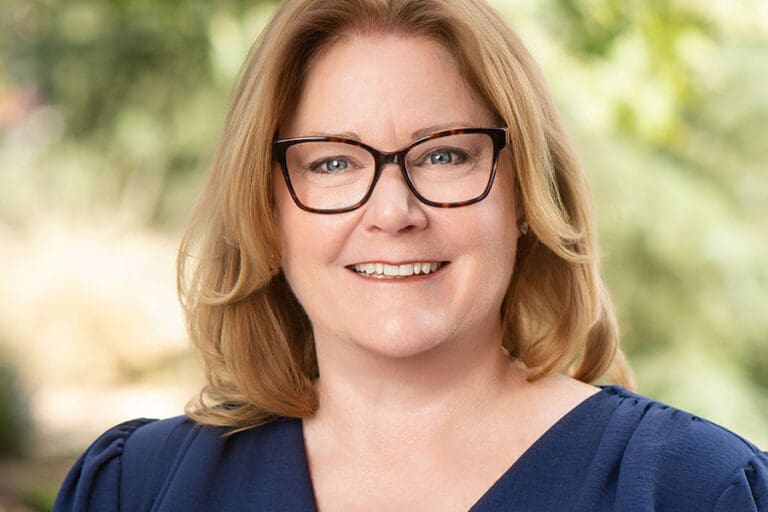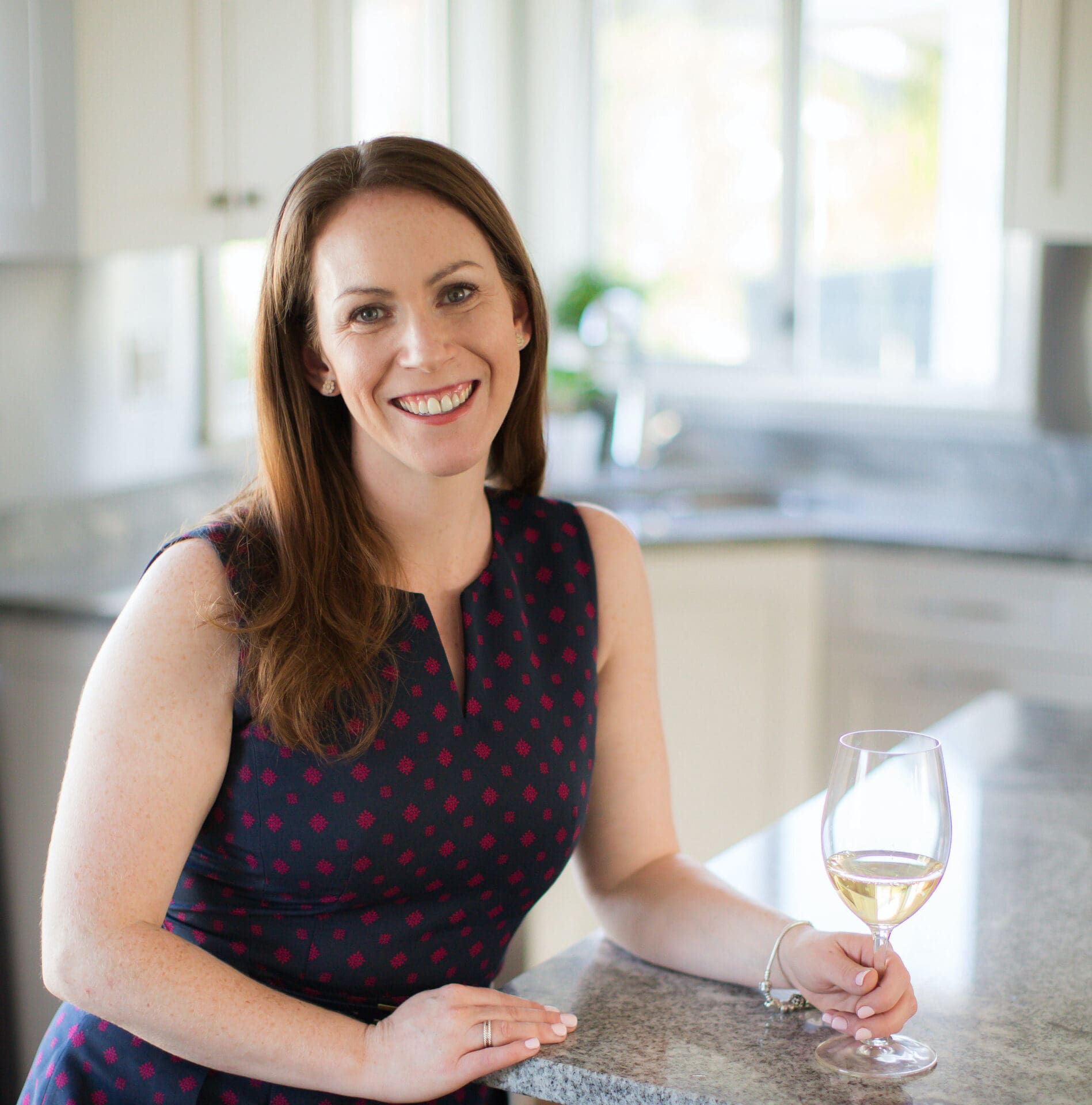
Nicole MacKay is a writer and editor specializing in wine, food, and travel. She brings a wealth of expertise and creativity to the wine industry as managing editor of Wine Folly. With over 20 years in media, her work appears in top publications like Decanter, Full Pour, and Yahoo! Canada.
How did you come to wine, and to wine writing? Why write about Wine?
I entered wine through the trade, working in marketing for an importer in Western Canada. My education came from suppliers, technical research, liquor board submissions, and in-store tastings. Writing came later as a stay-at-home mom with my twins. My creative outlet and sense of self, outside of being a new mom, was born through the creation of my website: SocialSips.ca. It took a few years of (admittedly terrible) blog posts to muster the guts to pitch a local publication and (gasp!) actually get paid to write. What I’ve learned along the way, and why I write about wine, is that every story and angle has one purpose: to sell wine. Maybe not a specific bottle or winery (although, certainly sometimes), but the idea of wine; the romance behind a region, the history of a multi-generational producer. Whether one imbibes or not, the whole point is to convey a good story, and that can be done in infinite ways through wine.
What are your primary story interests?
Stories about people and connectivity. What one winemaker is doing in New Zealand could be useful to another in the Okanagan. A trending consumer style in London can shape a wine list in Toronto. Those threads of connectivity make the wine world very small, and infinitely big at the same time.
Tell us about your work as managing editor of Wine Folly? Staff or freelance?
I work with Wine Folly on a long-term contract, focusing on top-of-funnel content strategy such as newsletters, social media, and maintaining the SEO library. What surprised me most is the depth of infrastructure behind the scenes: data analysis, e-commerce strategy, partnerships, and platform development, all executed by a remarkably lean and talented team.
Is it possible to make a living as a wine writer today? If so, how have you succeeded?
It’s possible, but not by writing alone. Modern wine communicators operate across multiple disciplines: editing, consulting, teaching, presenting, strategy. The industry rewards range and adaptability, not narrow specialization. The real challenge isn’t competition; it’s pace. Technology, media formats, and consumer behavior shift constantly, so longevity belongs to people willing to evolve.
What would people be surprised to know about you?
I love TV and movies. Not just watching, but the industry. I’ve worked as a background actor and later as a radio and television host, and I still follow film and television production closely. Now, my kids and I plan which movies we want to see on release weekends. It’s great escapism, and really fun to introduce nostalgic shows and films from my childhood to them.
What haven’t you done, that you’d like to do?
Travel is a huge priority for me and my family in the next 10 years. Not just wine regions, but food and culture experiences in unexpected places. And kid-friendly travel; seeing my kids’ faces light up whenever we’re somewhere new is the absolute best feeling. We have a giant pin map of all the places we’ve been to, and we talk constantly about where we’re going next.
What is one thing you’d like your readers to learn from your writing about wine?
Enjoyment doesn’t require expertise. Wine isn’t a competition, and curiosity is more valuable than credentials.
If you weren’t writing about wine for a living, what would you be doing?
I honestly think I have the best job; I’m doing what I love, and even get to travel sometimes, while still being able to take my kids to skating or hockey practice. Even if I won the lottery tomorrow, I still think I’d be pitching stories and writing drafts in arena stands.
Can you describe your approach to wine writing and/or doing wine reviews?
I publish reviews selectively; if I don’t have something distinctive to add, I don’t rush to publish. For features, my filter is always angle: what perspective can I offer that isn’t already saturating search results? Different platforms demand different approaches — some reward search value, others immediacy and headlines — so strategy starts with understanding the publication’s objective.
How do you develop and collaborate with sources for story ideas?
The strongest ideas derive from in-person connection: at events, or — if I’m lucky — in the vineyard or cellar. I spend 95% of my time behind a desk in Calgary, Canada. Anytime I’m immersed in a region, I’m flooded with ideas and angles. One conversation may ignite an idea; rigorous research determines whether it deserves publishing.
Do you work on an editorial schedule and/or develop story ideas as they come up?
For Wine Folly, I work on a strict production calendar. Freelance work is more fluid, with pitches developing as ideas surface. I deliberately cap that workload, including writing for my own website, at about twenty hours a week.
What are your recommendations to wineries when interacting with journalists?
Journalists aim to tell the best version of your story. I understand — and sometimes begrudge — larger entities having to get approval for quotes or vet narratives, but it really is better when we can be organic with one another. As I said before, we’re both here to do one thing, and that’s to sell (the idea of) wine.
What advantages are there in working directly with winery publicists?
Publicists are extremely valuable; they can gain access that one might not otherwise have and help enforce response times. They’re integral to the process, especially being based in Canada; I simply don’t have the same access. I have to work that much harder to connect and be a voice in the mix.
If you take days off, how do you spend them?
I’ve only learned in the last year or two how to take a day off. Before it was more, more, and more (pitching, researching, and drafting). But now I set office hours so that I can focus time with my kids. I’m often found chauffeuring them between ice rinks. But we also love exploring new cafés and restaurants together or playing board games and doing puzzles. I’m savoring these years they still enjoy spending time together.
What is your most memorable wine or wine tasting experience?
Back when I was still in the import world (circa 2013), one of our suppliers was Pol Roger Champagne. My husband and I took a personal trip to Paris and arranged a day trip to Epernay, where we had a private tour of the underground cellars and a vertical tasting. This was before I’d ever been hosted anywhere; and I knew in the moment how epic an experience it was. They were very kind to send us home with a bottle of the 2002 Brut, which we just recently enjoyed on our 15th wedding anniversary.
What’s your cure for a wine hangover?
Do your best to prevent it: have at least one glass of water for every drink with alcohol. Limit the cheap stuff (if you’re spending more on it, you’ll subconsciously want to savor it more, maybe?). Take two Advil before bed and two more when you wake up in the middle of the night to go to the bathroom (because you drank so much water). If all that fails, sleep it off the next day with Brooklyn 99 on the TV in the background.

Carl Giavanti has been a Winery Publicist for over 15 years, and in business marketing and public relations for over 30 years. His background in tech, marketing and project management informs his role as a publicist and wine journalist. Clients are or have been in Willamette Valley, Napa Valley, and Columbia Valley https://carlgiavanticonsulting.com/
Today, Carl is actively writing about his wine travel experiences for several publications. Check out his author pages here: https://linktr.ee/carlgiavanti