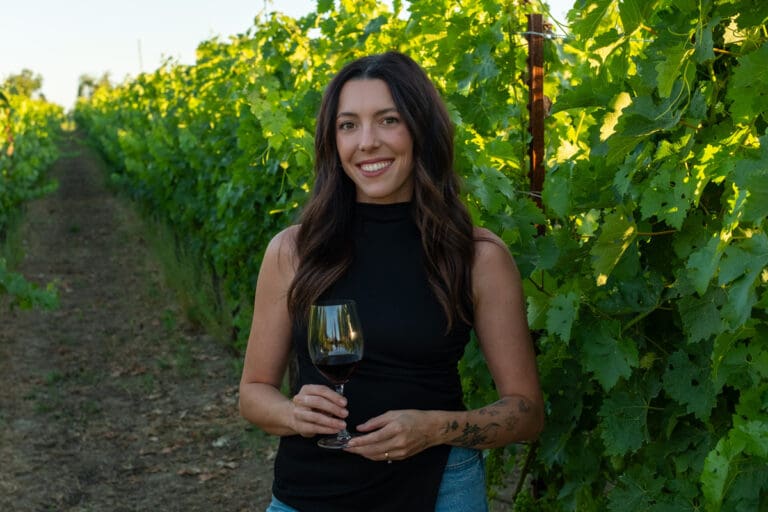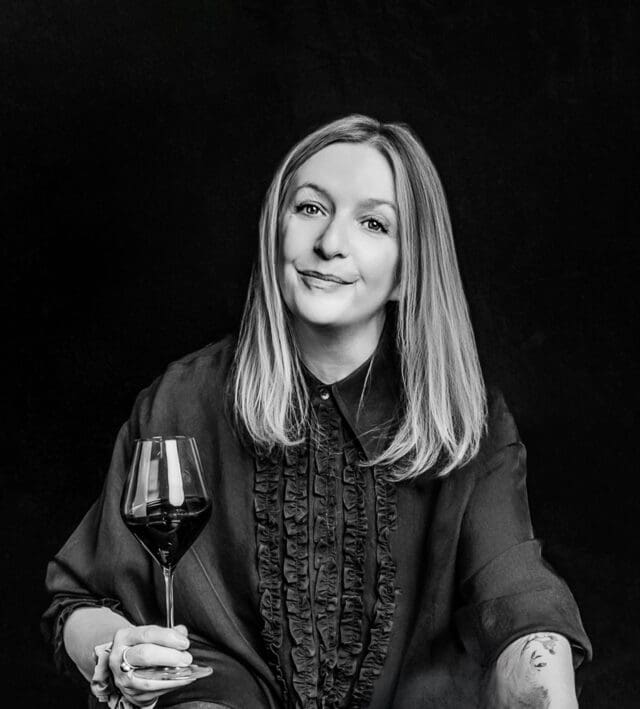
Alana Lapierre is Editor for Eastern Canada & International at VineRoutes, a regular contributor to Canada’s 100 Best Restaurants and Best Bars, and a freelance writer, editor, and consultant. Her work explores the intersection of wine, food, travel, and culture. She has written, photographed, and contributed to a range of print, digital, and radio outlets, including Wine Enthusiast, Forbes, Saveur, Elle Québec, and CJAD 800 Radio. WSET Level 3 certified and Le Cordon Bleu trained, she also works behind the scenes as a researcher, ghostwriter, and editorial partner. In a previous, and sometimes still parallel, life, she worked in global executive roles in corporate communications and human resources. Currently based in Montreal, she has lived and worked across North America, Europe, and the Middle East, and continues to travel, planning almost all of her trips around wine regions (much to her friends’ annoyance). When not working or writing about wine, she can be found with a glass of Cabernet Franc in hand, at a favourite wine bar or at home with her motley crew of rescues: Cinta, a three-legged Maine Coon cat, and her two pups, Birdy (a blind Setter-Lab-Golden mix) and Clooney (a Basque Français Pyrenean-Anatolian Shepherd-Weimaraner blend). Find her at www.alanalapierre.com and musing on all things wine, food, and life @alanaloveswine.
How did you come to wine?
Ah wine… It’s been a long-standing passion of mine. I started planning trips, restaurant outings and tastings around in my early twenties. It began after (and I still recall the what, where, and with whom) a glass of Beaujolais (Brouilly) gave me an emotional reaction. A bit of a lightbulb moment. From there, it escalated. I started planning trips around wine regions, choosing restaurants for their lists, saying yes to tastings before I fully knew what I was tasting (or how to taste, for that matter). You get the idea.
Wine is so much more than a drink. It’s what you celebrate with, what you gather around, what stretches a dinner into a five-hour evening. As cliché as that sounds, it’s true. Most of my life’s big moments, the beautiful and the difficult, I can trace back to a shared bottle. It’s a bit of a rabbit hole. The more I learn, the more I realize how much I don’t know. What holds me most are the people, the growers, the winemakers, the teams behind the bottle. It’s all endlessly fascinating.
What are your primary story interests?
The people. Always the people, behind the vines, the wines, and around the table.
As much as I love the geeky side, and I do, it’s the human layer that keeps me hooked. The psychologist in me, no doubt.
You’ve written, radioed and photographed extensively for multiple publications in North America? How did you get started, how long ago, and what are your plans going forward?
Somewhat labyrinthically — and very much through the back door.
I (half) joke that I fell into wine to keep me sane. After graduate studies in psychology, I moved into industrial-organizational work, my “other life” in global human resources, working across mergers, acquisitions, and carve-outs in private equity and venture capital environments, which is a slightly more elegant way of saying long hours and a lot of airports (very Up in the Air). It came with a lot of travel, a lot of meals out, and a growing interest in wine. A big part of that role was communications, media briefs and public statements, which often meant writing under the voice of CEOs and senior stakeholders. Ghostwriting, really.
I was taking wine courses on the side, mostly for fun. In 2018, I completed WSET Level 2, then WSET Level 3, still with no real intention of doing anything professionally with it. Then, over dinner in New York, I was introduced to a magazine editor who asked if I had ever considered giving editorial writing a try. And so I did, starting with editorial work and ghostwriting.
And here we are, eight years later. Much less corporate HR, much more wine and food writing.
Happiest accidental detour, by far.
You’ve lived and tasted wine all over the world. Tell us how and why?
Wanderlust. Pure and simple. If you ask my mother, she’ll say it’s the Sagittarius in me. My “other life” job had me travelling a lot, probably too much, splitting time between Montreal, New York, Toronto and London, with a few years living abroad in the Middle East and Paris. As my interest in wine grew, it was only a matter of time before I started planning most of my trips around wine regions. It was a slippery slope.
What would people be surprised to know about you?
I’m slightly freaked out by béchamel sauce. A bottle of sparkling once exploded in my car while I was attempting to smuggle it across a border, country unnamed, much to the amusement of the customs agent (luckily for me, and if you know me, perhaps not entirely surprising). And I accidentally hugged Steven Tyler in a coffee shop. It’s a long story.
What haven’t you done, that you’d like to do?
Visit the Loire Valley, for many reasons, but as an avid Cabernet Franc lover it’s high on the list. Ski at Portillo, Chile. Learn to speak Italian. Move to Nova Scotia.
Can you describe your approach to wine writing and/or doing wine reviews?
It depends. If I’m writing editorial or ghostwriting, it’s often responsive to a brief. For my own work, it starts with a base idea, a story I want to tell, and builds from there. I’m not much of a formal planner. It tends to take shape as I write, then gets reorganized once I see what it wants to be. Not the most linear process, but it works for me.
How do you develop and collaborate with sources for story ideas?
That’s my favourite part! Usually upstream, while planning a trip. I’ll reach out to wineries, consorzios, associations, PR teams, and personal contacts. Then it’s in the discussions, the questions, the listening, finding the quotes that carry meaning, the story underneath. That’s where it starts to come together. That said, I’m very clear: I’m not a journalist, I’m a writer. I’m not uncovering stories, I’m telling them. That’s a very different thing.
Do you work on an editorial schedule and/or develop story ideas as they come up?
Both. There is structure and an editorial schedule with outlets like VineRoutes and Canada’s 100 Best, but I also pitch constantly, often based on travel or ideas. Probably too much. Apologies to my editors.
Do you post your articles on social media? Why is that important?
I adore Instagram. Stories, at least. I keep having good intentions of actually posting, but so far that’s remained at the intention stage. They’re pure storytelling. A visual diary. I can look back and know exactly where I was, with whom, and what I was doing on any given day. I love photography, so it’s a medium that combines all of my passions. My rescue trio, Birdy and Clooney (two ex-street dogs from Lebanon) and Snax (my bossy, three-legged Maine Coon), tend to make frequent appearances as well.
What are your recommendations to wineries when interacting with journalists?
Right person, right time, right story. The best winery visits or press trips are the ones where that alignment is clear. And that’s as much, if not more, on the writer to define upfront. If I’m working on a regional piece that reads “places to see, eat, drink,” the last thing I want is to take up a winemaker’s time when I don’t need technical detail. People forget how many hats are worn at a winery. Time is the most valuable one.
What advantages are there in working directly with winery publicists?
They usually have most of the background information on the winery and can connect you with the right people quickly. They also tend to be food and wine lovers themselves and are often a great source of local intel.
What frustrates you most about working on winery stories and/or wine reviews?
Generic wines dressed up in fancy sheep’s clothing. Being “sold” to. Data inaccuracies on the SAQ and LCBO websites.
Which wine personalities would you most like to meet and taste with (living or dead)?
Maybe not wine personalities, but historical wine lovers. Thomas Jefferson, Benjamin Franklin, Charles Baudelaire, Anaïs Nin, and Ernest Hemingway, all gathered around the same table. With me, of course. And wine. Obviously.
If you take days off, how do you spend them?
People think I’m an extrovert, but really I’m a highly sociable introvert, so recharging is essential. Give me sweatpants, a fire, a stack of books, a glass of wine, and my dogs, and I’m a happy camper. I also love running, hiking, and back-country skiing.
What is your most memorable wine or wine tasting experience?
Most memorable wine: Maison Louis Latour Gevrey-Chambertin. It was my beloved paternal grandmother’s favorite, reserved for special occasions, and it takes me straight back to childhood.
Most memorable tasting: any tasting with Thomas Bachelder at the Bat Cave.
Comfort wine: the one I open every week for pizza Friday. Cheap, commercial, nostalgic. My wine version of Kraft Dinner. A guilty pleasure. I’d have to swear you to secrecy if I told you what it was.
What’s your favorite wine region in the world?
Can I choose a few? In Canada, the Annapolis and Gaspereau Valleys in Nova Scotia. Globally, Stellenbosch, Priorat, and Bierzo.
Do you have a favorite wine and food pairing? Favorite recipe/pairing?
Sea salt chips and sparkling wine. Hands down. Always.
Best wine advice that you’ve been given?
My first-ever wine tasting training, way, way (way) back. A very serious and austere man, which to my twenty-something self, read as both terrifying and impressive, told us to take notes on what was going to be the most important, truth-imbued piece of wine information ever imparted to us. We all pulled out pen and paper and waited breathlessly for his wisdom.
He told us to memorize these four criteria for assessing wine.
Dramatic pause.
Good / Not good. I like it / I don’t like it.
Best. Advice. Ever.
And really, all you need to know. I still have that piece of paper framed in my office.

Carl Giavanti is a Winery Publicist in his 16th year of consulting. Carl has been in business marketing and public relations for over 30 years; his background in tech, marketing and project management informs his role as a publicist and wine writer. Clients are or have been in Willamette Valley, Napa Valley, and Columbia Valley https://carlgiavanticonsulting.com/ He also writes for several wine and travel publications https://linktr.ee/carlgiavanti