By Carl Giavanti
Randy Caparoso is a longtime wine professional, journalist and photographer based in Lodi, Calif. He is the author of Lodi! The Definitive Guide and History of America’s Largest Winegrowing Region (2022), Editor-at-Large and Bottom Line columnist for The SOMM Journal (2008–present) and a regular contributor to the Lodi Winegrape Commission. Since 2021, he has also written OpEds for Wine Industry Advisor.
In 2024, Caparoso was named an Old Vine Hero for Communications by the UK-based Old Vine Conference and recognized as a Wine Business Monthly Industry Leader. He is a member of the Circle of Wine Writers.
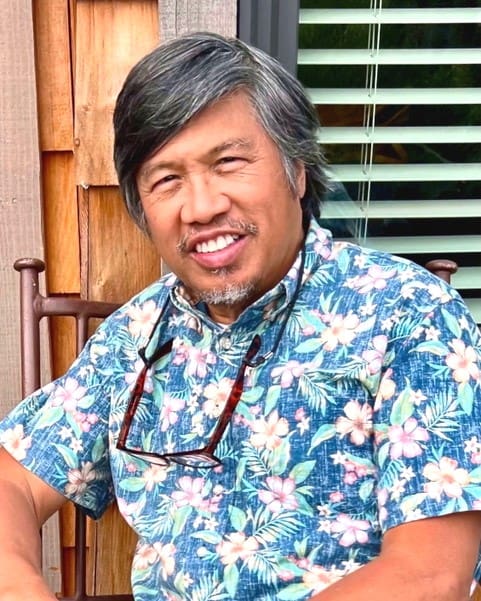
Caparoso worked in restaurants, beginning as a sommelier in 1978, and later became a founding partner of Roy’s restaurant group, serving as vice president and corporate wine director for its first 13 years. While at Roy’s, he was named Santé’s Wine & Spirits Professional of the Year (1988) and Restaurant Wine’s Wine Marketer of the Year (1992, 1998). He helped open and operate 28 Roy’s locations nationwide.
He also founded and operated Caparoso Wines LLC (2001–2006), with distribution in up to 12 states, and wrote a long-running biweekly wine column for The Honolulu Advertiser (1981–2002). His photography can be seen at randycaparosophotography.com, and more than 1,400 of his articles are archived at authory.com/RandyCaparoso.
How did you come to wine, and to wine writing?
When I “discovered” wine at the age of 18 (while working in a restaurant to put myself through school), I followed advice I read in books about taking copious notes and keeping a journal, then I began sharing my notes with my tasting groups. My passion was so intense, I transitioned from waiter to full-time sommelier in a French restaurant by age 21, while still writing extensively on wines I tasted and trips to wine regions. One day, my sister’s ex-boyfriend shared some of those notes with the editor of the local major daily newspaper and — just like that, at the age of 25 — I became a newspaper wine columnist in 1981, filing biweekly columns for 23 years until moving permanently from my hometown of Honolulu to California. I always made my living, however, as a restaurant manager, part-owner and multi-unit wine director, and wrote wine columns for “fun.”
Why did you decide to move your content to Substack?
The first time I heard of Substack was when Tom Wark started his Fermentation page on it. In 2023, he invited me to do a long “Ramble” interview. I liked the platform, but didn’t start my own page until 2024, when I was looking for a way to get chapters of a prospective book on restaurant wine management out in public so that friends and family could help me edit them. Substack makes writing and input a breeze. I should know, since I’d been doing blogs for at least 20 years, and also posted stories 6 to 8 times per month on lodiwine.com for the Lodi grapegrowers between 2010 and 2025. Anything that makes creative writing easier is a good thing, especially when it comes to wine journalism. We can now clearly see that there’s a ton of wine writing talent out in the world, and it’s about time that more people put their stamp on it, rather than the bad ol’ days when wine writing was dominated by just a handful of magazines and writers.
Are you a staff columnist or freelance?
I have always been a freelance writer, even after retiring from the hospitality industry and transitioning full-time to wine journalism and photography back in 2009. In fact, working for restaurant companies, including in corporate structures for nearly 30 years, is exactly the reason why I prefer freelancing. I no longer wish to answer to anyone but myself (although my publisher at The SOMM Journal can occasionally be cross about deadlines!).
What is one thing you’d like your readers to learn from your writing about wine?
The fact that I started out as a sommelier and, later, a restaurateur has a lot to do with my perspective on wine writing. First, I’ve always hated scoring — or the very idea that one wine can be “better” than another. I find it sad that most wine reviews are about the score and much less about imparting information or stories behind the wines. To me, this is a disservice to consumers and readers. It stunts their growth as wine aficionados and doesn’t really guide them to the wines they may actually prefer (when you buy by score, you’re following someone else’s taste, not developing your own).
As sommeliers, we are taught to appreciate appellations and terroirs. It is silly, to use just one example, to “rate” a Chablis in terms of a Meursault or Puligny-Montrachet on a sensory basis because they’re just so different. To me, true wine appreciation is enjoying a Chablis, a Meursault or Puligny-Montrachet for what they are, not for how they can be compared to each other, especially according to a score. The same goes for all the varietal bottlings in the world. Sense of place and the individual artistry of producers mean something.
If anything, that’s why I’ve been writing nonstop for newspapers, print magazines and online for going on 45 years: I am really and truly motivated to share my thoughts on how wine is best appreciated — as something that is a result of craftsmanship, science and Mother Nature. Wine is an art that’s to be appreciated for what it is, not for what people are saying it should be — just like any other work of art.
This, in a way, is also the restaurateur in me. In that business, we are always obsessed with getting the best possible wines in front of people to get them the best possible dining experience, particularly in context of specific foods or dishes. When you do that, you are working with the endless variety of wines consisting of unlimited sensory variations. What “scores” the highest is neither here nor there. You are not “judging” wine (this is why you never see scores on restaurant wine lists). Rather, you are appreciating them for what they are and how they fit on each table, with each dish and to the tastes of each guest.
This, in a wordy nutshell, is exactly what I hope readers always “get” from my wine writing: talking about wines and telling their stories in ways that can actually benefit readers and wine lovers.
What’s the best story you have written?
Recently I reprinted a 2011 interview of Kermit Lynch on randycaparoso.substack.com/p/adventures-on-the-wine-route-revisited. It’s not an article per se, of course, it’s an interview. But it’s important to me because Lynch is one of only two people I’ve considered a real mentor in my career (the other being André Tchelistcheff, who always used to find a way to hammer home the idea of “sense of place” in our conversations).
The things Lynch says are exactly what I say over and over again in my writing ’til I’m blue in the face. Everything I’ve ever done in my nearly 50 years as a full-time career wine professional — in restaurants, as a journalist and now as a photographer — are byproducts of the values espoused by giants such as Lynch and Tchelistcheff. Primarily, that wines are the products of places, Nature and the diligent work of people over the course of history. Since that’s how the finest wines should be appreciated, that’s what wine writing should focus on.
Can you describe your approach to wine writing and doing wine reviews?
I‘ve never done “reviews.” Even as a newspaper columnist, I always took pains to use my words to describe wines — sensory qualities, their past and present history, the places and craftsmanship, etc. — but never to judge them.
I find it utterly sad that the work of people during the countless hours spent cultivating vines and crafting wines over the course of months and years, much less the work of previous generations over the course of history, can be reduced to a stupid number like “89” or “92.” It’s absurd. I used to feel the same way during my years serving as a frequent wine competition judge, where you’re asked to pass judgement on wines of untold provenance in a matter of seconds. After a while, I found it unbearable, which is why I no longer do wine judgings, big or small.
The wine media, and its entire history, has done that to itself. It has let “convenience” dictate how rigorously grown and crafted wines are marketed and sold.
My approach? If anything, what I do believe in is originality, which is hard to do because there is an entire universe of good wine writing out in the world. Plus, it respects the originality of grape growers and vintners. I have found you can be original as a writer by sticking to primary sources — walking vineyards, talking directly to vintners, tasting wine for yourself and not following what other people say. Sure, I avail myself of the wealth of data now available online (information we used to get only from books and magazines); but to me, when creating a story, taking a stance and making your points, it’s not worth anything unless your thoughts are your own. “Don’t follow leaders,” Dylan once sang.
This, by the way, is why I don’t read books, magazines or other wine writers. I’ve been writing for The SOMM Journal (née Sommelier Journal) since 2008 and, frankly, I’ve never actually read it. I open it just to clip out my own articles and columns. I hate being influenced by what other people say. When I make a judgement on a wine or even an entire region or category, it’s my judgement, not someone else’s; although, of course, I enjoy conversations and exchanges with colleagues (not including other writers—I avoid conversations with other writers like the plague).
Why is posting your articles on social media important?
Social media is the greatest thing since sliced bread. How else do people know that you’ve posted something? Thank God for social media because it has democratized wine communication. Consumers and industry alike are no longer under the tyrannical yoke of just a few magazines or writers. Even Substack realizes that “Notes” (essentially their social media outreach) is the key to building their contributors’ audiences.
Do you consider yourself an Influencer?
“Influencers” work with a different set of skills — which, frankly, I do not possess. They’re not writers, and the information they impart is not exactly deep or nuanced. But who cares? I am full of admiration for people who can do this, and do it well, because at least they are enthusiastically and effectively communicating appreciation of wine. Therefore, I think they’ve contributed enormously to the wine industry and to the cause of consumer appreciation over the past few years, and I’m glad they’re out there doing a job most writers can’t.
What advantages are there in working directly with winery publicists?
The public relations industry has always, and always will, play an important role in the wine industry and the wine world. I think of them as the brokers who get stories done, and there are never enough good stories told about wine. Some of the best people I know in the wine industry are PR folks, and they’ve led me to a great many good stories.
Which wine reviewers/critics would you most like to be on a competition panel with?
I can count the number of “critics” I’ve enjoyed interacting with on just one, maybe two fingers. They’re just weird — like kids who live in basements in their own world, spinning twisted ideas on what makes a wine good or of value. That said, I like Matt Kettmann very much, even if he’s forced to do 100-point scores, because at least he can perform his job with some sense of integrity.
Which wine personalities would you most like to meet and taste with (living or dead)?
When I think “personalities,” I think of all the great, great growers and winemakers I have met over the years. There is, of course, a never-ending number of new ones coming up and doing exciting things that I love to experience and talk about. Too many to count, in fact, which goes to show that the wine production industry is as strong as ever insofar as talent and originality. Consumers may be drinking less wine by volume compared to just a few years ago, but wines keep getting better and better, which is all you can ask for. The wine world is doing quite well, thank you.
What’s your favorite wine region in the world?
I love wine regions where wines are still made in time-honored ways from grapes well-adapted to their places and in appellations with either an established or growing sense of place. There are too many to count, but suffice to say, I have a very global taste (something for which my restaurant wine programs were always known). In my corporate days as a restaurateur, I’d go to France, Italy and Germany at least once each year, and up and down the West Coast several times per year. Now I live in California, so it’s literally a backyard I can explore for myself. I’ve always been impressed by Australia, but there are places I’ve never been where I’d love to go (South Africa, Greece and a couple more). I may be 69 years old, but I’m not quite dead yet, so who knows?
Do you have a favorite wine and food pairing?
You can’t ask a restaurant pro this. I’ve worked with too many uber-talented chefs creating different things every day, and sat in too many great restaurants — and that’s not even mentioning my wife, who still cooks my favorite dishes in the world! I’ve always said, for the endless variety of wines out there in the world, there is always an ideal dish. Correction, more like five, six or more than a dozen ideal dishes. Wines and foods can go together in myriad ways for myriad reasons. That’s the entire beauty of dishes and wines with all their multifaceted sensory qualities.

Carl Giavanti
Carl Giavanti is a Winery Publicist in his 16th year of consulting. Carl has been in business marketing and public relations for over 30 years; his background in tech, marketing and project management informs his role as a publicist and wine writer. Clients are or have been in Willamette Valley, Napa Valley, and Columbia Valley https://carlgiavanticonsulting.com/ He also writes for several wine and travel publications https://linktr.ee/carlgiavanti