Seven years ago, Wine Industry Advisor debuted Turning the Tables, a monthly series of interviews that shines a spotlight on the journalists and storytellers within the wine world. Developed and spearheaded by industry publicist Carl Giavanti, TtT has become a readers’ favorite, introducing the people behind the headlines. For this anniversary installment, WIA is turning the tables on Lettie Teague, wine columnist for the Wall Street Journal — and a bona fide legend/rockstar/celebrity/ in wine circles. Thanks for all your efforts Carl; here’s to at least seven more years! —Alexandra Russell, WIA managing editor
By Carl Giavanti
Lettie Teague has been The Wall Street Journal’s wine columnist for more than 15 years, covering the world of wine from Argentina to Washington state — and all the wine countries, regions and winemakers in between. Her coverage on wine ranges widely and includes trends, news and reviews as well as profiles and pet peeves.
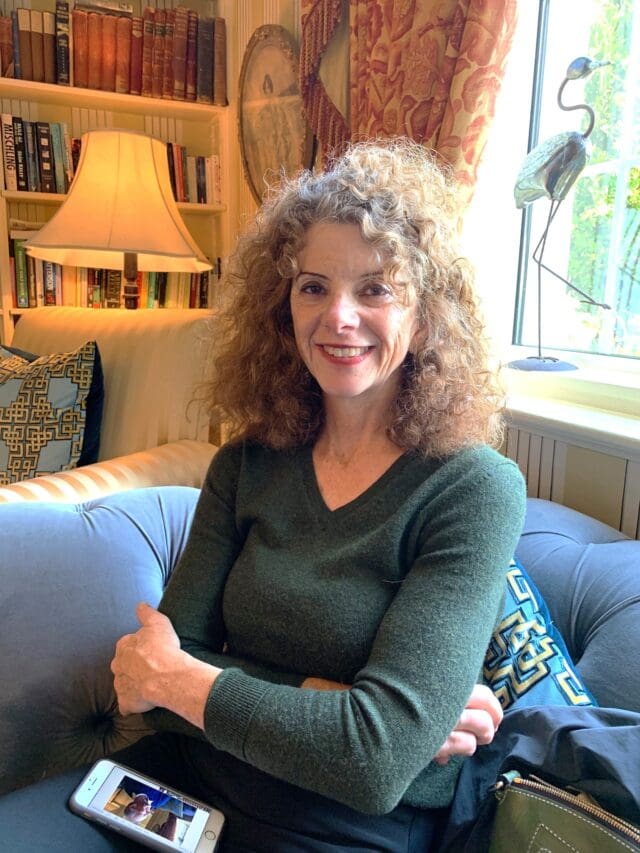
Before joining the Journal in 2010, Lettie was the executive wine editor and columnist for Food & Wine magazine. She has won three James Beard awards for her wine writing and is the author of three books: Wine in Words, Educating Peter and Dear Readers and Riders (this last is a biography of best-selling children’s book author Marguerite Henry). She is also the co-author and illustrator of Fear of Wine and was inducted into the Wine Media Hall of Fame in 2015.
How did you come to wine, and to wine writing?
I was a 20-year-old college student from Ohio, living in Dublin, Ireland, when I fell in love with wine. I’d moved to Ireland to study Irish history, literature and politics and was living with Peter Dunne, a wine merchant extraordinaire, his wife, Anne, and their daughter, Mary Elizabeth. I was a student who needed a place to live, just one of a long line of Americans who lived with Peter and Anne over the years. Anne was an amazing cook who produced tremendous, potato-centric meals and Peter brought bottles of wine home and talked about them over dinner. He talked about wine in a way I’d never experienced before: where and how and by whom they were made — it was history, geology and sociology. I was entranced. (My parents drank wine but it wasn’t anything worthy of even a few words.)
Peter was the director of Mitchell & Son, one of the most legendary wine retailers, importers and distributors in Ireland (yes, you can be all those things in Ireland). There was even a Mitchell & Son wine bar where I worked for a while. When I returned to Ohio and graduated from Kenyon College, I moved to New York determined to be “in the wine business” — although I had absolutely no idea what that entailed.
I started working in wine retail (I was told, “in order to understand the wine business you have to work retail,” which I think is still true today). Then I worked for various wine wholesalers and importers as a (lousy) salesperson on the streets of New York. I had a few jobs in wine public relations and marketing, restaurant management and even a restaurant software company. It was all work that proved useful in terms of understanding the business later in my life as a journalist (plus it was great fodder for future columns) but it was not particularly lucrative.
I was also writing little (non-wine) freelance stories for little freelance papers in metro New York at the time (none of which still exist). My first job in journalism, 30 years ago, was at Diversion magazine, a travel and leisure magazine for physicians that (also) no longer exists. I was the Food, Wine & Books editor (what a perfect job). From there, I moved to Food & Wine magazine as its wine editor and later executive wine editor and wine columnist and finally, in March 2010, to The Wall Street Journal when I became the paper’s wine columnist.
What are your primary story interests?
I am interested in every aspect of wine, from the people who make it to the people who drink it, to the people who buy and sell and import it, and, of course, in wine itself. There are endless story possibilities when it comes to wine.
What led to your role at Food & Wine Mag? How have things changed at the publication?
I wrote a freelance story for Food & Wine in 1997 entitled “Why I Hate to Eat With My Husband” (my ex, the great Alan Richman who has won more James Beard Awards than anyone on the planet.) The magazine’s then-editor Dana Cowin liked the story very much. It turned out they were looking for a wine editor and I applied for the job. The interview process lasted more than three months!
You’ve been a staff columnist for WSJ for over 15 years. There are very few wine journalism positions available like yours. How did you land with WSJ?
I am sure I was one of many people whom they interviewed. I wrote a sample column on the wines of Eastern Europe which were just beginning to be popular … or at least they seemed to be at the time.
What would people be surprised to know about you?
Although I have lived in Manhattan and in Greater New York (aka Westchester, Long Island, New Jersey) for decades, I am a Midwesterner in both birth and sensibility.
What haven’t you done that you’d like to do?
Write more books and maybe take up cartooning once again. I was once a pretty serious cartoonist (is that an oxymoron?). I even created an entire cartoon strip set in a restaurant called “London Broil.” I received a very polite rejection from King Features. My first wine book, Fear of Wine, actually featured my cartoons.
What’s the best story you have written?
I have written so, so many stories in 30-plus years of writing about wine. It would be hard to select one, but two of my favorites included “The Wine Matters” (written for Food & Wine; it’s not online alas), wherein I made my own fake 1982 Mouton Rothschild and served it to a group of wine professionals and collectors.
One of my favorite WSJ columns was about a German winemaker I picked up in a Long Island post office in the middle of winter when I was on my bicycle. He was hoping to visit some wineries on the North Fork. You will have to read the story to find out more.
When and what got you into writing?
I have been writing virtually all my life — short stories, poems, unfinished novels. I even published my own “newspaper” of family doings when I was 10-years-old, foreshadowing my journalism career. Sadly, that ended due to a lack of interested subscribers.
What are your recommendations to wineries when interacting with journalists?
I don’t have any general recommendations, but it means a lot to me when a winery representative is quick to respond with timely and accurate information! (I do not accept samples. I buy all the wines for my column.)
What advantages are there in working directly with winery publicists?
I have worked with many winery publicists over the years and there are many first-rate professionals who really know their stuff and are tremendously helpful and responsive. There are also a shocking number who don’t seem to know anything about what I do. The pitches are wildly general and show that they haven’t (ever?) read my column. I’ve gotten more than a few pitches for stories that I’ve already written — sometimes just weeks before their pitch to me.
Can you describe your approach to wine writing and/or doing wine reviews?
I think first and foremost of the reader: what kind of story would interest him or her?
Sometimes it’s a column about a trend such as wines in cans (which I wrote about years ago!) or it’s seasonal like a rosé column in summer. But not just a basic rosé column, rather one with a twist, like a column I wrote about leftover rosés (all the “old” roses from the previous vintage because COVID delayed shipment of the new wines).
It might be a column on why tasting notes are written the way that they are. Or a discussion of the eternal (perceived) problem of sulfites in wine or a red wine headache. It might just be a heartfelt essay about a collector who shaped my wine writing life and how wine transformed his life. He collected great wine with the express purpose of sharing it, which brought him friends wherever he went- what other beverage can accomplish that so beautifully?
I also like to poll WSJ readers from time to time to find out what they are thinking and drinking; their responses are always thoughtful and often fun!
Which wine personalities would you most like to meet and taste with (living or dead)?
Here are a few. Emile Peynaud: The Taste of Wine is such an extraordinary book — though I think I’d need to improve my French a great deal to have an intelligent conversation with him. Martin Ray, who seems brilliant and a bit nutty from all that I’ve read — what a great combination. Andre Tchelistcheff for obvious reasons. Harry Waugh, because any wine writer who is credited as saying he hadn’t mistaken Bordeaux for Burgundy “since lunch” must have been a great deal of fun.
If you take days off, how do you spend them?
Last year, I spent my days off traveling around talking about the book I’d just written (Dear Readers and Riders, which was not a wine book). The two years before that, I spent my time off writing said book. I’m working on a new project now…
What is your most memorable wine or wine tasting experience?There have been so many! But one of my favorites was a long-ago dinner with Robert M. Parker Jr — aka “Bob” to me (I was his editor at F&W for years) — and a group of spine docs who were members of the Wine & Spine Society at Charleston restaurant in Baltimore. (Bob was an honorary member, as he had back problems, too!) I’d herniated discs in my back and when I told Bob about it, he convened the group of docs at the restaurant to have a look. I brought my radiographs, the docs — who flew in from cities all over the world — brought a bunch of great wine and a light box to look at my scans. I wrote about it in my F&W column, of course. By the way, the docs told me that spine surgery is to be avoided at all costs unless absolutely necessary.

Carl Giavanti
Carl Giavanti is a Winery Publicist in his 16th year of consulting. Carl has been in business marketing and public relations for over 30 years; his background in tech, marketing and project management informs his role as a publicist and wine writer. Clients are or have been in Willamette Valley, Napa Valley, and Columbia Valley carlgiavanticonsulting.com He also writes for several wine and travel publications linktr.ee/carlgiavanti