The Potential of Sake Seen from the ASI Boot Camp in São Paulo
September 3, 2026 — This year marks the fourth year of the partnership between the JSS (Japan Sake and Shochu Makers Association) and ASI (Association de la Sommellerie Internationale). Leveraging this partnership, sake education has been incorporated into ASI’s educational programs every year. This year, a sake masterclass was held as part of the ASI Boot Camp, an educational program for young sommeliers, held in São Paulo, Brazil.
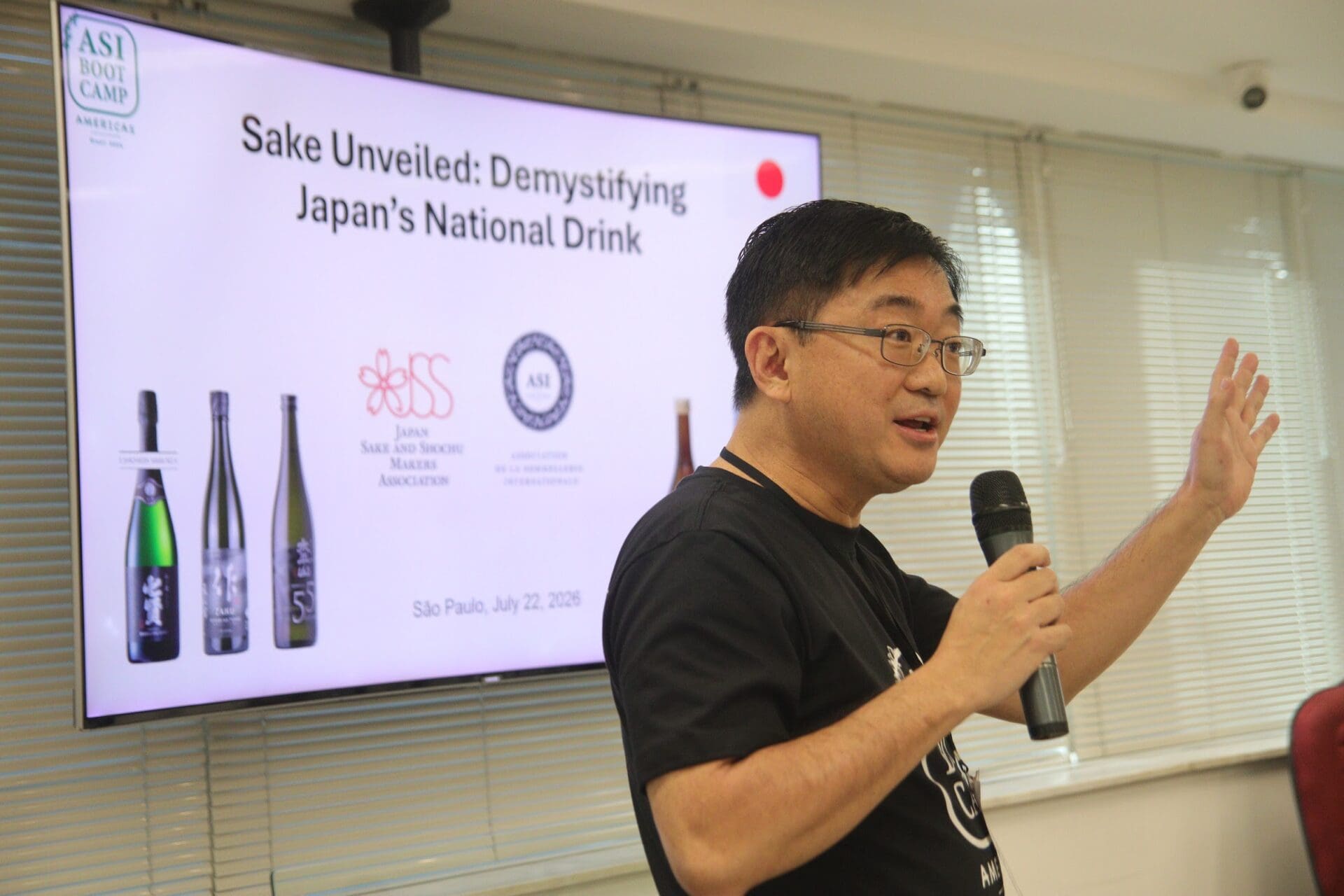
The masterclass was led by Mr. Fábio Ota, who runs a sake import business primarily in São Paulo. Regarding the sake knowledge held by the young sommeliers who participated this time, Mr. Ota commented that not a little of what the sommeliers believe they know about sake is outdated or based on misunderstanding. He first pointed out that the sommeliers still mistakenly believe sake to be a distilled spirit. Sake is not distilled; it is a “brewed” alcoholic beverage made from rice, water, koji mold, and yeast. While this misconception has been rapidly disappearing in recent years in other regions, Mr. Ota noted that it remains common in South America. He also noted that the sommeliers remain under the sway of the long-discredited notion that sake quality can be judged solely by the degree of rice polishing (for example, that categories such as daiginjo or junmai daiginjo necessarily represent the finest sake).
The Potential of Sake in Latin America
Julio Kunz, Vice President of the Associação Brasileira de Sommeliers (ABS-RS), said the masterclass changed how he views the sake category. Approaching five distinct sake styles with the same analytical rigor as wine, he noted, gave many participants their first real introduction to sake as a serious, study worthy category — not merely a novelty to try once at a Japanese restaurant.
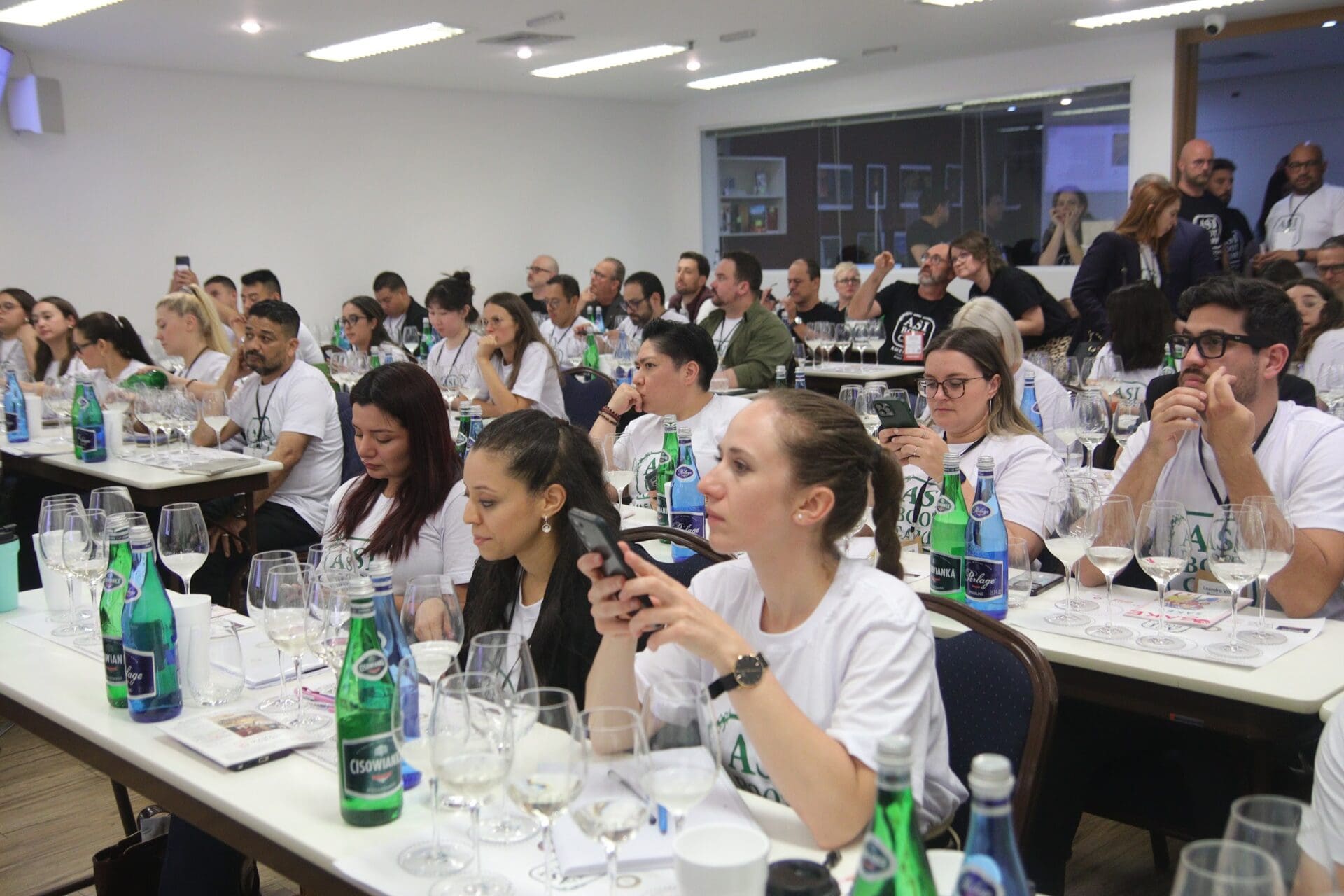
masterclass. (Credit: ASI)
He noted that, if sake education continues to grow, sake could become something like “the next wine” for curious Brazilian consumers. He explained that sake’s relatively low alcohol content and its emphasis on food pairing align precisely with the direction today’s consumers are seeking, concluding that they have only just tasted the first sip of what is an enormous market. Signs that sake is indeed becoming “the next wine” have already begun to appear in Brazil. In April 2026, Tuju and Evvai became the first restaurants in Brazil and Latin America to receive Michelin three stars, and both restaurants feature sake on their menus. This shows that sake need not be confined to Japanese restaurants and can become a category served even at the highest levels of fine dining.
At the same time, conversations with the participating young sommeliers revealed differences by country in how widely sake has spread across Latin America. In Uruguay, access to sake remains very limited, with almost no local distribution, and many consumers are still unaware of the category itself. In Peru, understanding of sake is comparatively higher, partly due to the influence of Nikkei (Japanese-Peruvian) food culture; however, the variety of sake in distribution is still limited, and there is a lack of the kind of diversity showcased at the Boot Camp, ranging from delicate usunigori to structurally robust kimoto-style sake.
Strengthening Sake Education Further to Expand Exports to Latin America
Sake export performance to the Latin American market for January–June 2026 showed substantial growth, up 20% year-on-year in volume and 38% year-on-year in value. Overall (across all markets), the same period saw volume decline 1% year-on-year to 1.83 million cases (9L cases), while value rose 4% to ¥23.8 billion. Although export performance to Latin America is far outpacing the growth rate of sake exports overall, it still accounts for only a small share of the total (2% of total volume and 1% of total value in customs clearance figures for January–June 2026). Not limiting its efforts to Brazil, which is currently leading sake exports to Latin America, the JSS will continue working, through its partnership with ASI, to create conditions in other cities where sake is available not only at Japanese restaurants but at non-Japanese restaurants as well — including through sake education aimed at the sommeliers who will shape the wine lists of the future.