By Carl Giavanti
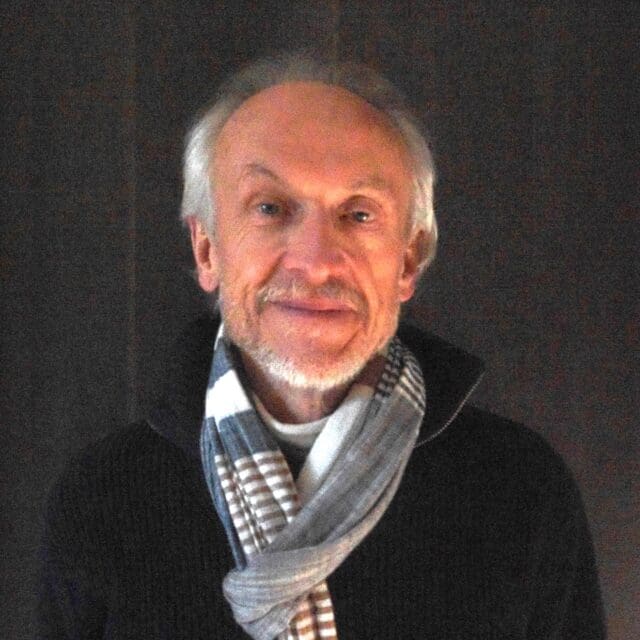
Andrew Jefford is a wine author and journalist based near Montpellier, France. Author of The New France, Whisky Island and Drinking with the Valkyries, he has written extensively for The Evening Standard and The Financial Times, and is a columnist for The New Statesman, Decanter and The World of Fine Wine. He serves as academic advisor and study tour guide for The Wine Scholar Guild. He is one of the five co-chairs of Decanter World Wine Awards, the world’s largest wine competition; he chairs the International Saperavi Competition in Georgia and is one of the international judges for the International Qvevri Wine Competition in Georgia; and is international judge in the Latvian Wine of the Year Competition in in Riga, Latvia. Follow him on Linked In and https://www.andrewjefford.com/
How did you come to wine, and to wine writing?
I came to wine when I started making it for my family, aged 16, using grapejuice concentrate, carrots, elderflowers, stinging nettles and whatever else I could lay my hands on; it was inexpensive and, occasionally, a palatable merriment. That kindled a broader interest, and when I earned some money working in a hospital between school and university, I bought a couple of books on wine and began to buy “the real thing.” Then … long pause, while I did six years in Uni with an intercalated year in the civil service. After that, I got a wineshop job for a few months, then … another long pause for four years as a book editor. I sidled into wine writing from book editing.
What are your primary story interests?
I like the bigger picture (wine in its cultural and political context), storytelling and description, and human interest: Why do people drink wine? What does it mean to them? What are the psychological mechanisms at work here? What dreams are at play? What’s going on at the wine/place interface?
I also enjoy rethinking the received wisdom and dogmas of the wine world. And I love writing profiles of wine folk I admire or find interesting. But, of course, I also have to do a certain amount of routine geeky stuff — tasting notes and so on.
What are your primary palate preferences?
Very unfashionable: I like ripe wine of all sorts, and don’t mind what’s called ‘high alcohol’ at all (in naturally articulated wines, though it’s horrible in confected or adjusted wines). I tend to dislike acid-structured wines unless they reflect the natural balance delivered by ripe fruit after a full growing season in their place of origin. (Champagne!) I adore texture in wine, especially that derived from skin tannins. I also look for aromatic subtlety. My palate only really chimes with the zeitgeist in disliking oak (if in any way palpable), preferring concrete and earthenware ageing to oak in general, and in loving orange wines and Georgian qvevri wines (because of their texture and ripeness).
Writing at the Edge seems to be your lifetime of advice to aspiring wine writers today. You started in 1988, during the halcyon days of wine writing. Is it still possible to make a living as a wine writer today? What are the challenges?
What’s a living? Everything depends on your personal circumstances. If you live on your own and have modest tastes and no dependents, sure, anyone can get by as a wine writer. If you have to support a family, it’s hard. I’m in the latter category. I keep wolves at bay by being canny with income (cost control!) and doing other non-writing things such as education, tour guiding, restaurant consultancy and rattling around the judging circuit.
Challenges and hurdles? If we set aside all of the practical struggles, one of the biggest is that the broader world at large has turned away from wine in recent years. Intelligent, curious, culturally alert readers have written wine off as being a geek zone of no interest. Wine writing has, sadly, become boring for the uninitiated — it’s stiff with tasting-notes, bottle shots, scores, recommendations, descriptions and hierarchies. No human being needs to pay for access to 200,000 tasting notes! This is mad! Twenty tasting notes are more than enough for most of us.
There are few strong narrative lines in wine writing, and wine descriptions are highly repetitive. There is no investigative edge, no scepticism, no adversarial stance: “everything is wonderful,” everything is 91to 100 points, and it’s all rather featureless. The historical dimension is often missing. There’s no humour, no fun, no mischief; it’s earnest and serious and “feed-my-ego.” It’s “listen-up, grasshopper.”
We’ve even lost the simple pleasures of landscape and locale, and of discovering people through portraiture. This wasn’t true when I began. Back then, everybody was beginning to be excited by wine and to feel that it had a role to play in cultural life, like architecture or music. There was a world to be opened up. There was a sense that great wine writers could introduce this mysterious and ever-changing world in an interesting and evocative way.
As far as I can see, that’s over. We’ve choked the goose. That’s why I urge young and new wine writers to head to the edge, to take risks, to “be real,” to be innocent, to use their imaginations and not to be satisfied with the status quo.
What haven’t you done that you’d like to do?
I would love to do some long-distance walks, the sort that take three or four weeks, where someone else looks after your luggage, and you can spend all that time with good companions, landscapes, wind, birds and running water. And drink good wine (even if it only has 87 points) with a well-earned dinner. That’s always been a dream of mine.
What is one thing you’d like your readers to learn from your writing about wine?
What matters in wine is not “excellence” but difference. And that wine is also a dream.
[That’s two things, sorry. There’s a lot more about both in the Valkyries book.]
If you weren’t writing about wine for a living, what would you be doing?
Writing about something else. I love writing. But if even that avenue wasn’t open to me, I think I have the right skill set to make a promising funeral director.
Can you describe your approach to wine writing and/or doing wine reviews?
First of all, don’t read what everyone else has written about your subject. Approach it as if you didn’t know anything about it until you began your research. Go in search of all the amazing or astonishing things it’s hiding. Check them all out; give them a good shaking. Verify and double-check. Be wide-eyed. Be surprised. Be interrogative. Discover; then discover some more. Get yourself into a state in which you’re super keen indeed to tell other people about all the things you have discovered. And then begin.
Do you work on an editorial schedule and/or develop story ideas as they come up?
My writing work nowadays is chiefly columns (the Decanter monthly column, the New Statesman monthly column, and the One Bottle column in each edition of The World of Fine Wine). For these, I can choose the subject. I have a notebook in which I constantly jot down column ideas, and I also have a computer file with all my column work logged so I can check when I last covered a particular subject. Variety is all-important for columns. Yes, I have a lot of freedom, but I’m also well aware that journalists are only as good as their next column, so I work at those columns, both in terms of pre-draft thinking and then post-draft revision, cutting and rewriting.
What inspired Drinking with the Valkyries? Is it your opus magnum?
It’s a collection of pieces which I wrote between 2007 and 2022, so in that sense, there is no single seam of inspiration. Honestly, the biggest regret of my life is not having been able to write more books, as I loved this activity. The New France was a decent first draft and could perhaps have turned into a regularly updated reference book of lasting value if the publisher had been interested, but the publisher wasn’t interested.
Whisky Island is, therefore, the most successful single book I’ve written. It’s two books in one — a book about an unusual place (the island of Islay), but also a book about the globally celebrated activity that happens in that place (malt-whisky distilling). It is very comprehensive; I don’t know another book that goes quite as deeply into either subject. But, yes, Drinking with the Valkyries will probably have to serve as my magnum opus, though it feels a little strange to see a compilation in that light. When I read it through at the end, I did feel that most of what I wanted to say about wine was in that book. I doubt there will be further opportunities. But the world isn’t short of wine books! At least this one is original.
What are your recommendations to wineries when interacting with journalists?
Be human. Be open and be honest. Tell us the whole story. Share your difficulties and frustrations. Make lines of communication as easy as possible. Don’t hustle, schmooze or spin obvious PR lines. Create easy-to-use, highly informative, data-rich websites which you update regularly so that the site becomes the go-to destination for fact-checking.
What advantages are there in working directly with winery publicists?
The fact is, most journalists have no travel expenses or travel budget, yet good journalism in this field requires a lot of travel, a lot of meetings, and a lot of interaction with different landscapes and biotopes. So ethically acceptable help with travel is the main practical challenge for most wine journalists. I haven’t visited Germany for years. How can I get there? I’ve never been to Etna. How can I get there?
Publicists, obviously, can help, but accepting travel help from a single winery is ethically problematic. It’s much more useful if publicists work together to create multi-producer trips or generic trips. But then remember that every journalist is different; they don’t all want the same thing. (Indeed it’s very important for readers that they don’t all get the same thing.) And of course publicists can help in generating story interest, though too few do this with imagination or creativity.
Long form editorial has become less popular these days. Are Decanter and World of Fine Wine still relevant for most wine-interested readers?
These two publications are very different from one another, but they both fill a need and I don’t see that changing. Decanter is the English-language wine magazine created in Europe with a European perspective. Of course it has a global focus, but Europe is where most wine is still created and so ‘the view from Europe’ matters for the wine world more generally. It is valued by producers as well as general readers.
World of Fine Wine is a true cultural journal and wine is culturally a very rich subject. It explores wine’s cultural milieu magnificently well and is a beautiful publication (no one ever throws away a copy). There is nothing else like it and I doubt there ever could be, unless you could clone Neil Beckett (its supremely gifted editor since day one). It’s true that the long-form is under siege from social media, but tertiary education is on the rise everywhere, too. If you’ve studied for a degree for three years, you can cope with reading 2,000 words on a subject you feel personally passionate about.
Which wine personalities would you most like to meet and taste with (living or dead)?
I would have loved to share wine with the Roman poet Horace (who clearly loved wine and social interactions, and who was a naughty, mischievous, witty and wise man) and also with the Chinese T’ang dynasty poet Li Bai (who, if anything, loved “wine” even more, and who made the altered reality or heightened reality of intoxication a key element of his poetic vision).
I would love to be able to spend an evening with Robert Louis Stevenson when he was a “Silverado squatter” in Napa and try the wines he tried then with him and his wife Fanny.
I always learn a huge amount when I meet Olivier Humbrecht, MW, in Alsace, but I also have the sense that there is invariably a huge amount more to learn. He is prodigiously talented and deep-thinking (and I love Alsace wine). Finally, Laura Catena is clearly a very remarkable person, with extraordinary energy, vision and intelligence, yet I have only ever met her online.
If you take days off, how do you spend them?
I go walking. I love music. I watch birds and clouds. In recent years, I have become interested in small-scale investment (initially out of desperation to create a pension). Then I discovered how fascinating all the ways in which human beings create prosperity and interact with their environment, in fact, are.
What’s your favorite wine region in the world?
I live in the Languedoc and love this place. It’s not dramatic like the Douro, or pretty like Alsace or Germany, or lavish and gilded like California, but it has a quiet and compelling Mediterranean beauty. It’s also very empty and remote and wild and unspoiled — and that appeals deeply.
Do you have a favorite wine and food pairing?
I love oysters, so oysters with Muscadet, Chablis or Picpoul du Pinet always makes me very happy. Plus great French bread and unsalted butter.
__________________________________________________________________________________________________________
Carl Giavanti

Carl Giavanti is a Winery Publicist in his 16th year of consulting. Carl has been in business marketing and public relations for over 30 years; his background in tech, marketing and project management informs his role as a publicist and wine writer. Clients are or have been in Willamette Valley, Napa Valley, and Columbia Valley https://carlgiavanticonsulting.com/ He also writes for several wine and travel publications https://linktr.ee/carlgiavanti