Valpolicella has ended a harvest marked by reduced grape yield and optimal phenolic ripeness. Riccardo Tedeschi: “A vintage that reminds one of 2022 with big red wines with great structure and significant potential for longevity.”
November 13, 2026 (Valpolicella, Italy) — Fewer grapes, but very promising beginnings related to wine quality. This is the initial assessment for the 2026 harvest for Tedeschi, the historic Valpolicella winery led by the siblings Antonietta, Sabrina and Riccardo Tedeschi, together with Enrico, the first representative of the new generation and Antonietta’s son. This is a vintage, which fits into an ever more complex climate scenario characterized by higher temperatures, seasons with less well-defined limits, and meteorological events that seem to redesign – harvest after harvest – the Italian wine geography. A climate that imposes on the producer an increasingly greater ability for observation and interpretation.
But what have been the consequences of this new climatic equilibrium on the vineyards of Valpolicella? And, above all, what do the grapes tell us after the harvest?
“I don’t like to make predictions when the harvest is still ongoing. I prefer to wait until the work has been done, look at the results, and only then sum things up,” explains Riccardo Tedeschi, the family winery’s enologist. A philosophy that favors hands-on experience over predictions—one that, this year more than eve, is borne out by how the season is unfolding.
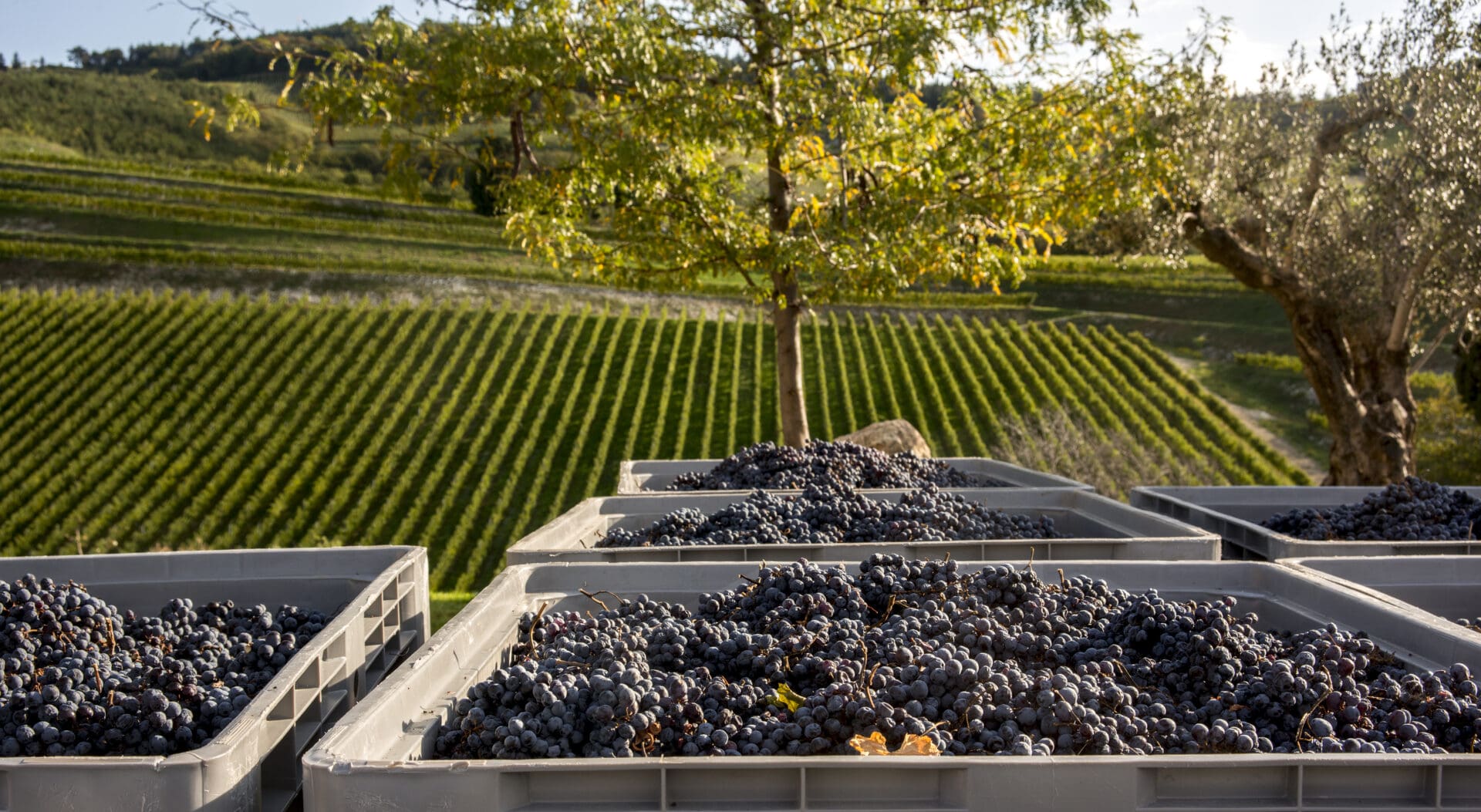
The 2026 harvest began on September 7, earlier than average but without significant deviations that could have been brought on by the high summer temperatures. Instead, rather than constantly accelerating the ripening process, the intense heat at times slowed down the evolution, altering initial expectations regarding the timing of the harvest. What did play a decisive role were the rains in August followed by cool nights, both of which favored the attainment of an excellent phenolic ripening with significant accumulation of anthocyanins and tannins, which are essential elements for color, structure, and potential for the evolution of the red wines.
The result is a low yield vintage with raw material that has great enological value and provides a glimpse of red wines with structure, depth, longevity, and characteristics that recall the 2022 vintage.
“This vintage will be remembered as one with reduced quantity but above all optimal phenolic ripening of the grapes,” observes Riccardo Tedeschi. “The cool nights after the rains of August along with the position of our vineyards on high hillsides have favored slower more complete ripening. We expect red wines with great structure, which in some ways recall the 2022 vintage and that show even now significant potential for longevity.”
Even the aromatic profile offers interesting insights on the identity of the vintage. Scents of cherry and black cherry emerge more clearly, while currant notes are less marked. On the floral side, one distinguishes viola accompanied by a very present yet delicate and elegant spice component. A collection of sensations that lets one imagine wines with intense personalities that are able to combine expressive richness with balance.
It is precisely from the diversity of the single parcels that emerges one of the most interesting aspects of the 2026 vintage. In a climatic context that is increasingly less predictable, a deep understanding of the vineyards, of their characteristics, and of their different responses to the meteorological conditions becomes an essential tool to interpret every vintage and highlight the uniqueness. For Tedeschi, who has always been attentive to the expression of different territorial identities in Valpolicella, this harvest represents not only a moment of closure of an agronomic cycle but also an opportunity to read the territory and its evolution.
Less quantity but raw material that promises wines with great character and the ability to evolve over time. If climate change continues to pose new challenges for winemaking, the 2026 harvest confirms the important and decisive roles of the altitude of the vineyards, knowledge of the territory, and the ability to interpret each season without preconceptions.
Now the floor goes to the winery, to drying the grapes, and to time. These will be what will transform the promise of this harvest into wines that are able to once again highlight the character of Valpolicella and the Tedeschi identity.