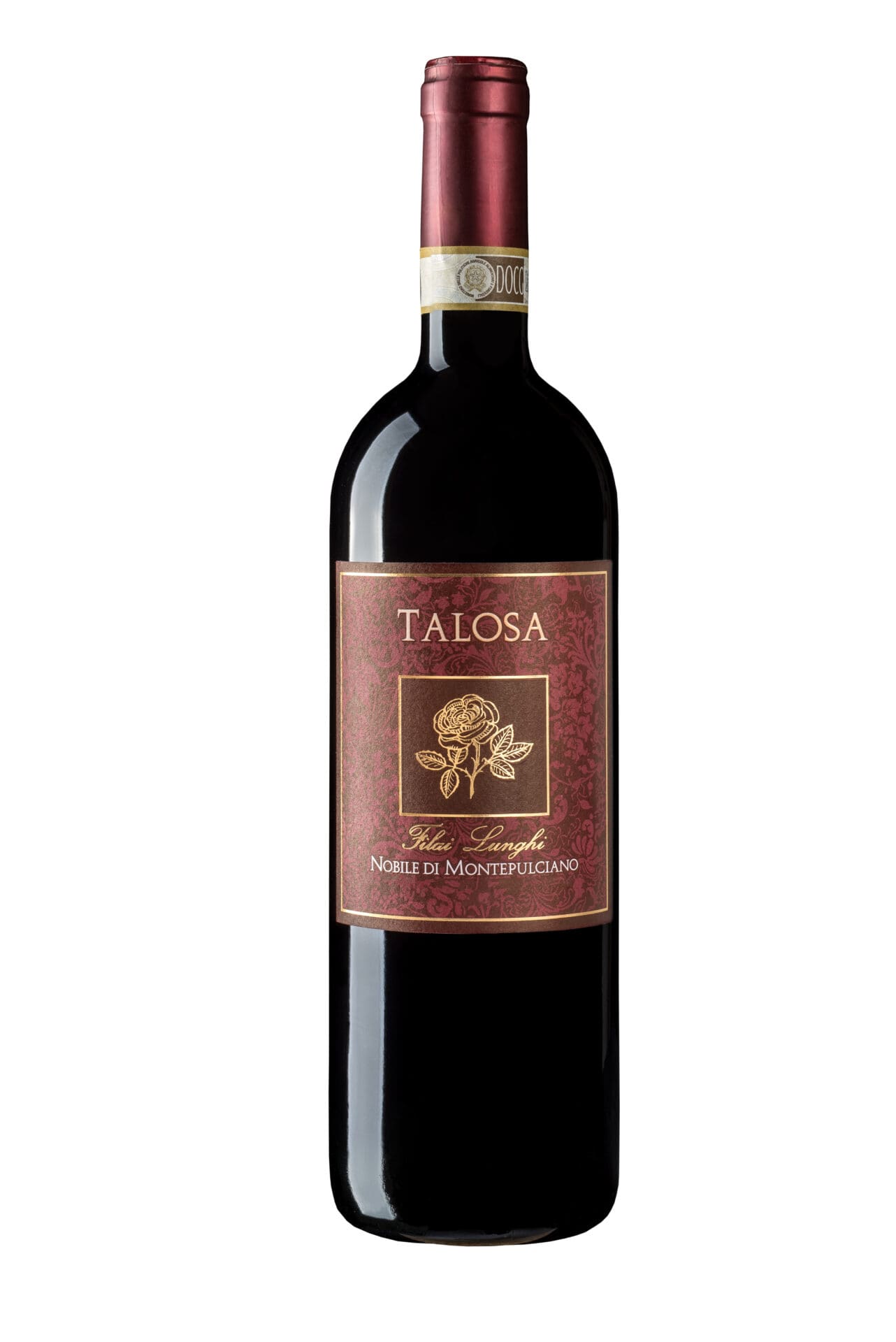
In Montepulciano, a Pliocene fossil bed is visible in the underground tunnels of the Historic Cellar. These are the same marine sediments that formed the soils in which Filai Lunghi Vino Nobile di Montepulciano DOCG originates
September 15, 2026 (Montepulciano, Italy) — Almost one hundred kilometers from the sea, in the heart of Montepulciano, traces of an ancient sea that disappeared millions of years ago are still visible today. An extensive fossil bed dating to the Pliocene—the geological era when much of Tuscany lay beneath the sea—is visible in the underground tunnels of Talosa’s Historic Cellar, beneath the 16th-century Palazzo Tarugi and Palazzo Sinatti.
Along the route to the tasting room, excavated into the hill on which Montepulciano stands, fossilized shells, bivalve remains, and traces of ancient marine organisms are clearly visible.
They offer tangible evidence of a time between approximately 5.3 and 2.6 million years ago, when this territory laid beneath a shallow sea. These fossils, however, reveal more than Tuscany’s geological past. The same matrix of marine sand and clay forms the foundation of Talosa’s 33 hectares of vineyards in Pietrose, situated at elevations ranging from 330 to 400 meters above sea level. Marine fossils are frequently found in these Sangiovese vineyards, confirming the Pliocene origin of the soils that shape the identity of Vino Nobile di Montepulciano.
These moderately fertile soils help mitigate the effects of climatic variations and produce well-structured wines with vibrant acidity and a sensory profile reminiscent of sour cherry and violet. The Consorzio del Vino Nobile di Montepulciano recognizes these characteristics as distinctive features of the appellation.
Talosa attributes these qualities to the particular location of its vineyards, situated where the clay and sand components of the Pietrose cru meet. “The Montepulciano territory still bears the marks of the sea that shaped it: we see them when excavating beneath the cellar and find them again in the composition of our soils,” explains Edoardo Mottini Jacorossi, CEO of Talosa. “For our family, which has worked this land since 1972, understanding the geological origins of the soils is part of the same approach that guides us when selecting clones, determining the orientation of the vine rows and defining the most appropriate aging regime for each vineyard.”
Among the estate’s wines, Filai Lunghi Vino Nobile di Montepulciano DOCG most directly expresses this connection with the territory. First produced in 2007, it comes from three predominantly sandy vineyards. According to Talosa’s winemaking interpretation, the marine soils contribute to the wine’s distinctive savory texture and lingering finish. In recent vintages, a progressively savory, iodine-like character emerges on the finish, a quality that can be traced back to the marine sands into which the vines extend their roots. Fossils are also one of the most evocative and unexpected features of a visit to the Historic Cellar, which opened to visitors in 2010 following meticulous conservation work. The route passes through underground chambers housing large oak casks and continues to the tasting room, inaugurated in 2021 and located beside an Etruscan tomb dating from the fifth century BC. Visitors are thus taken on a journey through different eras in Montepulciano’s history: the geological age represented by the marine fossils, the Etruscan period embodied by the tomb, and the Renaissance reflected in the palazzi that now house the cellar.
This journey connects the territory’s origins with the work carried out in the vineyards and cellar today. The fossils preserved in the tunnels of the Historic Cellar tell a story that began millions of years before Vino Nobile di Montepulciano was born. This story continues today in Talosa’s vineyards and in the wines born from these soils.
About Talosa
The Jacorossi family has owned Talosa since 1972. It was among the first estates in Montepulciano to embark on a quality-driven path that helped elevate Vino Nobile di Montepulciano to the highest levels of Tuscan and Italian winemaking. Over the years, the winery has grown into an estate renowned for outstanding-quality wines. Talosa’s vineyards extend across 33 hectares in Pietrose, one of the most evocative areas of the Montepulciano cru, at elevations ranging from 330 to 400 meters above sea level and with a south-westerly aspect. Talosa’s oldest aging cellar is located in Montepulciano’s historic center, beneath Palazzo Tarugi and Palazzo Sinatti, built during the early decades of the 16th century opposite Montepulciano Cathedral. Entering Talosa’s Historic Cellar transports visitors back to the Italian Renaissance. Built entirely of brick, its tunnels unfold through a succession of vaulted chambers and niches housing the large casks used to age the wines.