Curbside composting helps protect the environment in many ways
November 11, 2026 — The race is on to spread nutrient-rich compost made from food scraps on local farms before winter rains arrive.
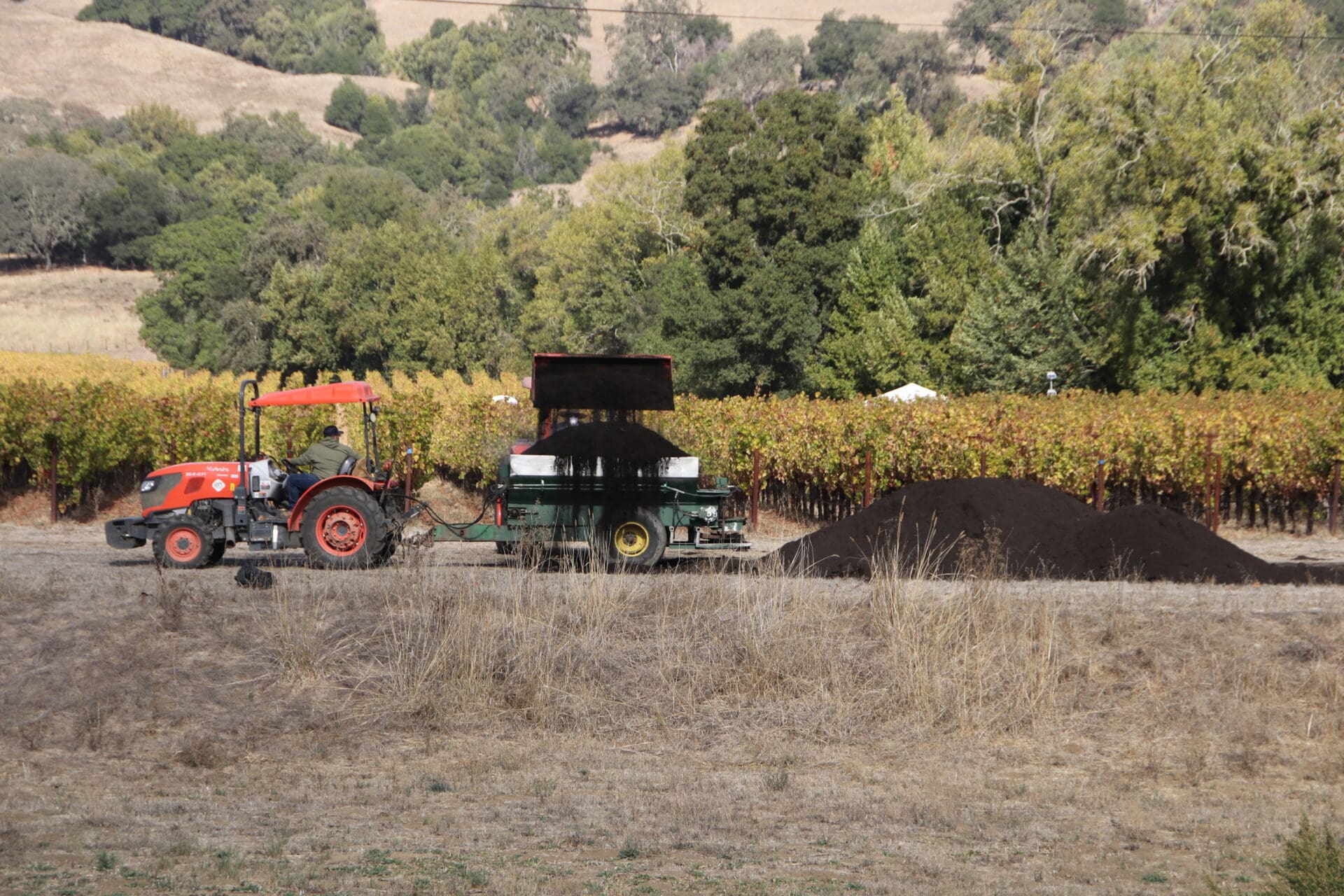
Vineyards and other farms planted cover crop seeds in recent weeks. Now growers are adding four to five tons of compost per acre on their fields.
Using compost to grow cover crops helps farms protect their topsoil from erosion.
Anticipating heavy rains this winter, farms have placed large compost orders and instructed crews to broadcast half an inch of it on vineyards, orchards, and other fields.
These farms grow almonds, pistachios, citrus, wine and table grapes, and many other crops.
Residents and businesses in local cities are encouraged to fully participate in curbside composting collection programs to keep food scraps, sticks, and leaves out of landfills and help make compost.
More than 90 percent of compost made from the materials we put in our curbside composting bins goes onto local farms. That supports food security and our economy, in which agriculture plays a major role.
Twenty years ago, many vineyards tilled the soil between rows of vines. Now, many vineyards and other farms use compost to grow cover crops such as yellow mustard and white daikon radish between row crops.
“The compost/cover crop system works well, and growers have observed the benefits and adopted the practice over time,” says agronomist Bob Shaffer.
The cover crops look like 8-inch-tall grass in mid-December and grow steadily in winter months. By March, they stand tall, covering farm fields in yellow and white. In addition to preventing erosion, these plants pull carbon and nitrogen from the atmosphere and carry them through roots deep into the soil.
This process feeds the microorganisms in the 14 inches of topsoil that grows our food.
“Compost is a valuable resource for agriculture because it helps improve soil health, adds organic matter, and enhances the soil’s ability to retain moisture,” says Jonathan Romero, a farm manager for Labrode Land Company, which uses Recology compost to grow cover crops between rows of pistachio trees on large orchards.
“As growers, we’re always looking for ways to improve our soil and implement sustainable farming practices that benefit our crops and the environment for years to come,” Romero says.
Eric Lamb of Cordero Vineyards east of Napa says, “Great wine begins with great soil. For 15 plus years, Recology’s compost has been part of our commitment to build healthy, resilient vineyards for Lost Valley Wines.”
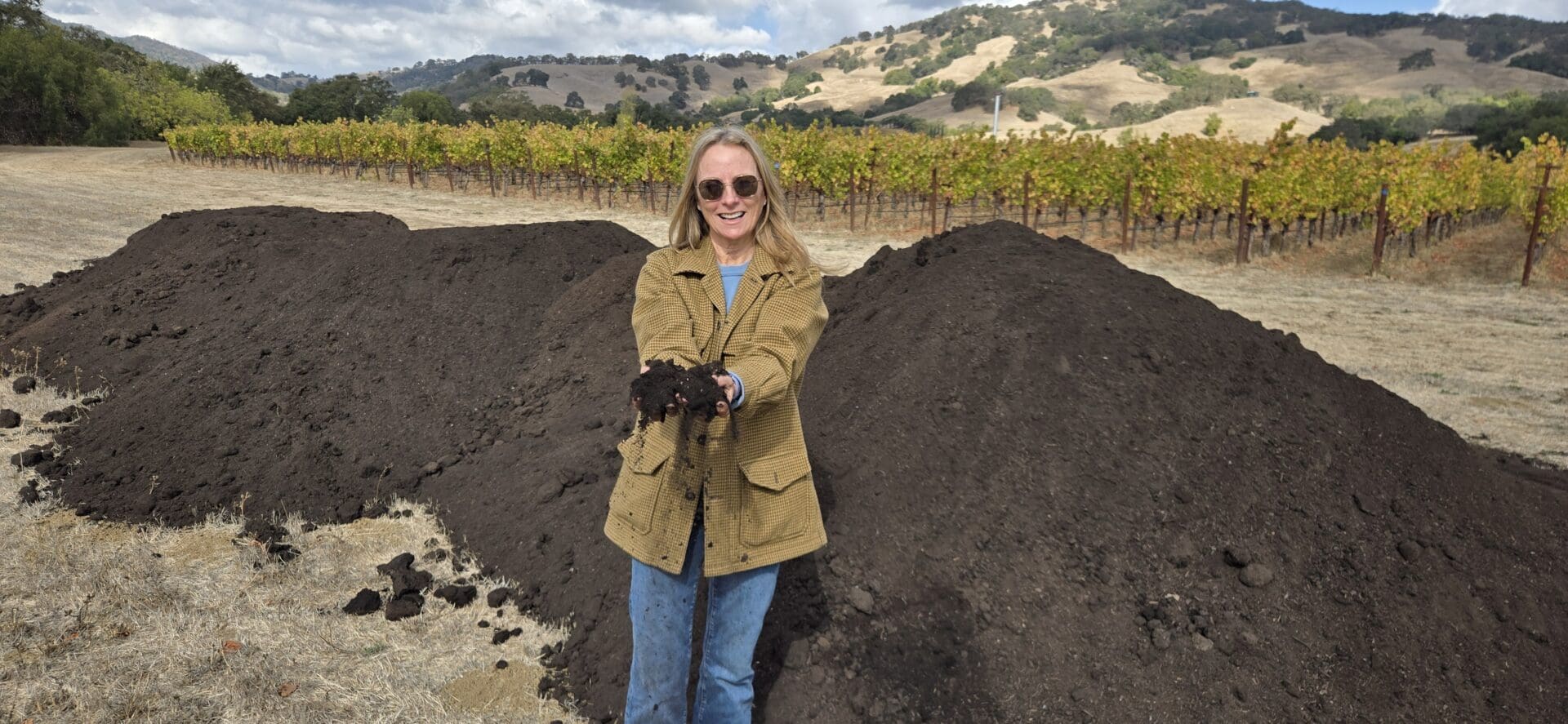
Debra Becker Lamb of Lost Valley Wines says, “It’s rewarding to know organic materials collected from our communities can be returned to the soil to support sustainable agriculture.”
In 1996, San Francisco became the first large city in the U.S. to implement curbside food scrap collection for composting. Approximately 600 cities across the country have followed suit and introduced municipal composting collection programs.
Recology owns and operates 8 composting facilities on the West Coast.
Fall is our busiest time of the year for loading delivery trucks that haul finished compost to local farms. The rush is on.