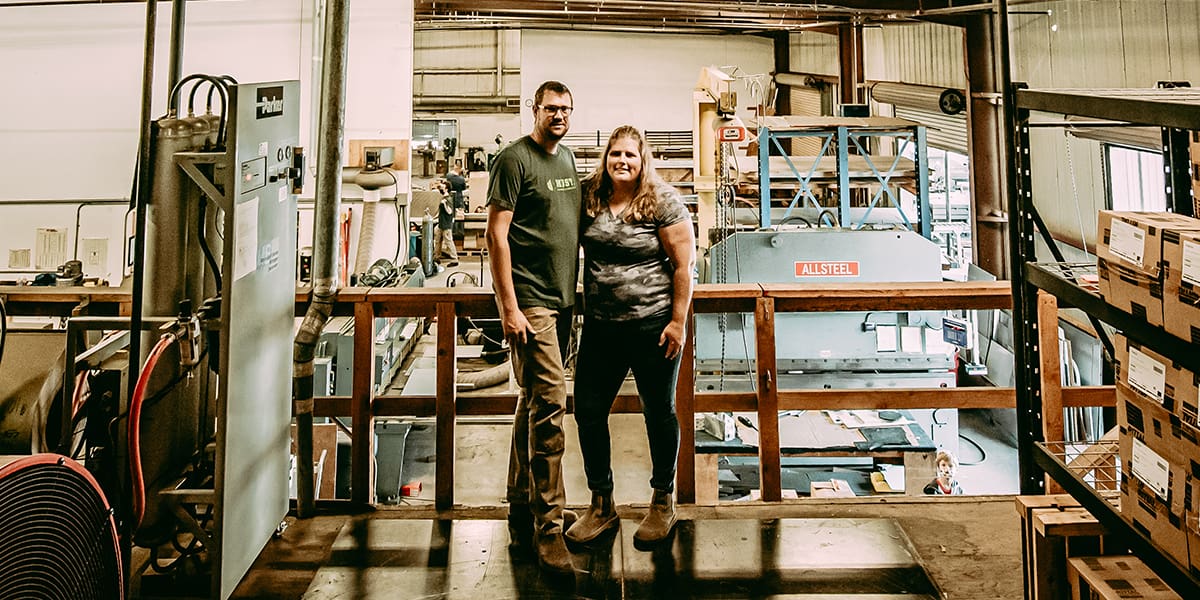
(Photo credit: Lisa Fonville – Hemlock House)
Alex Mitchell found his spark for all things mechanical as a young boy ‘helping’ his dad fix antique cars and trucks in his St. Helena driveway. “My father had a vineyard management company,” he says, “so there were lots of interesting things to repair in that driveway. I learned how to work on a car and fell in love with the work.”
Alex earned a Master’s in Industrial Technologies at Cal Poly San Luis Obispo, and came home to apply it at York Machine Works doing custom machining and fabrication for the wine industry. When John York retired in 2010, Alex and his wife bought the company; a decade later, they acquired Burgstahler Machine Works. Michelle, who holds a Master’s in Genetics from U.C. Davis, left her science career in 2014 to help Alex at York Machine Works, juggle parenthood and their growing business. In 2020 they acquired Burgstahler Machine Works and rebranded as MUST. Machining & Fabrication.
(Photo credit: Lisa Fonville – Hemlock House)
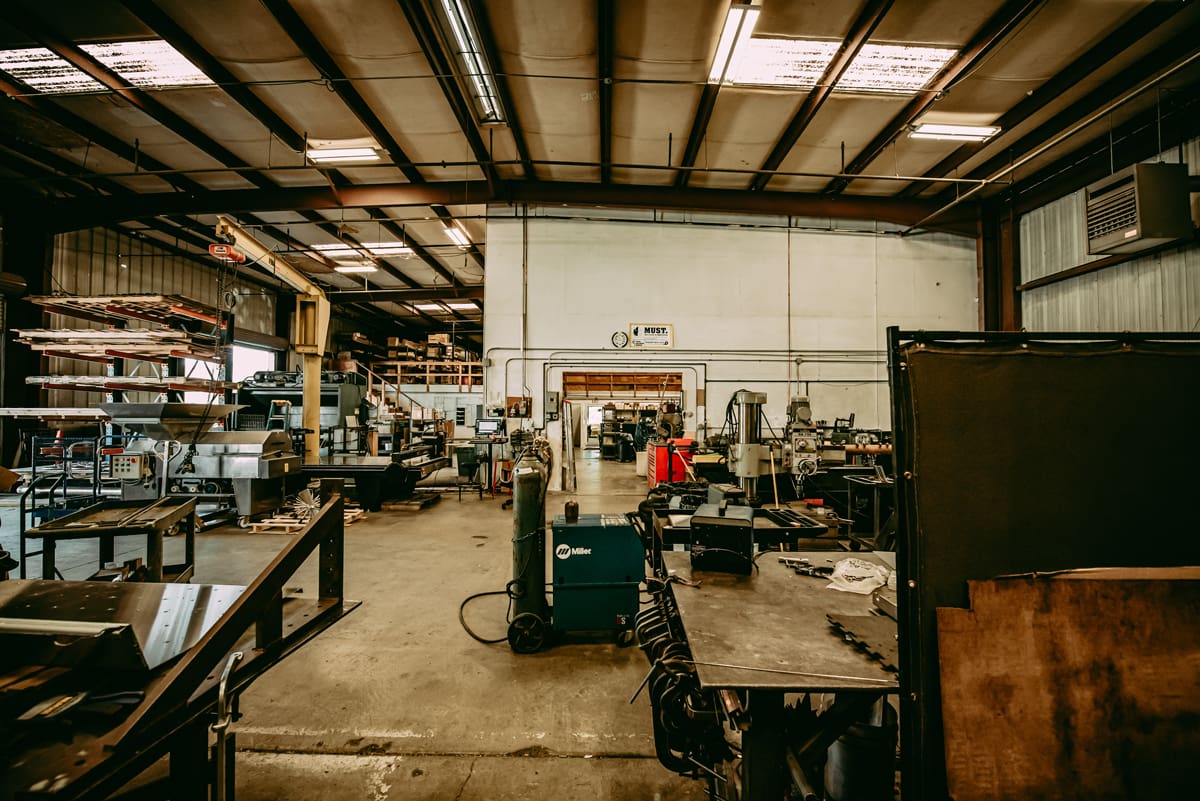
MUST provides custom machining and makes a full line of frequently needed parts for winemakers and brewmasters at its 10,000-square-foot facility. On a tour, Alex starts at the storefront that houses these parts.
“We’re a shop,” Alex explains, “essentially a hardware store for winemakers. So, if they need something, they can pop in and grab it off the shelf and go.”
Next are Assembly and Service, then Machining, with computer-controlled (CNC) lathes and a mill for high-volume production. Fabrication has a press brake, hydraulic shear and CNC plasma cutter for cutting and shaping sheet metal, and three TIG welders finish jobs there. A separate “dirty end” handles grinding, bead blasting and polishing to food-grade sanitary finishes. Mezzanines atop the tool room and CAD workstations overflow with inventory and welding fixtures.
Alex loves solving problems and often helps his customers solve their equipment issues. He shares an example: “A couple of years ago, our flexible impeller pump provider was often out of stock and their price kept increasing. We found our customers an alternative. McFinn Technologies—they’re always in stock and incredibly quick to ship. Plus, the prices are excellent, and honestly, the quality is higher. We started quoting both brands, but once the customers saw the difference, they said, ‘forget that old brand.’ So now we go straight to the McFinn US-FIP pumps.”
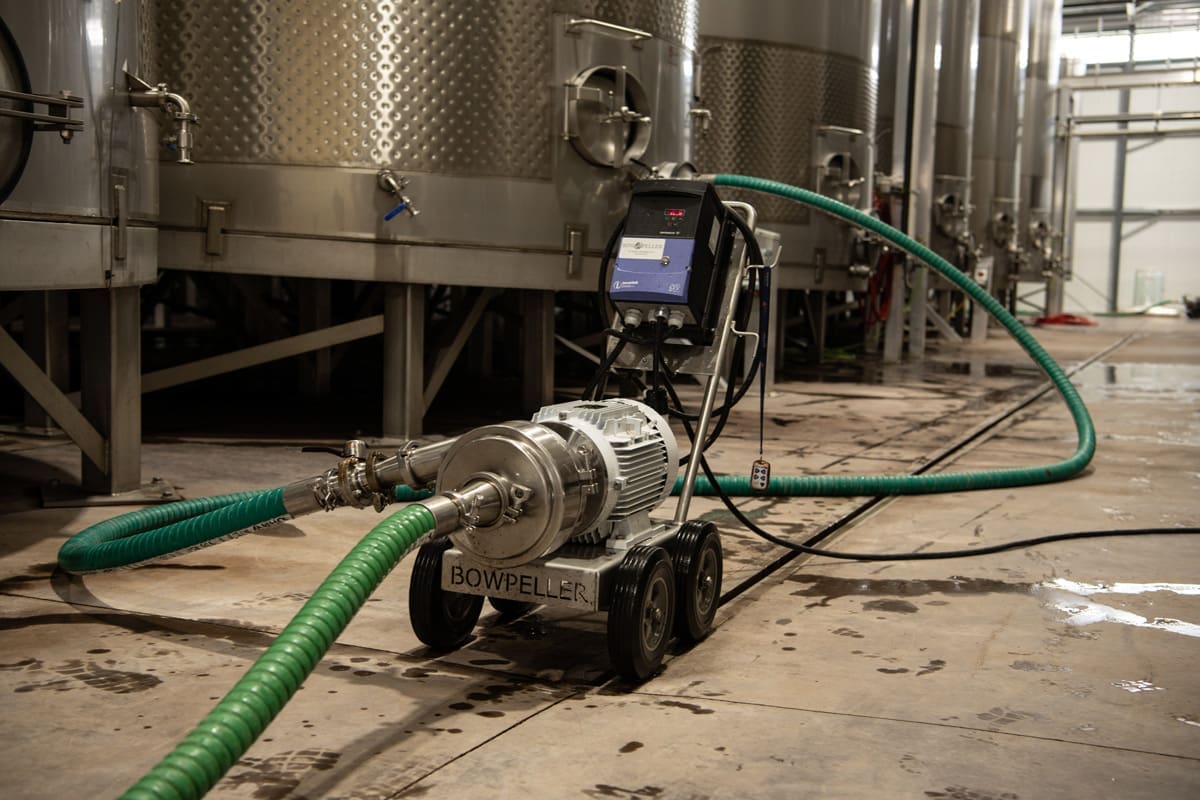
Mitchell also began using McFinn’s Bowpeller line for stationary pump-over applications. Its design allows solids to flow through the pump without plugging, eliminating the need for customers to use a screen inside the tank. Mitchell notes that he’ll probably be buying more Bowpeller pumps than ever, since his original supplier has long lead times due to data centers, which need them to move the liquid that cools them.
Says Alex, “John McGinn at McFinn is always available and willing to work closely with us to figure things out, but they designed these pumps for easy maintenance; everything is quite simple and straightforward. My service technician assembles pumps all day, every day, and he looked at the pump and started pointing out how nice it is.”
John McGinn explains the Bowpeller’s patented design. “A standard centrifugal pump has blades that slap the liquid and make it change direction by 90 degrees. The Bowpeller doesn’t beat it into 90-degree submission but does so gradually, which means a couple of things for winemakers who want to do pump-overs. First, there are no pinch points inside the pump to worry about, so skins and seeds will remain intact. Second, it will be very gentle on the product and won’t break up air or entrained gas bubbles.”
Learn more about how the Bowpeller by McFinn Technologies can help your winery at: mcfinntech.com.