October 1, 2026 (New York) — Across Europe, culinary traditions have been shaped by centuries of cultivation, craftsmanship, trade, and cultural exchange. Tuscany offers a particularly vivid testimonial to that enduring European heritage: its wines crossed oceans long before the modern European Union existed, while its olive oil was traded across the Mediterranean in antiquity. Today, the Savor Quality from Europe campaign, co-financed by the European Union, brings that living tradition to American audiences through two of Tuscany’s historic denominations: Vino Nobile di Montepulciano DOCG and the PDO and PGI extra virgin olive oils represented by APOT – Tuscan Olive Oil Producers Association. In 2026, two anniversaries provide an opportunity to explore how European food and wine have traveled across generations and borders.
Two Anniversaries, One Wine
As the United States marks the 250th anniversary of its Declaration of Independence, one of the document’s principal authors is being remembered for a lesser-known aspect of his life: his appreciation of European wine. Thomas Jefferson, later the third President of the United States, was among the admirers of Vino Nobile di Montepulciano, with historical records documenting his orders of several hundred bottles — an early example of how European wine and food culture found a place at the table of the young American republic.
That connection has now been revisited in a new book, The Taste of Freedom: Thomas Jefferson, Vino Nobile di Montepulciano and the Birth of the United States, by Francesco Clementi and Antonio Gaudioso. Presented in Montepulciano on June 19, 2026, the book traces how European material culture, and Vino Nobile in particular, helped shape a republican society founded on moderation, dialogue, and civic coexistence — one in which Jefferson used the table as a tool of diplomacy.
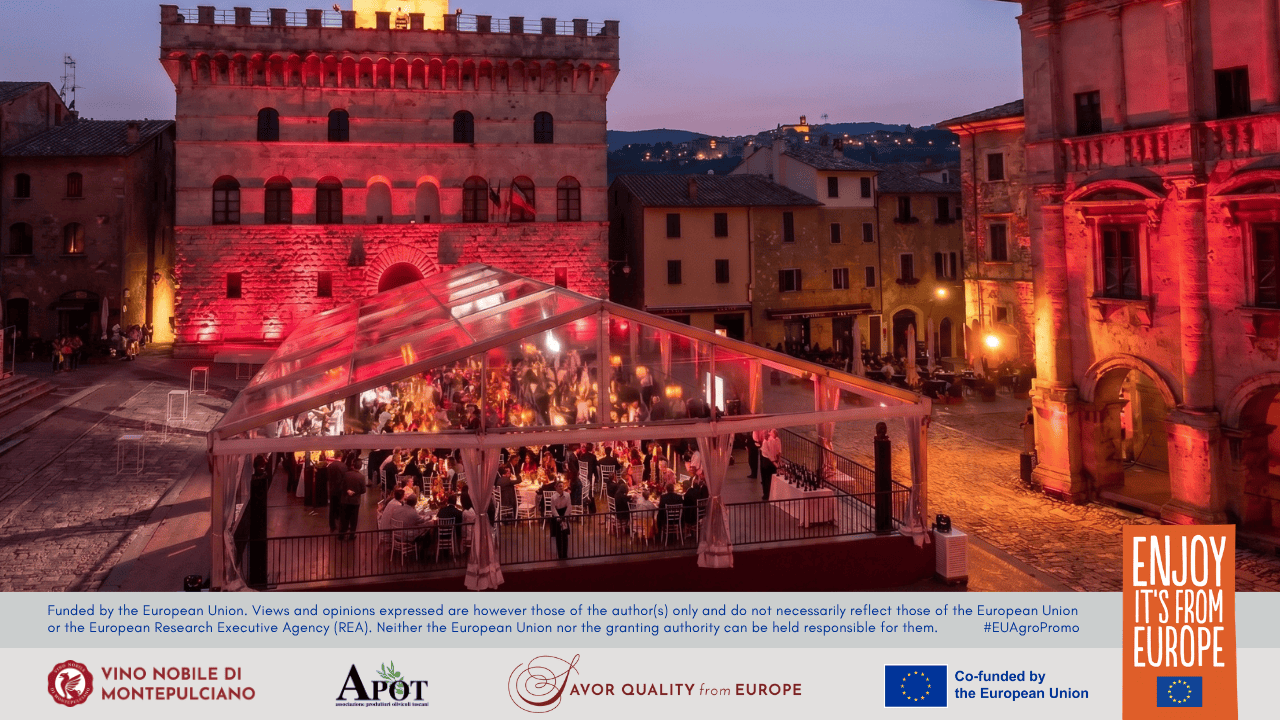
The presentation coincided with another 2026 milestone: the 400th anniversary of the birth of Francesco Redi, the Tuscan scientist and poet who, in his 17th-century poem Bacco in Toscana, gave Montepulciano wine a place in Italian literary tradition that has endured ever since. The Consorzio’s celebrations launched in June in Montepulciano’s Piazza Grande and will culminate in an international exhibition in March 2027.
Long Roots, Living Tradition
Olive cultivation has been part of Europe’s Mediterranean heritage for thousands of years. In Tuscany, that history can be traced to Etruscan times — a 6th-century BC shipwreck discovered off the Island of Giglio contained amphorae of preserved olives, archaeological confirmation of how central this crop was to Mediterranean trade more than twenty-six centuries ago.
That long history is still visible in what grows there today. Romans expanded the practice, medieval monasteries preserved it, and the terraced groves familiar to today’s visitors took shape between the 18th and 19th centuries. Tuscany’s cultivar heritage — Frantoio, Moraiolo, Leccino, and dozens of local varieties preserved by growers in specific corners of the region — is a direct reflection of Europe’s remarkable agricultural diversity and continuity.
Sustaining it today is the work of APOT – Tuscan Olive Oil Producers Association, the Pisa-based cooperative representing the producers behind Tuscany’s PDO and PGI extra virgin olive oils. APOT’s current agenda reflects a sector under significant pressure: climate change, biodiversity, and rising production costs are reshaping a landscape of small, hilly farms, where sustainability is as much economic as environmental.
A Successful 2026, and What’s Next
That through-line — from Etruscan amphorae to Redi’s verse to Jefferson’s table — is what the Savor Quality from Europe campaign brought to American audiences this spring, reaching more than 400 trade and media professionals across New York, Los Angeles, and San Francisco, with coverage from Forbes, Fortune, Bon Appétit, Food & Wine, and CBS. The campaign’s programming continues into 2027, with further U.S. activity in planning. Trade and media professionals interested in attending or arranging interviews with the Consorzio or APOT are invited to contact the campaign’s U.S. press office at eter@beviour.com
About the Consorzio del Vino Nobile di Montepulciano
Founded in 1965, the Consorzio safeguards and promotes Vino Nobile di Montepulciano, Rosso di Montepulciano, and Vin Santo. Today, it represents nearly 270 producers and leads initiatives to protect these denominations worldwide while advancing sustainability.
About APOT – Tuscan Olive Oil Producers Association
APOT brings together producers of Tuscany’s PDO and PGI extra virgin olive oils, preserving centuries-old traditions while promoting quality and sustainability. Representing oils such as IGP Toscano, DOP Terre di Siena, DOP Lucca, DOP Seggiano, and Chianti Classico DOP, APOT ensures that Tuscan olive oil remains a symbol of authenticity and excellence.
Discover the campaign:
www.savorqualityfromeurope.eu
Facebook: @savorqualityfromeurope
Instagram: @savorqualityfromeurope
#savorqualityfromeurope