Expanding Opportunities to Enjoy Nihonshu in Japan / Proposing Pairings Beyond Japanese Cuisine Overseas
September 30, 2026 — This year is the 48th year since October 1 was designated as “Nihonshu no hi” (Japanese Sake Day) by the Japan Sake and Shochu Makers Association (JSS) in 1978. The Association’s hope was to pass sake culture on to future generations and foster a deeper understanding and appreciation of it. Since then, sake has gained greater recognition and respect both in Japan and beyond, and today October 1 has become widely known around the world as World Sake Day.
October 1 was chosen because it once marked the beginning of the brewing year, and because the kanji character “酉” (tori), associated with October, is derived from the shape of a vessel used to hold alcoholic beverages. Today, the brewing year runs from July 1 through June 30 of the following year, but October 1 continues to provide an opportunity to communicate anew the culture and appeal of sake.
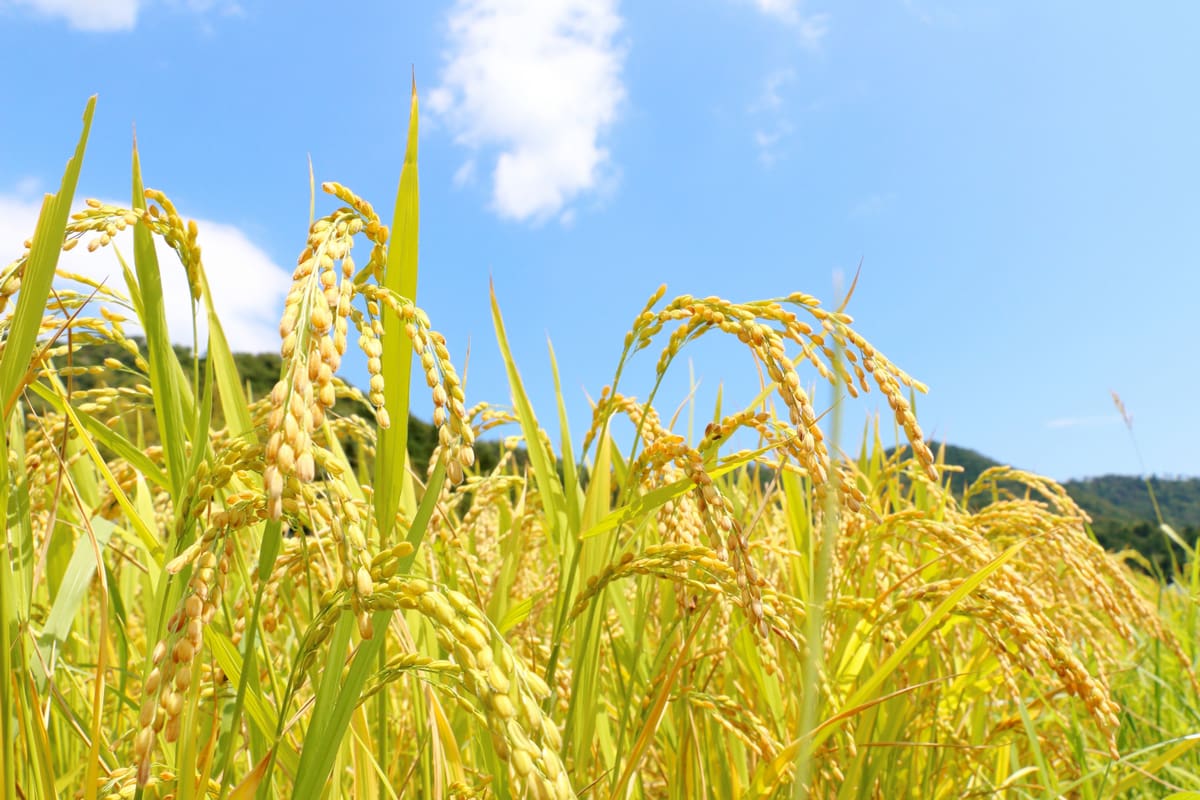
Only sake made with Japanese-grown rice and brewed and bottled in Japan may be called “Nihonshu,” and the name is protected as a Geographical Indication (GI). To carry Nihonshu into the future, it is important not only for producers to pass down their skills, but also to expand opportunities for consumers to discover its appeal. In Japan, efforts are underway to introduce Nihonshu through new ways of drinking it and opportunities to experience it, while overseas, its appeal is being communicated through pairings with local cuisines and food cultures.
Hitoshi Utsunomiya, Director of the JSS emphasized the significance of the occasion, saying, “We would like to use the opportunity of World Sake Day to communicate the appeal of Nihonshu both in Japan and overseas.”
Passing Sake-Brewing Skills on to the Next Generation
In December 2024, Japan’s “Traditional knowledge and skills of sake-making with koji mold in Japan” was inscribed on UNESCO’s Representative List of the Intangible Cultural Heritage of Humanity. At the forefront of efforts to pass these skills on to the next generation, initiatives continue to develop human resources through both theory and practice.
The National Research Institute of Brewing systematically conducts lectures and practical training based on brewing research, brewing theory, and management theory, with the aim of enabling participants to understand the principles of sake production and acquire the knowledge and skills necessary to take an active role in production themselves. Practical training focuses primarily on hands-on work and is designed to enable participants to learn how to control the microorganisms that are central to traditional sake brewing, including through their five senses and physical intuition.
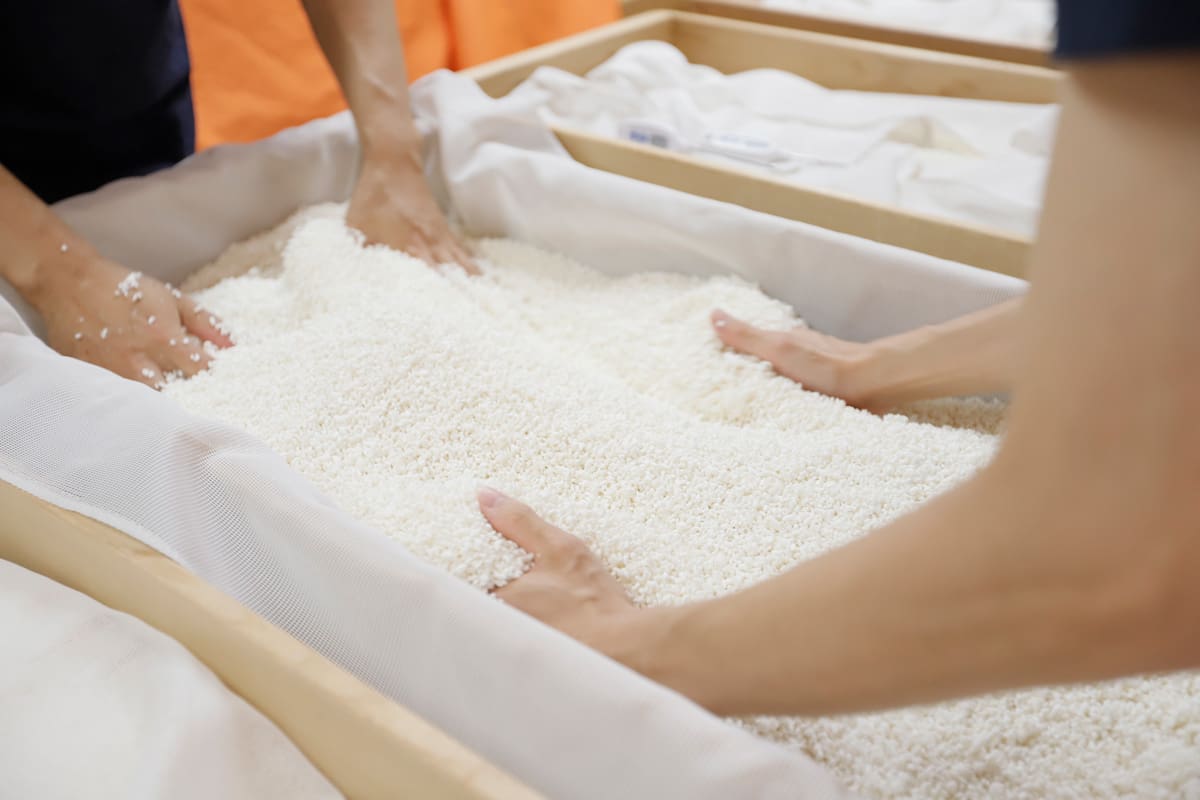
According to the institute, in recent years there have been many participants with relatively limited years of experience. Some say they would like to understand the basic principles of sake production, while others say they would like to experience production methods that they cannot learn at their own breweries.
The institute also notes a change in recent years: “Many participants actively exchange opinions with instructors and other participants, and we particularly see them enthusiastically working to improve their sensory evaluation skills through discussion-based sessions.” Exchanging views with one another and refining their ability to evaluate aromas and flavors also appears to be an important part of the learning that supports sake brewing.
Bringing Nihonshu Closer to Consumers
The JSS believes that, in order to carry the skills inherited by producers into the future, it is essential to continue creating an environment in which the appeal of Nihonshu reaches consumers and encourages consumption.
However, domestic shipments of Nihonshu in 2025 amounted to approximately 40 million cases (calculated on the basis of 9 liters per case), a decrease of 12% compared with 2020. From January to June 2026, shipments also declined by 5.8% year on year. To change this situation, JSS and individual producers continue to undertake activities aimed primarily at younger generations aged 20 and over to expand opportunities for them to become familiar with Nihonshu.
One example is “Sake High” (Sake Highball), a way of enjoying Nihonshu mixed with carbonated water. When Nihonshu with an alcohol content of 15% is mixed with carbonated water at a 1:1 ratio, the alcohol content becomes approximately 7.5%. This initiative, which began in earnest in 2024, has expanded to more than 10,000 outlets across Japan. By offering more ways to enjoy Nihonshu, the initiative is creating opportunities for people who previously had little exposure to it to discover its flavors.
Likewise, at Sake Fair 2026, held in June 2026, discounted tickets were offered to people aged 20 to 39, providing younger generations with an easier opportunity to participate. Through proposals for new ways of drinking Nihonshu and the creation of opportunities to experience it firsthand, JSS aims to expand domestic consumption.
Bringing Nihonshu to the World’s Food Cultures
In 2025, the value of Nihonshu exports reached approximately JPY 45.9 billion, while export volume totaled approximately 3.73 million cases (calculated on the basis of 9 liters per case), with both value and volume exceeding the previous year. From January to June 2026, export value increased by 4.2% year on year to JPY 23.8 billion, while volume decreased by 0.8% to approximately 1.85 million cases.
To expand understanding of Nihonshu and opportunities to serve it overseas, JSS has maintained partnerships with the Union de la Sommellerie Française since 2020 and the Association de la Sommellerie Internationale since 2022. Sommeliers, who connect local cuisine with beverages and make recommendations to consumers, play an important role in connecting Nihonshu with different food cultures.
Nihonshu Gains Ground in Fine Dining — An Importer on Nihonshu Sales Performance
Keiichiro Miyagawa, who works in France as a sommelier and importer and serves at JSS’s support desk, feels that interest in Nihonshu is increasing as local restaurants seek new beverage options. “Restaurants have also begun looking for new options, asking, ‘Is there an alcoholic beverage other than wine that our customers can enjoy?’ At that point, Nihonshu has increasingly come to be seen as one promising option.”
Miyagawa explains that behind this trend are many years of steady promotional efforts by importers. He believes that having chefs and sommeliers understand Nihonshu and recommend it to customers in their own words will help it become established within the local food culture.
Miyagawa added, “According to our current research, Nihonshu is now served at approximately 22% of three-Michelin-starred restaurants in France, approximately 22% of two-Michelin-starred restaurants, and approximately 33% of one-Michelin-starred restaurants in Paris. This situation would have been almost unimaginable 15 years ago. These figures alone show that, within France’s top restaurants, Nihonshu is gradually changing from a ‘special foreign alcoholic beverage’ into ‘one of the beverage options to pair with food.'”
He says that changes can also be seen outside restaurants. According to Miyagawa, companies that have traditionally focused on selling wine through e-commerce have begun making inquiries about handling Nihonshu, while wine shops are also gradually beginning to stock it. He hopes that encounters with Nihonshu in restaurants will lead consumers to purchase it and enjoy it at home as well.
In 2025, the value of Nihonshu exports to France expanded to approximately three times the 2020 level, making France the largest market for Nihonshu in Europe.
Sake as an Enhancer of Cuisine: Top Sommeliers Discuss Its Appeal
At restaurants in luxury hotels in France, sake is being selected as a beverage to accompany food. Emmanuel Cadieu, Wine Director at Cheval Blanc Paris, particularly enjoys pairing eel with aged sake at the hotel’s Japanese restaurant, Hakuba. The dish features ikejime eel that is aged and then simmered in a sauce containing soy sauce, mirin, sake and other ingredients, and is paired with long-aged sake. Cadieu explains that aromas found in aged sake, such as roasted hazelnuts and sweet spices, resonate with the deep flavors of the sauce. It is a pairing based on aromatic “resonance,” making use of the diverse expressions of sake in combination with food.
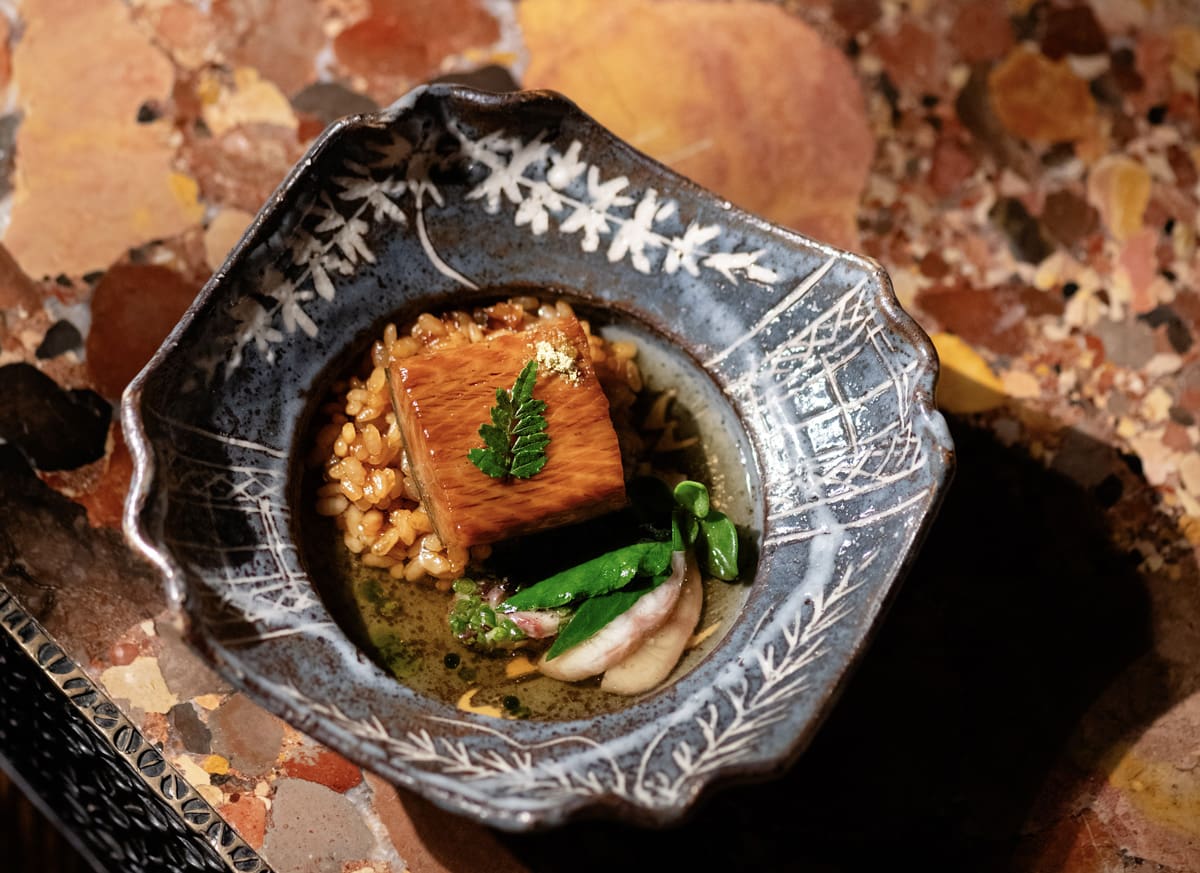
At the same time, Cadieu says, “I would like people not to think of sake as ‘a beverage only for Japanese cuisine.'” What he identifies as distinctive about sake is the combination of “texture,” meaning its mouthfeel and tactile qualities, and “umami.” By complementing the flavors of a dish and extending its finish, sake can create a wide variety of pairings.
Florian Guilloteau, who oversees the sommelier department at Ritz Paris, discusses the potential of sake pairings through dishes served at his restaurant. One example at the hotel’s restaurant, Espadon, is a dish combining “oily fish, blackcurrant and coffee.” Guilloteau explains that the texture and depth of sake connect the richness of the fish, the bitterness of the coffee and the vivid fruitiness of the blackcurrant.
“One of the great strengths of sake is its ability to enhance the flavors of a dish,” he says. While wine often creates a “contrast” with food through acidity, tannins and aromatic intensity, he adds that sake tends to extend and further amplify the flavors inherent in the dish itself. “The result is often full of surprises, revealing new aspects of both the dish and the sake that we had not noticed before.”
Focusing on these characteristics of sake, both sommeliers propose pairings with an even broader range of cuisines. Guilloteau points out that rich, structured styles of sake also have potential with meat dishes involving roasting or grilling, or sauces based on meat juices. Choosing sake, he says, broadens the range of dining experiences that chefs and sommeliers can propose. For rich and creamy styles of sake, Cadieu suggests fish cooked with browned butter or creamy risotto. For aged sake, he sees possibilities with dishes using reduced meat jus, roasted vegetables and aged cheeses. This approach applies the diverse aromas and textures of sake to French and Italian cuisine as well.
Passing Sake on to the Next Generation
Regarding the future of pairing, Guilloteau points out that it is important to embrace both wine and sake and understand how each can enrich the dining experience.
The sake industry is supported by producers who inherit and pass on brewing skills, by those who communicate its flavors, and by the people who enjoy it. Both new ways of drinking sake proposed in Japan and the growing range of pairings with non-Japanese cuisine overseas provide opportunities to connect sake with new consumers.
The JSS will continue to communicate the value of traditional sake brewing while promoting diverse styles of sake, ways of drinking it, and pairings with food, thereby expanding opportunities for sake, and Nihonshu in particular, to be selected and enjoyed in dining settings both in Japan and overseas.