“As a Master Sommelier and longtime winery owner, I hold advisors to a high standard, and Erik McLaughlin exceeded it. Erik and the Metis team represented Gramercy Cellars in our transaction with Avennia, and from our first meeting I knew we had the right firm.
Erik knows the industry’s decision-makers: which operators, family groups, and strategic buyers are active, what they will pay for, and where a winery like Gramercy fits. That reach put us in front of Avennia at the right moment and kept other parties in play when we needed leverage. He ran a real process, not a hope-and-wait sale.
He also understands how buyers value a wine business, from vineyards and inventory to brand equity and sales channels. Having spent years in the business himself, he knows how a winery actually operates. That let him present Gramercy with a precision and credibility a generalist advisor cannot match. Erik is a strong negotiator and, at times, a therapist. He knew when to push and when to let something sit. Every sale has moments when it looks as if the deal will not close. Erik kept control from introductions through closing, was available whenever I needed him, and is backed by a team of leaders in their own fields. I could not be more pleased with the representation or the result. For any owner considering the sale of a winery or vineyard, I recommend Erik and Metis without reservation.”
— Greg Harrington, MS, Founder, Gramercy Cellars
CLIENT
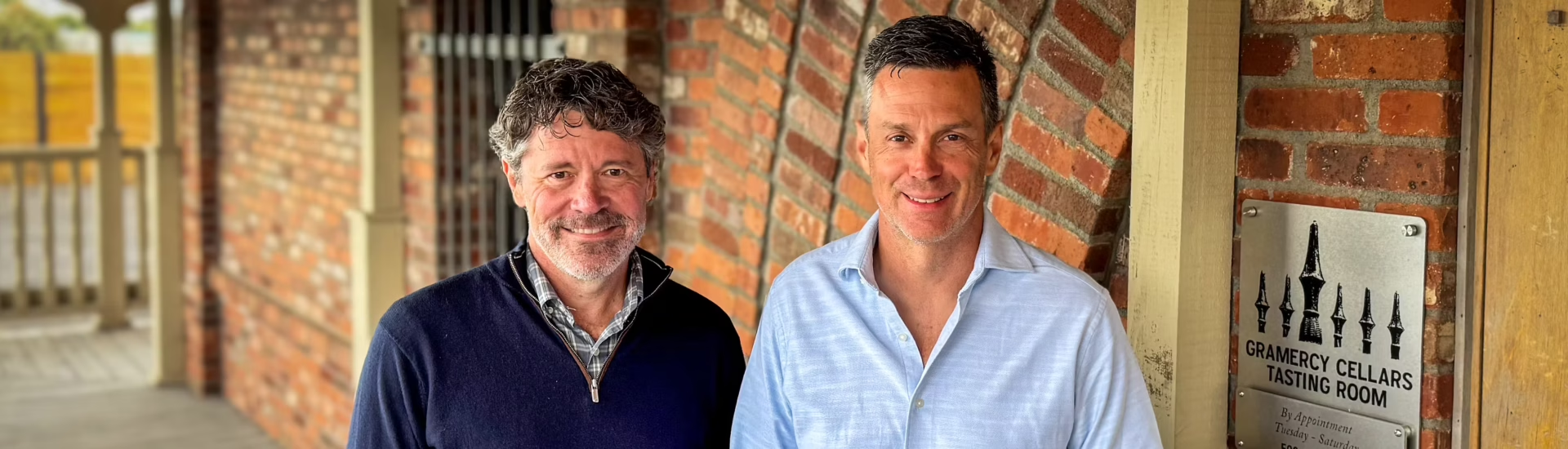
Few Washington wineries have earned the sustained critical recognition of Gramercy Cellars. Founded in Walla Walla in 2005 by Master Sommelier Greg Harrington and Pam Harrington, the winery has received more than 300 scores of 90 points or higher from the world’s leading critics and has been named to Wine & Spirits’ “Top 100 Wineries in the World” eleven times. Harrington earned his Master Sommelier certification in 1996 at the age of 26, making him the youngest to pass the exam at that time and the 261st Master Sommelier worldwide. Before turning to winemaking, he oversaw wine programs at some of the country’s most prestigious restaurants, working for chefs including Emeril Lagasse and Wolfgang Puck. In 2004, he attended an event in Walla Walla, was blown away by the potential of the region, and moved west the following year to found Gramercy Cellars.
The winemaking philosophy has remained consistent: balance, structure, and minimal intervention, with fruit harvested in balance rather than overripe and aged in minimal new oak. Working almost exclusively with Rhône and Bordeaux varieties, Harrington built a portfolio known for restraint and food-friendly character — in his words, “lower oak, lower alcohol wines clearly meant for the dinner table.” That style made Gramercy a leader in the industry’s shift toward more balanced wines and a standard bearer for Washington on top wine lists nationally.
The recognition came early and kept coming. Seattle Magazine named Harrington ‘Best New Winemaker in Washington’ in 2008, and Food & Wine named Gramercy ‘Best New Winery in America’ in 2010.
Commercially, the business reflected its founder’s background. Direct-to-consumer sales consistently exceeded 70% of revenue, anchored by wine club membership and their Walla Walla tasting room. The balance moved through a distribution network covering 24 states and 11 export markets, weighted toward the high-end on-premise accounts where Harrington’s credentials and relationships had the most influence. The estate holdings included Forgotten Hills Vineyard, an organically farmed cool-climate site at the base of the Blue Mountains; JB George Vineyard in the Pepper Bridge corridor; and a partnership in Octave Vineyard, a high-elevation site in the SeVein project.
CHALLENGE
Gramercy Cellars co-founders Greg and Pam Harrington divorced, ultimately necessitating a sale of the business. The brand is broadly identified with Greg personally, though, and Gramercy’s greatest asset also became its central succession challenge. The brand’s standing with sommeliers, critics, and its own club members was inseparable from Greg Harrington personally. His palate selected the club allocations, his credentials opened the on-premise accounts, and his voice told the story in the market. This reputation could not simply be transferred with the inventory and IP, so it was key to find a buyer who would retain Greg and with whom Greg was excited to work.
The timing also added a challenge, as the marketing period coincided with a broad downturn in the wine industry that reduced the number of active buyers in the market and significantly increased the caution amongst remaining buyers. The business also made strategic decisions to contract during this period, pulling back on production and sales travel to focus on debt reduction, operational efficiencies, and balancing inventory while maintaining its highly profitable club and DTC channels. These choices enabled the company to maintain EBITDA despite a conscious reduction in revenue for the company. Helping buyers understand the continued strength of the brand despite a decline in top-line revenue became a key criterion for developing interest in the business.
The structure presented its own complexity. The business spanned multiple related entities, including related-party vineyard holdings and a minority interest in a third vineyard, and both the winery and the barrel and case-goods warehouse operated under leases rather than owned real estate. The unique nature of the Business being production asset-light and vineyard asset-heavy unsettled others.
Finally, Walla Walla is a small community with over 140 wineries and little distance between them. Confidentiality mattered, and Harrington’s visibility in the industry and the profile of the brand made it fragile.
PROCESS
Metis developed a buyer pool spanning regional, national, and international strategic operators, family wine companies, and financial buyers with existing wine platforms.
Early work centered on separating the brand’s performance from the deliberate pause in growth spending. Metis built the financial analysis and normalized earnings presentation that allowed buyers to see the underlying margin structure of a business generating over 70% of revenue through direct-to-consumer channels, and to understand what modest incremental volume would contribute against an overhead base already in place.
Structuring the transaction required untangling the related entities and vineyard interests. Metis worked with the company and its advisors to present the vineyard holdings, including the minority Octave interest and its fruit purchase obligation, in a form buyers could underwrite, and to define which assets would transfer. Forgotten Hills Vineyard and Gramercy’s interest in Octave were ultimately included in the transaction.
After the initial marketing period, Metis quickly found a buyer, and Harrington accepted an offer. However, the diligence period coincided with the start of the conflict in Iran that rattled investors, resulting in the offer being terminated. Metis expanded the buyer pool and circled back to parties who had previously reviewed the opportunity. Ultimately, Avennia proved to be the right fit both strategically and culturally.
Founded by winemaker Chris Peterson and Marty Taucher, the Woodinville winery had built its own reputation on Old World-inspired wines from premier Washington sites including Red Willow, Boushey, Bacchus, and Dionysus, reflecting the same conviction that Washington vineyards can yield wines of elegance and restraint. For Avennia, Gramercy established a significant Walla Walla presence complementing its Red Mountain estate program, extended its distribution reach domestically and internationally, and brought Harrington’s on-premise relationships into the group.
In the summer of 2026, the Avennia team, including ownership and its sales and operations leads, met with Harrington at the Metis office in Walla Walla. The agenda was less about terms than about fit: how a transition would actually work, the history of the winery, what its philosophy and principles are, what the customers care about, if and how Greg wanted to remain involved going forward. The conversations continued over a couple of days and ran well past the business at hand. Both sides opened bottles from their own libraries and shared favorite wines from around the world. By the end of those days, what remained to be settled was structural rather than philosophical.
Metis facilitated information sharing, negotiation, and diligence, with particular attention to the terms governing Harrington’s ongoing role, the provision that mattered most to both the brand and its club members.
Once the deal was fully agreed upon, Metis also negotiated and facilitated the acquisition of the Gramercy winery building (which had been leased by the winery) from the McKibben family.
OUTCOME
The transaction closed in September 2026. The ownership group behind Avennia acquired the Gramercy Cellars brand and inventory, Forgotten Hills Vineyard, and their interest in Octave Vineyard from Greg and Pam Harrington, as well as the winery’s longtime production facility and tasting room from the McKibben family. Gramercy Cellars continues to operate as an independent brand, parallel to the Avennia wine family. The winery’s wine club and Walla Walla tasting room continue to serve guests without interruption, and club members will see no change to their allocations or benefits. Gramercy and Avennia are each roughly equal-sized businesses. While production and sales of each remain entirely independent, there are significant efficiencies enabled by shared ownership and administration of the businesses.
Harrington has transitioned his activities from day-to-day leadership to Founding Winemaker, producing the wines at the Gramercy facility in Walla Walla alongside Chris Peterson, who assumed overall responsibility for winemaking across the group. Greg remains the voice of Gramercy Cellars, participating in release events and ongoing communication with customers, and continues to work with the distribution team and to tell the story of Washington wine worldwide.
The result is a transaction that preserved what made Gramercy Cellars distinctive: the style, the club, the vineyards, the tasting room, and the founder’s voice. What it added was the capitalization and team to help it return to growth and carry into the future as one of Walla Walla’s most influential wineries.