Over the last eighty years, wine has developed into a global monoculture—but an eclectic group of vintner rebels are redefining the culture and creation of wine.
“Opening the windows in the cathedrals we’ve built around wine won’t harm its better parts, and it just might breathe it back to life.”—Mimi Casteel, Hope Well Wine, from the foreword
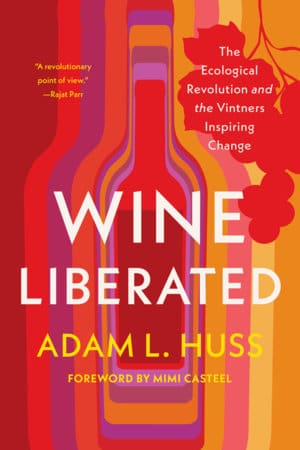
September 28, 2026 — Chelsea Green Publishing—What can wine become when we free ourselves from the belief that our current idea of wine is the highest and best version that it can be? Just a few varieties of a single species of grape dominate the wine market: Millions of acres of Cabernet Sauvignon, Pinot Noir, Chardonnay, and a few others grow across many countries on nearly every continent. When you think of wine, what you probably think of is actually a product of colonial capitalism founded on prejudice and sustained by pesticides.
Since 2019, winemaker and popular podcaster Adam Huss has been seeking out, interviewing, and learning from an unorganized group of wine producers who are pushing wine beyond the boundaries of the wine industry’s hegemony. The impetus for many of these folks originates in ecological appropriateness and the desire to build authentic local wine cultures, and the results are revolutionary. The influence of the ideas behind these unassuming rebels’ approach to wine has begun to liberate it from the damaging confines of the dominant wine culture, of which their wine is a living critique.
Wine Liberated explores the big questions about what wine is and what it can become when it’s ecologically minded, diverse, and even more delicious.
About the Author
Adam Huss started learning and blogging about wine in 2004. He started making wine in 2007 and growing wine in 2012. Along the way, he took introductory level tests with The Wine & Spirits Education Trust (WSET) and the Court of Master Sommeliers, but he found something missing in these widely revered institutions of formal wine training and didn’t pursue education with either. He chose instead to take the practical approach by working in and with wine and vines. Starting in 2012, Adam converted his Los Angeles yard into a permaculture-inspired wine-producing perennial polyculture, named Crenshaw Cru Winegarden. In 2019, Adam started Centralas, a commercial licensed winery headquartered in South Los Angeles. When he started Centralas, Adam also began recording and publishing the Organic Wine Podcast, which he later renamed the Beyond Organic Wine Podcast. He has interviewed over 180 wine professionals, scientists, authors, and wine farmers and producers from around the world. Recently, Adam and his wife moved from California to the Finger Lakes region of New York State, where he plans to develop an experimentation site for married vines, which are co-planted perennial polycultures made of vines growing on living trees supported by an understory of other beneficial plants.