The appellation confirms its constant growth while opening a discussion on the new opportunities offered by reduced-alcohol wines
June 11, 2026 (Verona, Italy) — A rapidly growing appellation, capable of interpreting market shifts and responding to the evolving needs of international consumers. This was the key message emerging from the conference “Garda DOC: Growth Strategies and Market Perception in International Markets. Low Alcohol, Versatility and New Consumption Trends”, organised by the Garda DOC Consortium at the historic Dogana Veneta in Lazise.
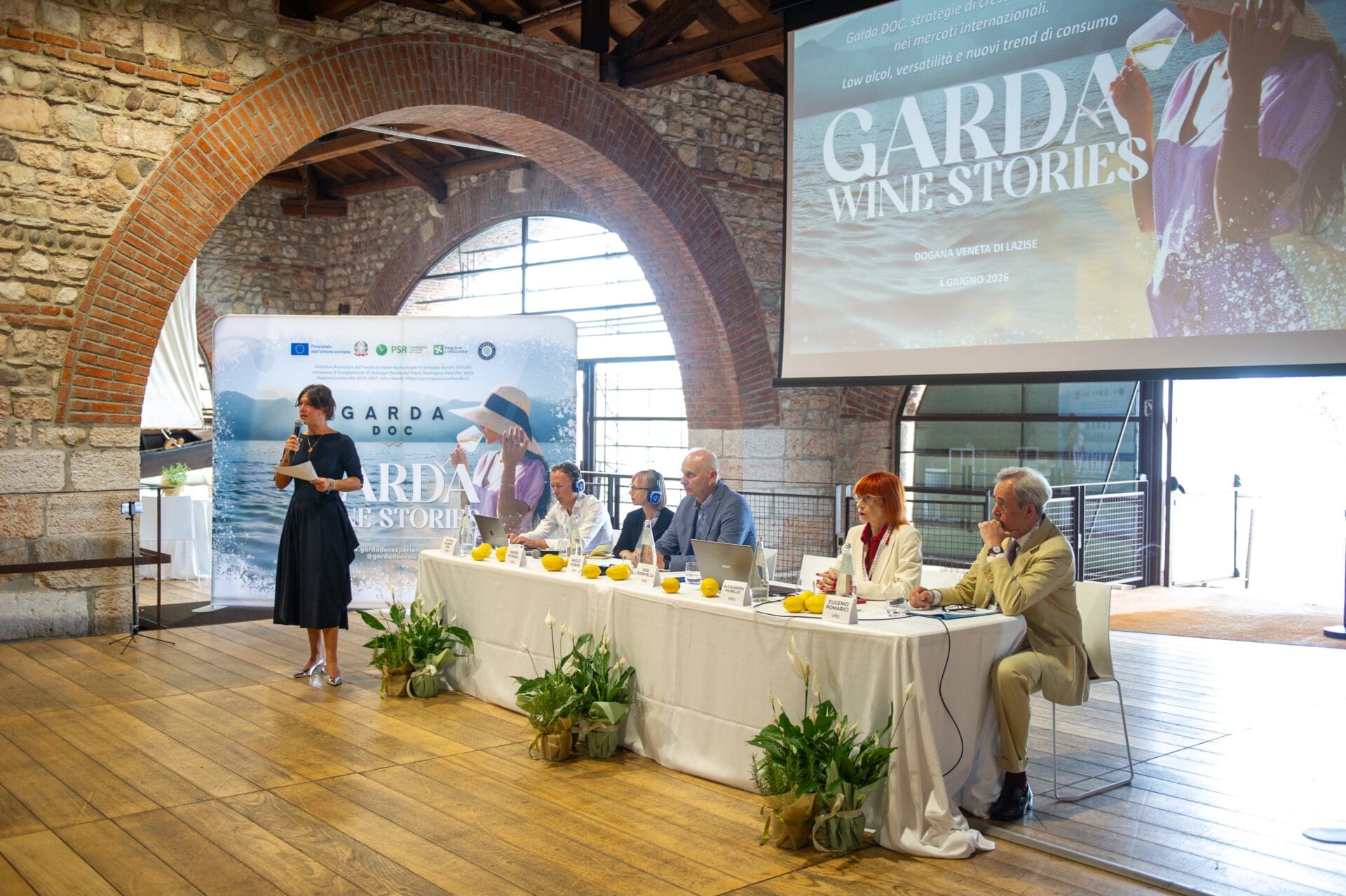
The event brought together academics, journalists, Master of Wine professionals, international opinion leaders and wine industry stakeholders to examine the role that low-alcohol wines and emerging consumption trends may play in the future development of the denomination.
“Addressing the topic of low-alcohol wines today means carefully analysing the evolution of international demand, understanding new consumption patterns and anticipating the changes currently reshaping the global wine industry,” said Paolo Fiorini, President of the Garda DOC Consortium.
“An increasing number of consumers are seeking versatile, contemporary wines that align with a more mindful approach to drinking, without compromising on quality, authenticity or a strong connection to place. In this context, the role of an appellation is to interpret change with responsibility and strategic vision, transforming emerging trends into growth opportunities for producers. As a Consortium, we were the first Italian denomination to introduce a reduced-alcohol category into our production regulations. This pioneering decision reflects Garda DOC’s commitment to innovation and its determination to provide producers with practical tools to respond to international market demands while remaining firmly rooted in its identity and values. It is precisely in this spirit that this conference was conceived as part of Garda Wine Stories: a project designed not only to promote the denomination, but also to serve as an ongoing observatory of key wine markets, consumer behaviour and the trends shaping purchasing decisions. Bringing together analysts, journalists, Masters of Wine, trade professionals and producers helps generate knowledge, encourage dialogue and provide wineries with valuable tools to navigate future challenges with greater awareness. The Garda area has always demonstrated an ability to evolve without losing its identity. The growth of our denomination depends on our capacity to look ahead, invest in innovation and continue enhancing the unique characteristics that distinguish us within the Italian wine landscape.”
Opening the conference, Fiorini presented the evolution of the denomination and the results achieved in recent years. With more than 23 million bottles produced in 2025, Garda DOC recorded its best performance ever, consolidating a growth trajectory that began in 2016 and has been driven by its ability to offer contemporary, versatile wines aligned with international market demands.
Among the most recent innovations introduced into the production regulations is the possibility of producing Garda Garganega with a minimum alcohol content of 9% ABV, a decision that places the denomination at the forefront of addressing emerging consumer preferences.
From a regulatory and production perspective, Professor Eugenio Pomarici of the University of Padua outlined the current landscape of no- and low-alcohol wine products, highlighting how the NoLo segment has become one of the most dynamic developments in the global wine industry. Although still a relatively young market, its growth rates are significant and stand in contrast to the decline in traditional wine consumption. According to the data presented by Professor Pomarici, the future success of the category will depend on further improvements in the sensory quality of products, advances in dealcoholization technologies, and continued investment in research and innovation.
A detailed analysis of the United Kingdom was provided by Patrick Schmitt MW, Editor-in-Chief of The Drinks Business, who explored the growth opportunities for low-alcohol wines in the British market. The study highlighted how changing consumer attitudes towards alcohol consumption, together with the introduction of taxation systems increasingly linked to alcohol content, are reshaping the UK wine sector. In this context, low-alcohol wines represent one of the most promising growth segments. The analysis showed that demand is being driven by consumers seeking lighter products suitable for moderate consumption and compatible with wellness-oriented lifestyles. At the same time, Schmitt emphasized the importance of developing effective positioning, pricing, and distribution strategies to successfully capture this growing demand. Within this evolving landscape, Garda DOC wines are well positioned to meet market expectations thanks to their inherent freshness, drinkability, and versatility, offering strong growth potential in a market that continues to reward innovation while valuing quality and a clear sense of origin.
Equally significant was the analysis of the German market presented by Karin Eymael, Editor-in-Chief of Weinwirtschaft and Meininger’s International. The data presented revealed strong growth in the no-and low-alcohol wine segment, driven by increasing health awareness, technological innovation, and evolving lifestyles, despite an overall decline in wine consumption. According to Eymael, naturally low-alcohol wines represent a tangible opportunity in the German market, which remains one of the world’s leading wine markets and a strategic destination for Italian wine. Appellations capable of combining territorial authenticity, sustainability, and quality are particularly well positioned to benefit from this trend.
The cultural evolution of wine consumption was explored by Alessandra Piubello, journalist for Decanter, who addressed the subject of low-alcohol wines from both a practical and strategic perspective, reflecting on their potential role in the future of the industry. Rather than offering definitive answers, her presentation encouraged broader consideration of the relationship between innovation, identity, and changing consumption habits, emphasizing that the wine sector’s greatest challenge lies in understanding and embracing change without sacrificing authenticity or cultural value.
The conference concluded with a roundtable discussion moderated by oenologist and wine expert Sissi Baratella, during which speakers, journalists, and producers shared insights and strategies for the future development of the denomination. The discussion underscored the importance of continuing to invest in research, communication, and international market analysis, while further strengthening the qualities that make Garda DOC a distinctive presence within the Italian wine landscape: production versatility, strong territorial identity, and the ability to anticipate and respond to evolving consumer preferences.