The focus of the opening conference is the new Ceseo-Lumsa report on wine tourism, the themes of training, the new generations and artificial intelligence.
May 15, 2026 (Palermo, Sicily) — With the opening conference of the 22nd edition of Sicilia en Primeur, Assovini Sicilia sought to delve more deeply into a highly topical issue such as wine tourism, drawing on concrete data and a useful analysis to help shape future strategies.
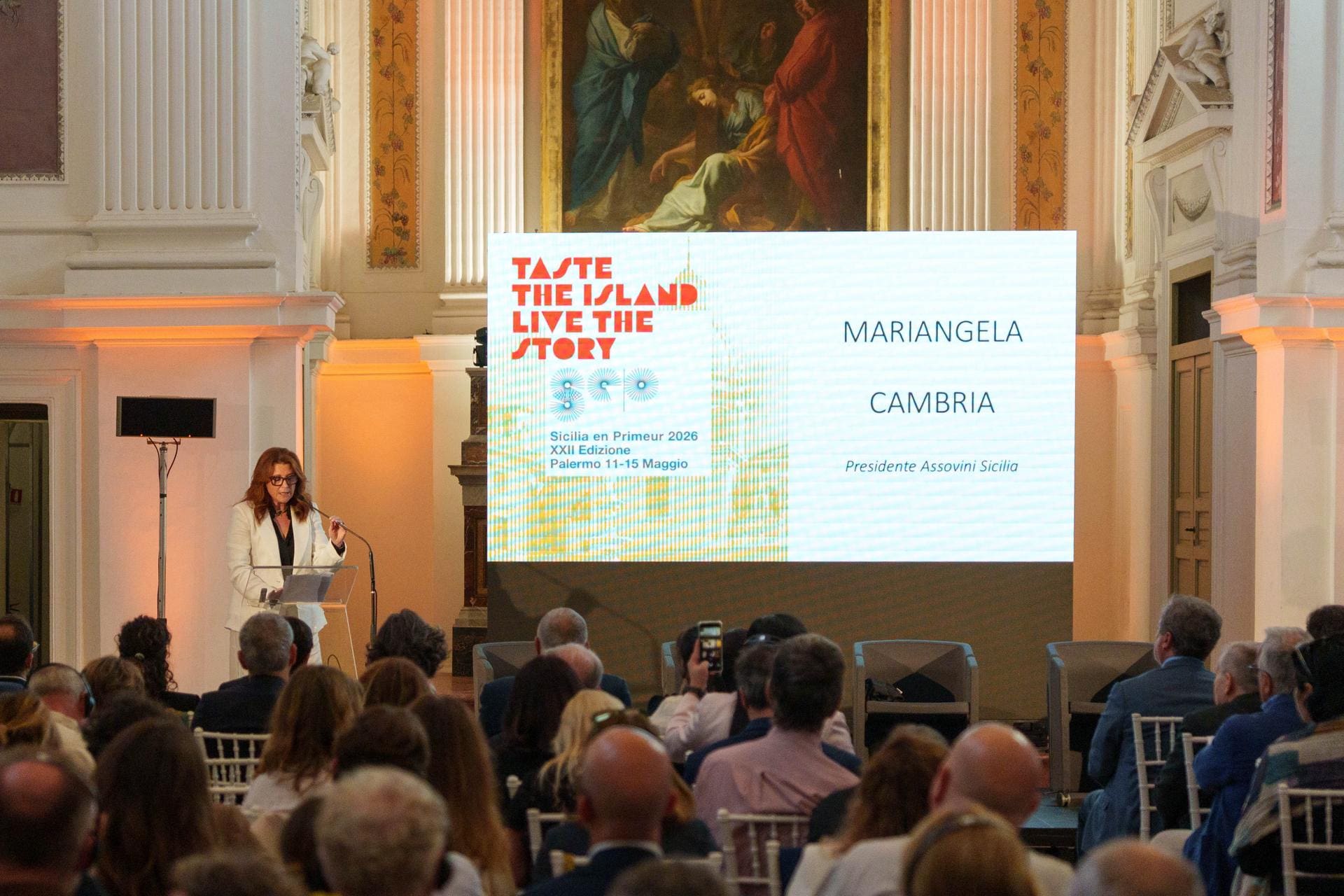
The event, organized by the Sicilian association, got underway at the Oratorio dei Bianchi in Palermo with the conference “Taste the Island. Live the Story” and, until 15 May, will bring together over a hundred journalists from all over the world in Sicily to discover Sicilian wine through tastings, visits to wineries and other experiences. This year’s event features 56 member wineries with over one thousand labels tasted during the different moments.
Choosing Palermo as the venue also provided an opportunity for the national and international press to explore some lesser-known parts of the city, such as the recently renovated Real Albergo delle Povere – the venue for the tasting with producers and the technical tasting – the Church of Santa Maria dello Spasimo, and Palazzo Sant’Elia.
Mariangela Cambria, president of Assovini Sicilia, opened the proceedings: “Talking about wine in Sicily inevitably means talking about a journey. A journey that goes beyond tasting and becomes a cultural experience, an encounter with the region, its communities and the island’s deep-rooted identities. We decided to host this edition of Sicilia en Primeur in Palermo because this city best represents the rich tapestry of history, cultures and perspectives that makes our region so unique. Today, wine tourism is a key strategic asset: not simply an economic opportunity for businesses, but a powerful tool for telling the story of wine through Sicily’s landscape, cuisine, art and human heritage. This is the spirit behind our invitation: ‘taste the island, live the story’.”
The conference – chaired by the moderator and sommelier Andrea Amadei, focuses on wine tourism as a key element for growth in the regional wine sector, covering sustainability, digitalization, training and new ways of interacting with consumers. The picture that emerges is that of a distinctive Sicilian wine tourism model which needs to organize and capitalize on existing international demand.
Following the opening remarks and greetings by the various dignitaries – Roberto Lagalla, Mayor of Palermo; Alessio Planeta, President of Consorzio di tutela vini DOC Sicilia; Alberto Tasca, President of the SOStain Sicily Foundation; Matteo Zoppas, President of ICE (Italian Trade Agency) – the findings of the report on Sicilian wine tourism produced by Lumsa-Ceseo (Centre for Studies in Wine and Olive Oil Tourism) were presented, painting a picture of a mature, international sector that is becoming increasingly strategic for the development of Sicilian wine. According to the statistics, in 2025 61.4% of the Sicilian wineries surveyed reported an increase in the number of visitors, whereas 74.7% indicated that the majority of their customers were foreign, mainly coming from Europe and the United States. According to the study, wine tourism represents a significant and growing economic factor for the Sicilian wine industry: for 58.3% of wineries, it accounts for around 10% of total turnover – excluding direct wine sales – whilst guided tours and tastings are proving to be increasingly important marketing tools for wineries.
Among the key areas of strength, sustainability also ranks highly: 86.7% of wineries generate energy from renewable sources, 56.2% meet at least 40% of their energy needs through green energy, 88% have eliminated single-use plastic in their hospitality facilities, and around seven in ten wineries use lighter-weight bottles.
The survey also reveals a significant evolution in the range of services on offer: tasting rooms, wine shops, guided tours and dedicated staff are now widespread, and almost six in ten wineries say they have already planned new experiences for 2026, with the aim of creating increasingly elaborate and premium offerings. The level of basic digitalization – websites, e-commerce and mailing lists – is also positive, whilst the use of more advanced tools remains somewhat limited: only 20% of wineries have a fully-fledged Wine Club, and 30.6% report using artificial intelligence, primarily in the areas of marketing and communications.
“The work carried out by CESEO on behalf of Assovini Sicilia provides a unique and thought-provoking wealth of knowledge for those who have the future of Sicilian wine tourism at heart. Having access to solid, up-to-date and geographically detailed data is not an academic exercise, but a necessary condition for enabling institutions and operators to take effective action, moving beyond fragmented approaches and guiding a growing sector towards full competitive maturity”, explained Dario Stefàno, President of CESEO – Lumsa University, Rome. “The statistics emerging from the survey confirm the vitality of the sector, which is characterized by considerable international appeal and a well-established offering, but they also clearly highlight a number of weaknesses that need to be addressed,” concludes Stefàno.
According to Antonello Maruotti, scientific coordinator at CESEO and professor of statistics at Lumsa University in Rome: “The report we have worked on paints a picture of a dynamic and well-established ecosystem, in which the quality of the wine tourism experience goes hand in hand with a growing focus on sustainability and innovation. The challenge suggested by the data no longer concerns merely the appeal of the wineries, but rather the ability to transform the existing international demand into stable economic value that is evenly distributed across the region.”
The conference also devoted ample space to the relationship between wine and the younger generation, a topic addressed by Vincenzo Russo, Professor of Consumer Psychology and Neuromarketing at IULM University in Milan, who presented the findings of the Youth & Wine Observatory. The research reveals that 51% of young 20 to 24-year-old Italians drink wine – the highest figure ever recorded for this age group – and that first-hand experiences at wineries are one of the main factors driving young people’s interest in wine. Young people are not averse to wine: They are looking for authentic experiences, connections and cultural content. Wine tourism could very possibly become the arena in which this new relationship with wine is forged. “Nowadays, wine communication and marketing must be increasingly flexible and intergenerational, adapting strategies, products and activities at the winery to suit the target audience. This requires a further professional effort to also tap into the new characteristics of Generation Z’s brain plasticity,” explained Russo.
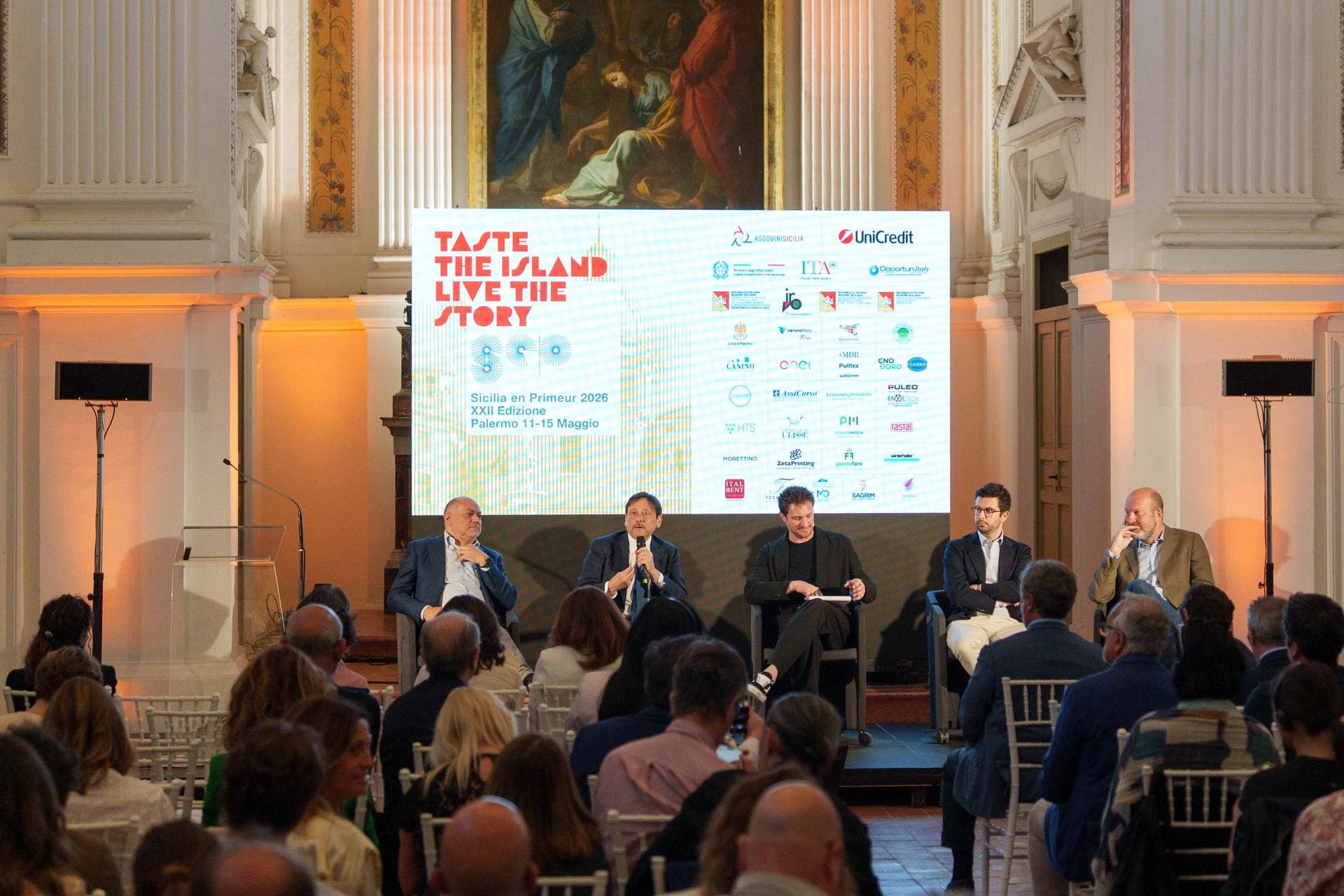
Among the topics addressed were the impact of Artificial Intelligence on wine tourism, with a presentation by Edoardo Colombo, president of Turismi.AI, and the role of training and hospitality in the strategies of wineries, with Filippo Galanti, co-founder of Wine Suite. “Artificial intelligence can be an opportunity for Sicilian wine tourism to transform an already extraordinarily attractive heritage into a smarter, more personalized and competitive system, which, thanks to data and predictive tools, can better respond to visitors’ needs and meet the demand for bespoke experiences. From this perspective, Sicily can become an advanced laboratory for wine tourism, capable of combining identity, sustainability and digital innovation”, said Colombo during his talk “Artificial Intelligence and Wine Tourism: Towards Smart and Predictive Destinations”.
The closing topic was training in wine tourism and how it can be used as a strategic tool to generate added value in direct sales. “Sicily is one of Italy’s wine-producing regions with the greatest potential for wine tourism. The growing appeal of wine-growing areas and the caliber of visitors who choose to enjoy experiences at wineries make staff training, expertise and professionalism increasingly crucial aspects. In this context, the use of technological and digital tools can, over time, also help to generate a significantly positive impact not only on companies’ turnover and profit margins, but also on the overall development of the region. Furthermore, a key role is played not only by the wineries themselves, but also by associations such as Assovini Sicilia, which are committed to coordinating and promoting the entire sector,” emphasized Filippo Galanti.
Assovini Sicilia reaffirms its role in discussions about the world of wine, and charts the course for the future of Sicilian wine tourism. “Sicily’s wine industry now possesses all the elements needed to establish itself as one of the world’s leading wine tourism destinations: authenticity, biodiversity, culture and a warm welcome. The challenge is to continue building a shared vision that transforms this heritage into sustainable growth for the whole island”, concluded Mariangela Cambria.
Sicilia en primeur is an initiative funded by the Regional Department of Agriculture, Rural Development and Mediterranean Fisheries.
“Wine tourism is set to become one of the pillars supporting our economy. Experiential tourism focused on discovering wine, the unique characteristics of the local area and the local culture is attracting thousands of visitors to our region, and the statistics tell us we are on the right track: We are Italy’s second most popular food and wine destination after Tuscany. “We are also one of the most appealing destinations, and we are seeing a daily increase in demand for authentic experiences linked to the local area. This is a way to diversify our tourism offering and revitalize our economy,” commented the councilor – Luca Sammartino, the regional councilor for Agriculture.