By: Isabell C. Camillo, PhD
April 28, 2026 (Niagara Region, ON) — A Winter 2026 experiential education project at Brock University’s Goodman School of Business has connected classroom strategy work with Ontario’s wine industry by giving senior business students the opportunity to provide strategic consulting support to Calamus Estate Winery in Niagara and The Richmond Estate Winery in the Ottawa region.
About the Wineries
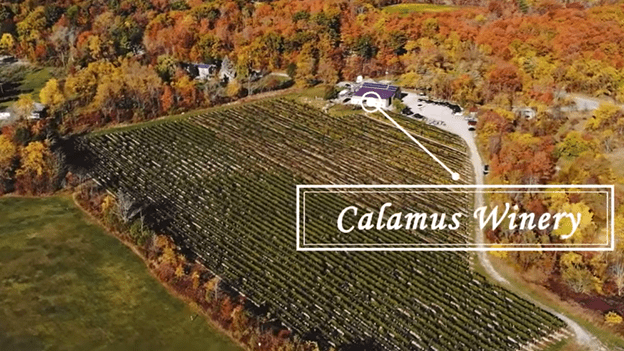
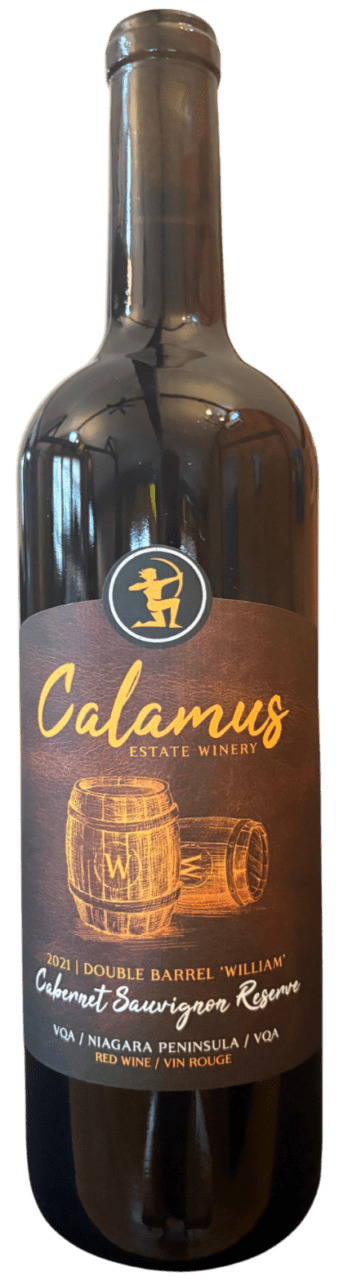
Calamus Estate Winery and The Richmond Estate Winery are both operated by the Van Helsdingen family and reflect a shared commitment to wine, hospitality, and memorable guest experiences. At Calamus Estate Winery in Jordan, Ontario, the family’s vision is rooted in becoming “Niagara’s Premier Artisanal Winery Experience,” combining locally crafted wines, estate hospitality, heritage barns, vineyard views, and distinctive experiences such as the Chronos Observatory and speakeasy programming. Calamus began with a 14-acre vineyard property near Beamsville in 1999, planted its first 10-acre vineyard in 2000, and now grows varieties including Chardonnay, Riesling, Pinot Gris, Cabernet Franc, Cabernet Sauvignon, and Merlot.
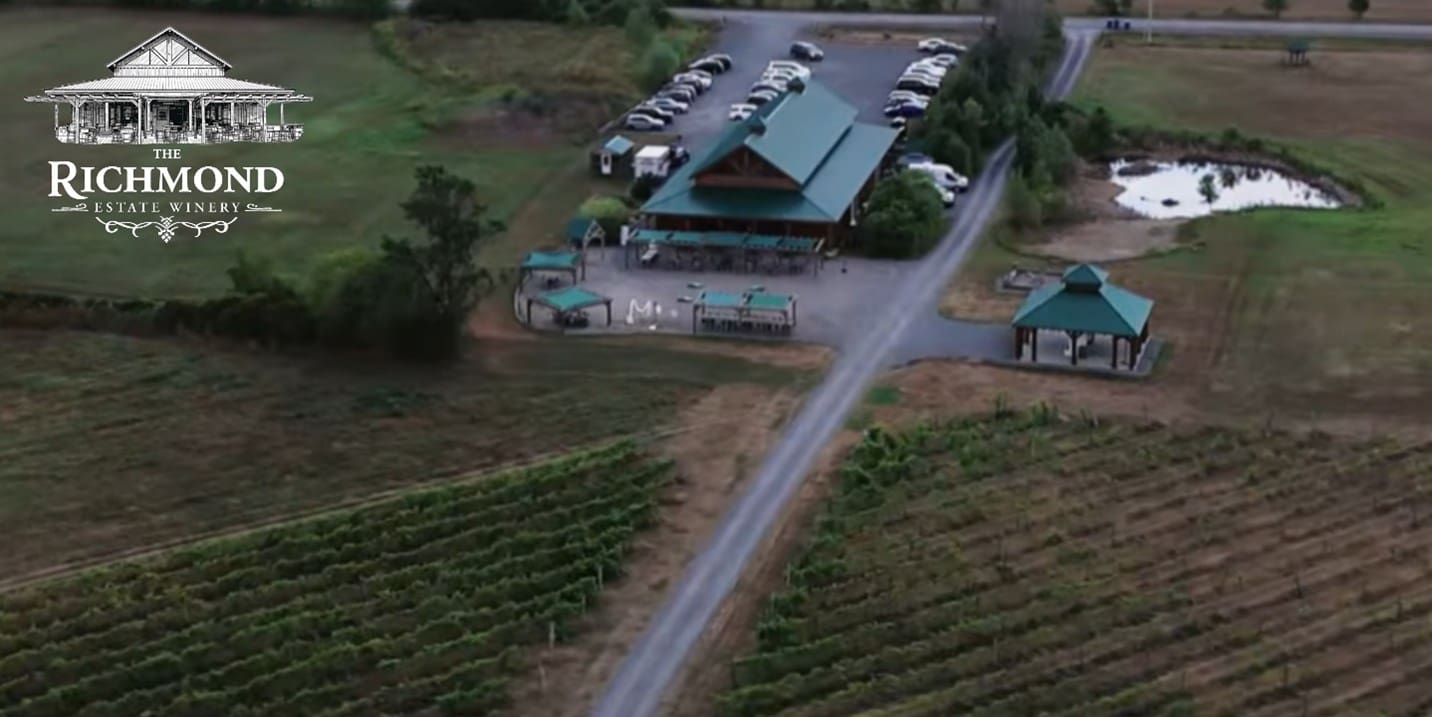
The Richmond Estate Winery, located in Richmond, Ontario, builds on the former Jabulani Vineyard & Winery. Its philosophy emphasizes celebration, hospitality, and creating a welcoming estate experience through wine, food, weddings, events, guided tours, and bistro programming. The estate includes cold-climate vines in the Ottawa region and connects its wine offering to both its local vineyard setting and the family’s Niagara roots through Calamus Estate Winery.
From Classroom Strategy to Client-Facing Consulting
The real-world project was completed through MGMT 4P90 Business Strategy, a pre-MBA capstone course required for graduation, taught by Dr. Isabell C. Camillo, with support from Goodman’s Co-op, Career & Experiential Education coordinator. Working in six consulting teams, 44 senior business students engaged directly with winery owner Rosalee Van Helsdingen and her son Michael, analyzed the operating realities of both estates, and developed strategic recommendations tied to growth, hospitality, visibility, and year-round utilization. The project moved beyond a simulated case format and placed students in a real client-facing environment marked by uncertainty, incomplete information, and practical business constraints. Students visited the winery context, interacted directly with the client, produced presentations and written strategic reports, and were required to translate business strategy concepts into actionable recommendations.
An integrative strategic report prepared by Dr. Camillo synthesized client engagement, course learning, and selected insights emerging from the student work into a broader two-estate strategic analysis for Calamus Estate Winery and The Richmond Estate Winery. The final report identified differentiated strategic paths for the two properties, recognizing Calamus as a flagship hospitality-driven estate in Niagara and Richmond as a growth estate with strong opportunity for improved organization, visibility, and event-led development.
Strategic Recommendations and Early Implementation
The resulting recommendations were tailored to the distinct realities of each estate rather than treated as a one-size-fits-all solution. For Calamus Estate Winery, the work emphasized stronger year-round programming, seasonal activation, and discoverability in a highly competitive Niagara market. For The Richmond Estate Winery, the work emphasized improved retail and event flow, event-led growth, and selective distribution support to strengthen awareness and utilization. Several recommendations are already moving toward implementation.
Beyond marketing, the project also identified practical operational and strategic opportunities now under consideration by the client. At Calamus, the work reinforces the strategic value of the estate’s distinctive assets, including the Chronos Observatory and the Speakeasy, as foundations for experience-led programming. At Richmond, this includes exploring a clearer separation of retail and event spaces to better utilize the property and increase event capacity. To support both properties, the wineries are also testing a marketing co-op role focused on increasing brand visibility, supporting event promotion, and strengthening customer engagement.
Experiential Learning and Community Partner Value
This project allowed students to do what strategy work actually demands in practice: ask better questions, work through ambiguity, assess real business challenges, weigh strategic trade-offs, and make recommendations under constraint. It also showed what can happen when a community partner is willing to open the door and become part of the teaching and learning process.
By sharing the realities of operating in a competitive, resource-constrained industry, the client helped students understand strategy not as an abstract classroom exercise but as a practical discipline shaped by real people, real businesses, and real decisions. Student feedback on both the overall experiential education experience and the community partner experience was highly positive, with recurring references to the value of real-world application, client interaction, communication, teamwork, and strategic thinking.
Client Reflections
For the Van Helsdingen family and their team, the project created an opportunity to receive fresh strategic thinking while directly helping prepare the next generation of business graduates for applied work in consulting, hospitality, and agribusiness.
“This was more than a classroom exercise,” said Rosalee Van Helsdingen. “It gave us the opportunity to hear a wide range of perspectives from individuals who think like entrepreneurs, each bringing different ideas and approaches. That kind of outside thinking is not something we typically access in our day-to-day operations, and it helped us reflect more critically on our business and where we want to go.”
“The project helped clarify several practical business challenges for us, especially around marketing and how to expand an already established business model,” said Michael Van Helsdingen. “What felt most actionable were the recommendations around brand awareness, sales strategy, and positioning the winery more clearly around the experience we offer, not just the wine. The students brought a younger perspective and outside thinking that is hard to come by, and we have already started testing some of those ideas at The Richmond Estate, including marketing support and refining our identity around the message, The Wine That Brings People Together.”
Brock, Goodman, and CCOVI
For Brock University, and its Goodman School of Business and Cool Climate Oenology and Viticulture Institute (CCOVI), the project highlights how experiential education can strengthen regional business relationships while helping students build professional confidence and judgment. Ontario’s wine sector demonstrates how partnerships between industry and business education can create practical value in real time.
Conclusion
The project demonstrates the value of involving senior business students in live consulting engagements with business owners. When structured thoughtfully, these partnerships can provide students with meaningful experiential learning while giving community partners access to fresh perspectives, practical analysis, and actionable strategic recommendations. In this case, the engagement showed that student consulting teams can work professionally, respond to real business needs, and contribute ideas with direct value for participating wineries.
About the Project
The consulting project was created by Dr. Camillo and completed at Brock University’s Goodman School of Business during the Winter 2026 semester. As part of the course’s experiential education design, students worked in six consulting teams to complete a live strategic consulting engagement with winery clients.
The teams were not competing against one another. Instead, each group developed its own strategic report based on its analysis, perspective, and areas of interest. This approach gave the Van Helsdingens access to a broader range of strategic options and allowed them to identify which recommendations were most relevant, feasible, and aligned with their business priorities. As a result, the project provided both a meaningful learning experience for students and practical strategic value for the participating wineries.
About Brock University
Located in the heart of Niagara’s wine region, Brock University brings together academic learning, applied research, and community engagement. Through the Goodman School of Business, students gain opportunities to apply business concepts to real organizational challenges, while Brock’s Cool Climate Oenology and Viticulture Institute reflects the University’s longstanding connection to Canada’s grape and wine industry. Together, these strengths position Brock as a meaningful partner for experiential projects that connect students, educators, and community partners in practical, industry-relevant learning.

Dr. Isabell C. Camillo is a part-time faculty member at the Goodman School of Business, Brock University, and Chief Learning Officer & Strategic Advisor at Eudaimonium Research and Innovation. She can be reached at icamillo@eudaimoniumresearch.com