From precision pruning to ungrafted vines: the Calabrian winery presents a model of viticulture that respects plant physiology, addresses climate change and is validated by scientific research

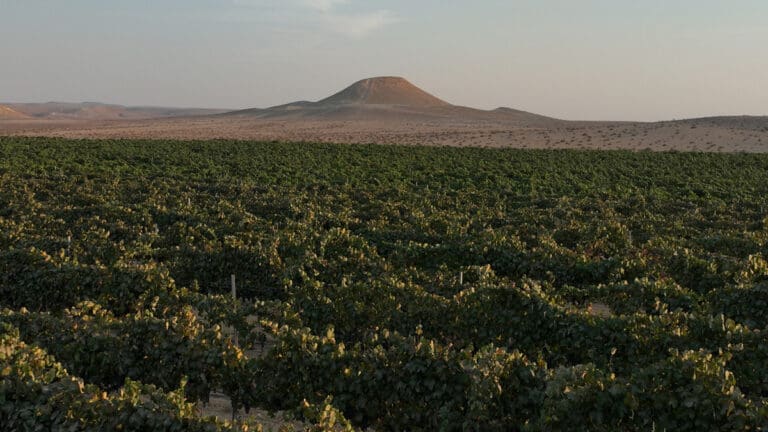
April 23, 2026 (Calabria, Italy) — Among the vineyards of Librandi’s Tenuta Rosaneti, a small experimental plot also looks back almost two centuries: a planting of Mantonico Bianco on ungrafted vines, not grafted onto American rootstocks, as was common practice before the devastation caused by phylloxera. The selected soil is deliberately sandy, with over 60 percent sand, a condition unfavourable to phylloxera and one that makes this experiment in pre‑industrial viticulture possible. Ungrafted vines develop deeper root systems, access water reserves unavailable to grafted plants and naturally regulate the balance between vegetative growth and fruit production. The grapes they yield express a level of complexity and territorial typicity that is difficult to replicate. It is a choice driven by a clear vision: demonstrating that returning to tradition can represent the most advanced form of innovation.
It is within this context—vineyards managed with close attention to plant physiology and a landscape enriched by hedgerows, margins, strips of spontaneous vegetation and transition areas—that a team of researchers from the National Agritech Research Centre (PNRR) and CREA carried out a systematic monitoring of nocturnal Lepidoptera at Tenuta Rosaneti. Nocturnal Lepidoptera are among the most reliable indicators of environmental quality: highly selective and sensitive species, able to colonise only those environments where ecological conditions are truly intact.
The findings exceeded expectations within the scientific community. During the monitoring programme, coordinated by Stefano Scalercio with contributions from Marco Infusino and Giada Zucco, Anthracia ephialtes (Hübner, [1822]) was recorded for the first time in mainland Italy, while Eublemma cochylioides (Guenée, 1852) was documented for the first time in southern Italy. To date, both species are known across the entire region of Calabria exclusively from the Librandi site.
For several years, Librandi has adopted pruning techniques that overturn the logic of traditional yield driven production. The objective is not to maximise yields, but to preserve vine physiology over time: precise and restrained cuts, never on three year old wood, with careful attention paid to so called “respect wood”, one to two centimetres above the buds, enough to prevent the drying cone from damaging the cordon. This approach requires more hours of specialised labour, but results in long lived vines with intact sap flow and a naturally greater resistance to the increasingly frequent water and heat stress.
“A healthy vine lives longer, produces better grapes and copes more effectively with the drought and extreme temperatures that climate change forces us to face every year,” explains Davide De Santis, agronomist at Librandi. “Correct pruning is not a technical detail; it is the foundation of our entire resilience strategy.”
“The discovery of these two species comes as no surprise to those who are familiar with how we work,” De Santis continues. “These Lepidoptera are extremely selective in their choice of habitat. Their presence is an objective indicator: it tells us that the estate’s ecological system is functioning properly. Butterflies do not lie.”
The results were presented in three international scientific forums in 2025: the 28th Italian National Congress of Entomology (Siena), the 24th European Congress of Lepidopterology (Czech Republic) and the annual meeting of the Italian Lepidopterological Association (Pigna). On each occasion, they generated strong interest both for the faunal significance of the findings and for the management implications of the agricultural model that made them possible.
“For us, the land has never been merely a means of production. It is the place we come from, which we have inherited and which we have a responsibility to hand back intact—or even better, enriched—to those who will come after us,” states the Librandi family. “Knowing that our vineyards host butterfly species never before recorded in Calabria confirms that the path we have chosen is the right one: it is nature’s response to decades of decisions that have placed the life of the soil, hedgerows and wild areas on the same level as wine quality. Biodiversity has always been central to our approach to agriculture.”
The Librandi case is part of the broader debate on the role of Mediterranean agricultural landscapes in biodiversity conservation, offering concrete evidence that quality viticulture and nature conservation are mutually reinforcing objectives.
ABOUT LIBRANDI
For three generations, the Librandi family has been a leading presence in Calabrian viticulture. The family’s estates cover a total of approximately 350 hectares, of which 232 are planted with vines, 80 dedicated to olive groves and the remainder to woodland. The six Librandi estates are Rosaneti, the beating heart of the company, Arcidiaconato, Ponta, Pittaffo, San Biase and Brisi. Here, the work is focused primarily on the area’s indigenous grape varieties.
The company has always been entirely family run. Led until 2012 by the founding brothers Antonio and Nicodemo Librandi, it is today managed by Raffaele, Paolo, Francesco and Teresa Librandi.