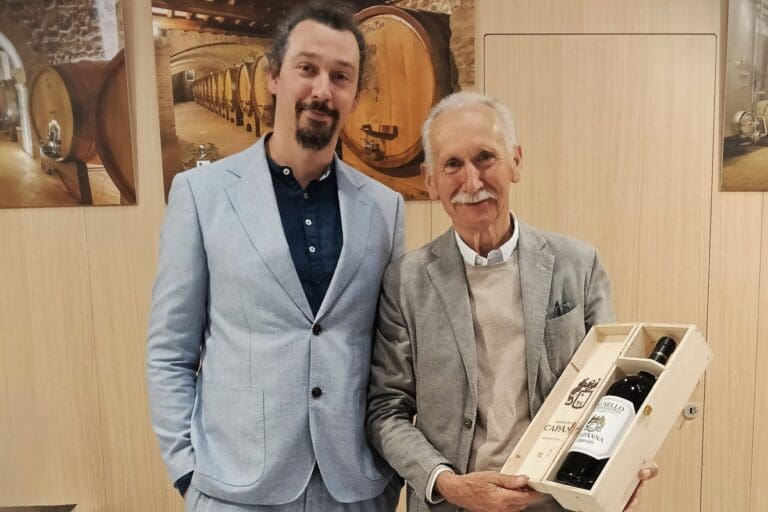
Field visits to seven Napa, Sonoma and Carneros wineries shaped a Winery Customer Experience Management framework, adapting a discipline hotels, airlines and tourism companies have used for decades
Student authors: Kevin Arroyo, Tavis Brown, Liam Crow, Shanden Delamater, Michael Escamilla, Evan Grandvoinet, Mari Guerrero, Johan Hernandez Hermosillo, Ailton Orozco Camarillo, Grace Peavey, Sebastian Romo, Katerina Zyrianov.
Rohnert Park, CA., Nov. 4, 2026 — Wine business students at Sonoma State University went on a series of field trips in 2025 and 2026 to learn hospitality where it happens: in tasting rooms, barrel cellars and sparkling wine caves across Napa and Sonoma counties. What they brought back to the classroom is a proposal for the industry — a Winery Customer Experience Management framework that treats every contact a customer has with a winery, from the first Instagram post to the last club shipment, as one managed system.
Customer experience management, known as CEM, is not new. Hotels, cruise lines, airlines and tour operators have run it as a strategic discipline for decades, with dedicated executives, journey maps, service standards and loyalty metrics that reach well beyond the front desk or the boarding gate. Wineries have adopted many of its tools, but the students and their professor, Angelo A. Camillo of the university’s Wine Business Institute, found no published framework that integrates them across the full winery customer journey.
“The wine industry did not miss the customer experience. It invented some of the best guest experiences in the world,” said Camillo, who spent more than 35 years in international hospitality management before joining Sonoma State. “What it has not done is manage that experience the way a hotel company or an airline does, as one discipline with one owner and one set of measures. The tasting room, wine club, e-commerce, events and shipping often live in separate silos. Our framework asks wineries to connect them.”
The students visited Grgich Hills Estate, Beaulieu Vineyard, Ridge Vineyards, J Vineyards & Winery, Schramsberg Vineyards, Madonna Estate and Ferrari-Carano Vineyards and Winery. At each stop, they met the people who design and deliver the guest experience, including David Grant, tasting room manager at Grgich Hills Estate, and Luke Magnini, director of hospitality for Beaulieu Vineyard, Sterling Vineyards and Hewitt Vineyard, part of the Treasury Wine Estates portfolio.
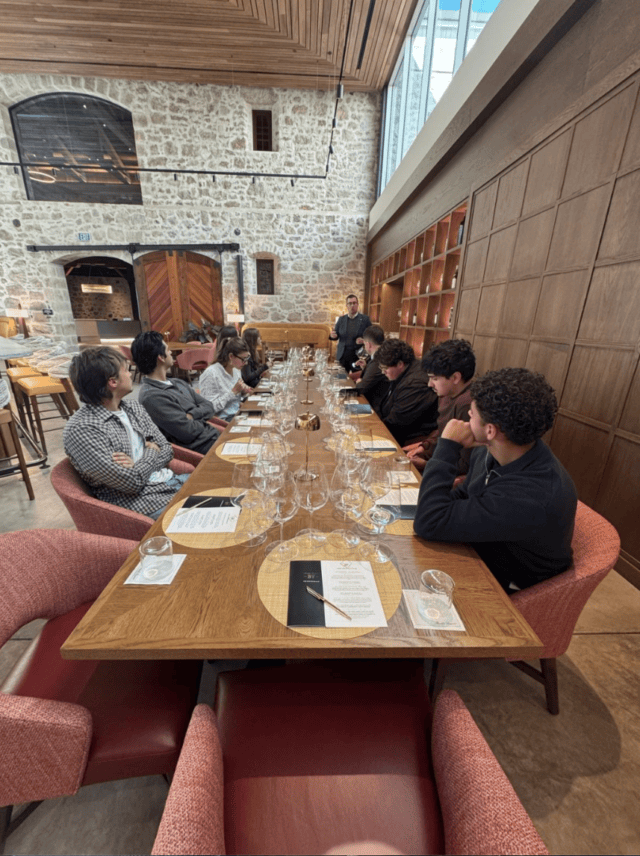
Why field trips matter
The framework grew out of a simple teaching conviction: hospitality cannot be learned from a textbook alone. Camillo’s course module pairs readings from his book, “Winery Hospitality Management: Strategies for the Global Wine Experience Economy” (Ethics Press), with site visits, guest speakers and desk and field research. Its conceptual starting point is the book’s eighth chapter, “The Rise of the Wine Experience Economy.”
“Students can read about a customer journey in a chapter. Then they stand in a tasting room and watch a host read a group, adjust the pace, tell the right story and turn a visit into a relationship,” Camillo said. “That is when the theory becomes real. The professionals who opened their doors to us are the best teachers our students will ever have, and we are grateful to every one of them.”
Grant hosted the group at Grgich Hills Estate in Napa Valley, founded in 1977 by Miljenko “Mike” Grgich and Austin Hills. Grgich made the 1973 Chateau Montelena chardonnay that won the white wine competition at the 1976 Judgment of Paris tasting, and the estate today farms under regenerative organic certification.
“We carry our founders’ legacy. Every guest who walks in has a story about how they found us, and they leave with a story about us,” said Grant. “Our job is to make sure those two stories connect. It was a pleasure to show students that a great visit is built long before the first pour and lasts long after the last one.”
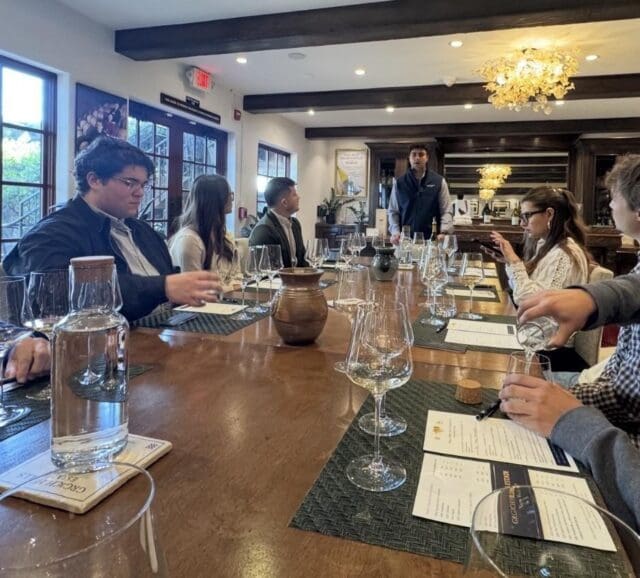
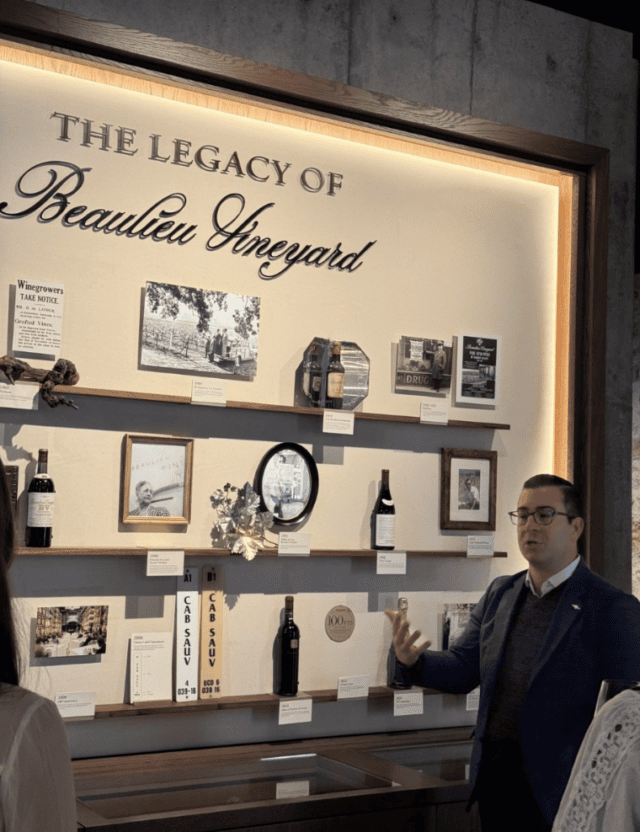
At Beaulieu Vineyard in Rutherford, founded in 1900 by Georges and Fernande de Latour, Magnini walked students through the winery’s history and its new hospitality center, which opened in July after a two-year restoration of the estate’s 1880s stone buildings. The center offers seven distinct tasting spaces, a member lounge and the winery’s first dedicated culinary program. For students studying experience design, it was a case study in how a heritage brand segments guests and builds different journeys for first-time visitors, collectors and club members.
“Hospitality is where a 125-year legacy becomes personal,” said Magnini. “We design each space and each experience around who the guest is and what they hope to take home, and that only works when the whole team — hospitality, culinary, wine club and operations — sees the same guest. It was inspiring to share that with students who will soon be shaping this industry themselves. It was a pleasure to host Sonoma State University wine business students and share a glimpse into our winemaking philosophy, history, and hospitality programs.
“Spending time with these students leaves us optimistic about the future of the wine and hospitality industries. Their curiosity, engagement, and thoughtful questions were a reminder that the next generation of leaders is already preparing to make a meaningful impact.
“At BV, we remain committed to investing in a bright future for our industry, and supporting educational programs such as Sonoma State University’s Wine Business Institute is an important part of that commitment. We are grateful for the opportunity to contribute to the students’ learning experience and to strengthen the connection between academia and the wine business.”
What students saw at each winery
Each visit illustrated a different part of the customer journey. Read together, they show why the students concluded that the industry’s best practices already exist, but rarely as one system:
- Grgich Hills Estate, Napa Valley: Heritage and authenticity as the core of the story, linking the guest experience to the vineyard and its regenerative organic farming.
- Beaulieu Vineyard, Rutherford: Segmented experience design, with multiple tasting spaces, a culinary program and a member lounge serving different guest types under one brand.
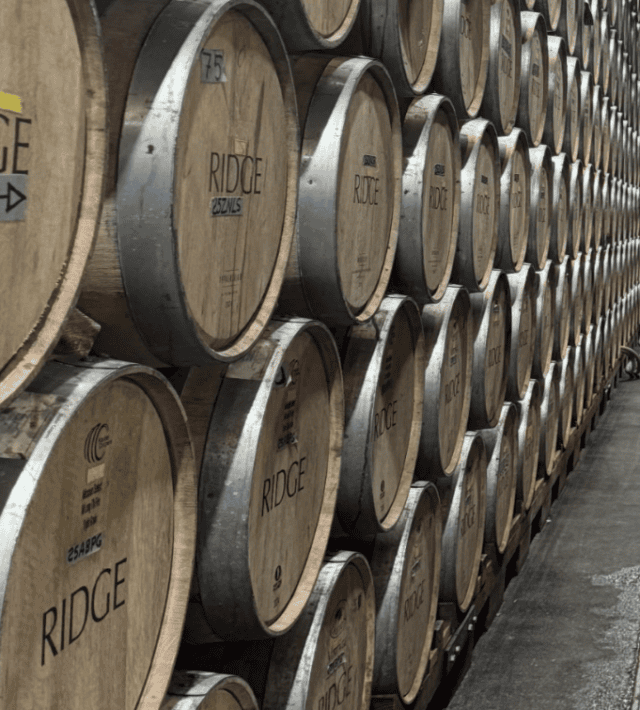
- Ridge Vineyards, Lytton Springs, Healdsburg: Production made visible. Founded in 1962 and known for single-vineyard wines, Ridge lets guests see the barrel rooms where the wines they taste are aging, connecting hospitality with the supply chain behind the glass. Visited Sept. 28, 2026.
- J Vineyards & Winery, Russian River Valley: Aesthetics and food pairing. Founded in 1986 by Judy Jordan, J built its Bubble Room around a chef-driven, multicourse pairing menu matched to its sparkling and still wines. Visited Sept. 28, 2026.
- Schramsberg Vineyards, Calistoga: Education and escapism. The Davies family has made sparkling wine on the Diamond Mountain estate since 1965, and guided tours lead through historic caves first dug in the 19th century. Visited Oct. 29, 2025.
- Madonna Estate, Carneros: Access and welcome. The Bartolucci family has made wine since 1922, farms its vineyard organically and dry-farms it, and still welcomes walk-in guests at a time when many Napa wineries require reservations. Visited Oct. 29, 2025.
- Ferrari-Carano Vineyards and Winery, Dry Creek Valley: Place as experience. The Villa Fiore hospitality center sits among 5 acres of gardens, showing how landscape and architecture shape a guest’s memory of a brand. Visited April 22, 2026.
A discipline borrowed from hospitality, airlines and tourism
Customer experience management grew out of service industries that compete on intangibles. A 2018 review in the International Journal of Contemporary Hospitality Management, led by Jay Kandampully of Ohio State University, concluded that managing the experience well requires coordinating marketing, operations, human resources, technology and front-line service rather than leaving it to one department. A 2022 analysis of two decades of research in the International Journal of Hospitality Management found that customer experience is a primary driver of satisfaction, loyalty, and competitive advantage across hospitality and tourism.
The theoretical roots go back further. In “The Experience Economy,” first published in 1999, B. Joseph Pine II and James H. Gilmore argued that economic value progresses from commodities to goods, services, and finally experiences, with each stage commanding greater pricing power. In wine, that progression runs from bulk grapes, to a bottle on a store shelf, to a standard tasting pour, to a guided, story-rich visit that a guest remembers for years.
What the wine industry has already done
Wineries are not starting from zero, and the students’ research acknowledges that. Scholars have studied the wine tourism experience for more than two decades, and in 2021 Antonella Angelini and Annalisa Gilli of the University of Pisa argued in the Journal of Business Strategy that customer experience can play a strategic role for wineries. Industry groups and technology providers now teach customer journey mapping: Penn State Extension publishes a tasting room journey-mapping guide, the New York Wine & Grape Foundation offered consumer journey mapping workshops in 2023, and direct-to-consumer software companies publish journey-mapping guides and Net Promoter Score tools for wineries. Some wineries have created senior consumer-experience roles.
What remains missing, Camillo said, is integration. Journey maps, satisfaction surveys and loyalty programs tend to be adopted one at a time, usually within the hospitality or marketing team, and rarely extend to production planning, fulfillment and shipping. A 2025 study of family wineries in Austria’s Lake Neusiedl region, published in the Hungarian journal Marketing & Menedzsment, noted that no study had yet provided a comprehensive framework explaining how winery visits contribute to customer retention through repeat purchases and repeat visits.
“We looked hard for an integrated, wine-specific CEM framework in the research and in industry practice, and we did not find one,” Camillo said. “If a winery is already doing this end to end, we would love to hear from them and bring our students to see it.”
The framework: Eight stages of the winery customer journey
The Winery Customer Experience Management framework, or WCEM, maps the relationship in eight managed stages:
- Discovery. Advertising, social media, reviews, public relations and word of mouth shape expectations long before a guest arrives.
- Consideration and planning. Website navigation, reservations and inquiries. A complicated booking process can damage an experience before it begins.
- Arrival and welcome. Parking, signage, greeting and timing mark the moment expectation meets reality.
- The tasting experience. Education, storytelling, sensory engagement and personalization, designed to create memories rather than simply present wines.
- Purchase. Buying should feel like a natural extension of the visit, not a shift from hospitality to retail.
- Wine club enrollment. The beginning of a relationship rather than the close of a sale, and for many wineries, the foundation of direct-to-consumer profitability.
- Ongoing relationship management. Member communications, events, exclusive access, educational content, and the shipment experience itself.
- Advocacy. Customers who actively recommend the winery and become an extension of its marketing team.
Where the supply chain meets the customer
Because the framework took shape partly in Camillo’s wine supply chain management course, it carries a perspective hospitality discussions often miss: the customer experience does not end at the tasting bar. Allocation decisions, inventory for club releases, order accuracy, packaging, temperature-appropriate shipping, delivery timing, and the handling of a damaged or delayed order are all customer touchpoints. A memorable visit can be undone by a club shipment that arrives late, incomplete, or heat-damaged.
“A wine club promise is also a supply chain promise,” Camillo said. “The tasting room host makes the commitment, but the cellar, the warehouse and the shipping partner have to keep it. Customer experience management is where marketing and operations finally sit at the same table.”
Designing experiences across four realms
WCEM draws on Pine and Gilmore’s four realms of experience: entertainment, such as live music and engaging storytelling; education, such as guided sensory tastings, blending seminars and vineyard walks; escapism, such as cave tours and harvest participation; and aesthetics, including architecture, landscape and design. The richest experiences engage several realms at once, often at little added cost. A tasting note card engages education on its own. Read aloud by a host while guests look out over the vineyard block it describes, the same content also engages aesthetics and escapism.
Measuring what matters
The framework treats hospitality as a revenue driver rather than a cost center and calls for consistent measurement:
- Pricing power: direct-to-consumer prices and average purchase compared with retail prices for the same wines, a direct measure of the experience premium.
- Loyalty and advocacy: repeat visits, wine club retention and renewal, referrals and Net Promoter Score.
- Customer lifetime value: a member retained for a decade is worth far more than a one-time visitor, so experience investments should be judged against long-term relationship outcomes.
- Realm coverage: an honest review of which of the four realms a winery engages well and which it neglects.
Why it matters now
Camillo said the timing is not accidental. Wineries face softer wine consumption, a younger generation of drinkers with different habits and growing competition for the same visitors.
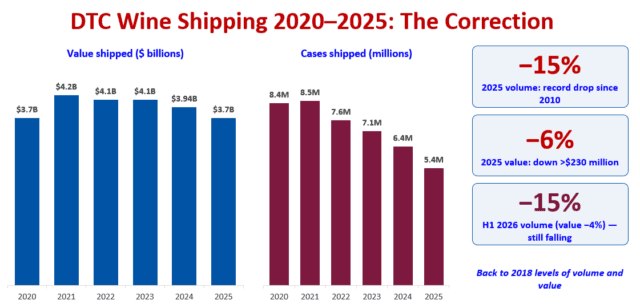
In that environment, he said, the wine experience often earns the second visit, the club membership and the recommendation.
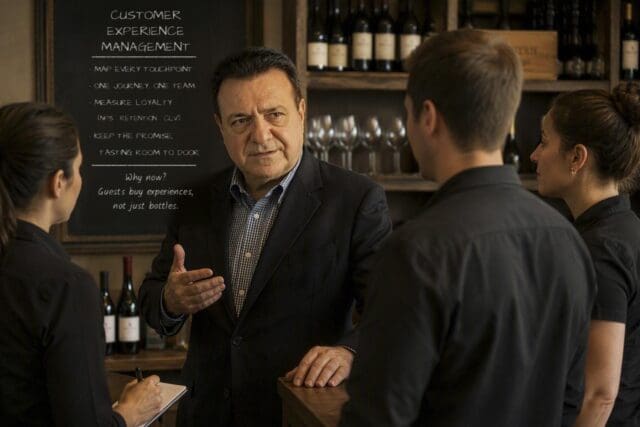
“Today’s guests buy experiences, not just bottles,” Camillo said. “The daily briefing is where that starts. Before the doors open, every team member should know who is coming, what that guest expects and how today’s visit connects to everything that happens after they leave.”
Protecting authenticity
The framework also carries a caution. As wineries add events, wellness programs and entertainment, they risk drifting from the wine itself, until guests wonder whether they are visiting a winery or an event venue that happens to pour wine. Guests come to wine country for a connection to agriculture, craftsmanship and place. WCEM asks wineries to test every new program against that connection: a harvest event tied to actual harvest work, or yoga among the vines rather than in a generic function room.
Looking ahead
Camillo plans to extend WCEM into a formal research study examining how winery customer journeys relate to wine club conversion, retention, and direct-to-consumer performance in Sonoma and Napa counties. Wineries interested in taking part in student field research or hosting a class visit are invited to contact Camillo at camillo@sonoma.edu.
About the Wine Business Institute at Sonoma State University
The Wine Business Institute, part of the School of Business at Sonoma State University in Rohnert Park, California, is dedicated to wine business education, research, and industry engagement. Located in the heart of Sonoma County wine country, the institute connects students with the wine industry through winery visits, guest speakers, industry partnerships and applied research.
About Angelo A. Camillo
Angelo A. Camillo, PhD, MBA, is an associate professor at Sonoma State University’s Department of Business Administration and Wine Business Institute, where he teaches strategic management, hospitality management, international business, wine business, and wine supply chain management, and leads the study abroad program. He has more than 35 years of international hospitality management experience in 10 countries on four continents. He is editor-in-chief of the Wine Business Journal and founding editor-in-chief of IJTHMDA, a Certified Executive Chef, Certified Culinary Educator, and Certified Food Executive, and the author of eight books, including “Winery Hospitality Management: Strategies for the Global Wine Experience Economy” (Ethics Press).