For agronomist and winemaker Serena Gusmeri, every vintage begins with observation, rather than intervention
July 30, 2026 (Greve in Chianti) — Above Panzano, where the vineyards of Vecchie Terre di Montefili overlook the rolling hills of Chianti Classico, Serena Gusmeri rarely begins her day in the cellar. Although she is responsible for every wine produced at Montefili, her first instinct remains that of an agronomist. Every vintage, she believes, begins by understanding the vines. If time allows, she covers the entire estate on foot: a four-hour walk that becomes a daily exercise in observation rather than inspection.
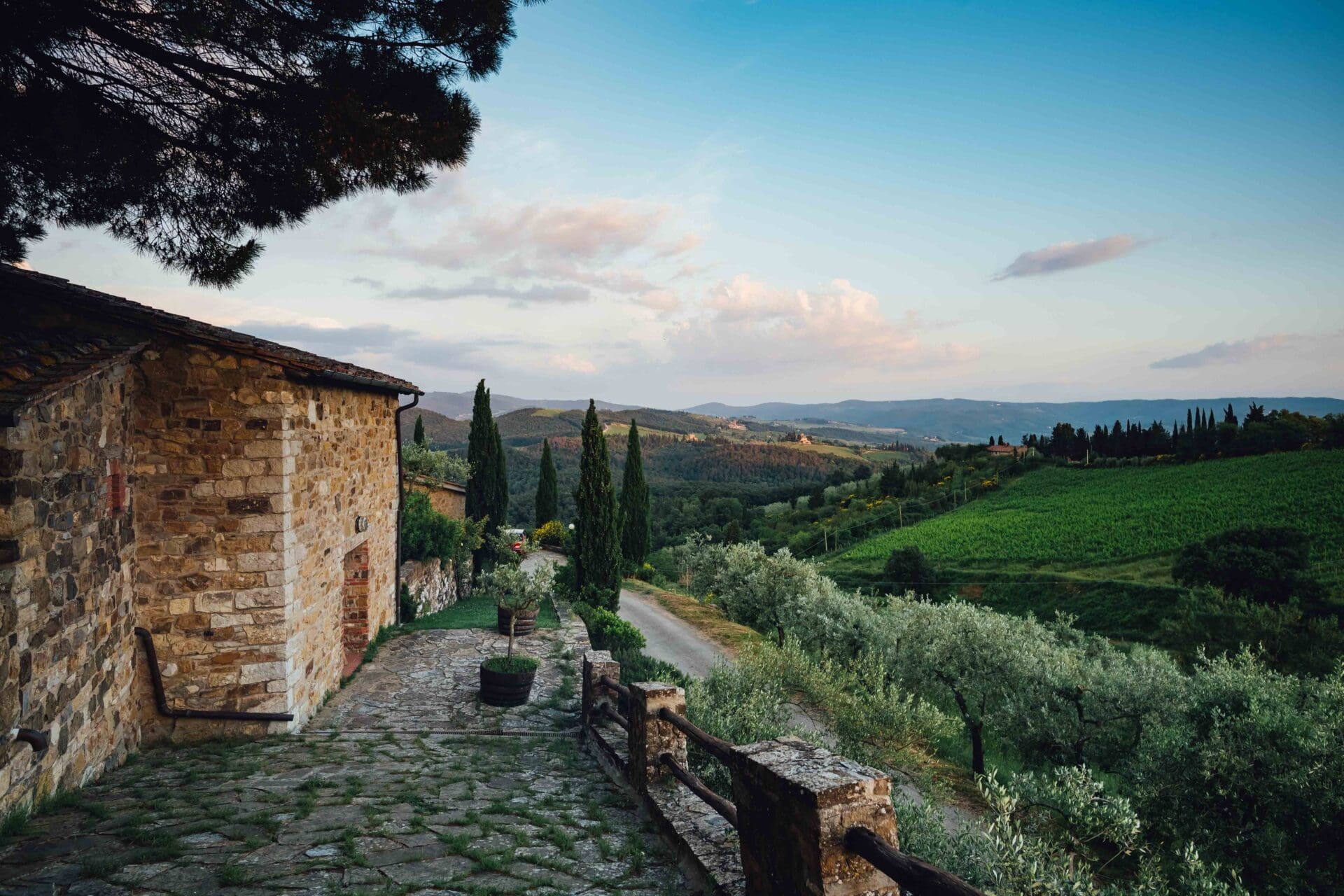
“I look first at the canopy,” she explains. “I’m checking that the vine is balanced and growing evenly. Then I reach into the foliage to look directly at the clusters, especially the ones you don’t immediately see.” For Gusmeri, this quiet ritual is not preparation for winemaking. It is winemaking.
After more than a decade at Montefili, Gusmeri’s approach remains rooted in the discipline she studied first: agronomy. Before deciding how to make the wine, she first asks what the vineyard is trying to say. The most valuable lesson she says the vines have taught her is surprisingly simple. “To adapt—once you truly understand what you’re working with.” Rather than pursuing fixed formulas, every season requires new decisions. No two vintages unfold in quite the same way, and even a site as distinctive as Montefili refuses to repeat itself. That philosophy resonates throughout the estate, where each vineyard parcel is observed individually, and every farming decision responds to the conditions of the year rather than predetermined expectations. Precision comes not from control, but from attention.
Because her thinking begins in the vineyard rather than in the cellar, altitude is not simply another technical parameter. It is one of the estate’s greatest responsibilities and defining characteristics. For many producers, elevation is simply a technical figure. For Gusmeri, it is something that deserves protection. “Freshness, finesse, verticality and longevity are the qualities our elevation gives us naturally. My job is to protect them, never to mask them.” The altitude itself does not dictate her daily decisions. Every growing season follows its own rhythm, sometimes beginning later than expected, sometimes advancing rapidly under unusually warm conditions. What remains constant is the objective: allowing Sangiovese to retain the energy and precision that have become Montefili’s signature. Rather than pursuing richness or excessive concentration, the wines seek clarity, tension and balance: these are the qualities that reflect both place and restraint.
Among the estate’s vineyards, Bosco holds a particularly personal place. When Gusmeri arrived at Montefili, the parcel was not yet part of the estate. Acquired in 2016, it required years of restoration before revealing its true potential. “It was a vision,” she recalls. “We invested years bringing the vineyard back, and in 2019, we decided it deserved its own label. That was a real leap of faith.” Today, Vinea nel Bosco stands as one of Montefili’s most distinctive single-vineyard wines, as a reminder that great vineyards are not simply discovered. They are patiently understood.
Every winemaker remembers the vintage that reshaped their thinking. For Gusmeri, that year was 2018. That vintage confirmed something she still believes today: ripeness alone is never the goal. The wines were generous, structured and widely appreciated. Yet they no longer reflected the style she wanted Montefili to express.
“I harvested late into October. At the time, I wanted to understand how far Sangiovese could go under perfect ripening conditions. The wines were successful—but stylistically, they weren’t Montefili.” The experience reinforced a conviction that still guides her work today. Power is not the destination. Identity is.
Ask Gusmeri what she hopes people discover when they open a bottle of Montefili, and she never mentions scores or tasting notes. “I hope they find this place.” Not simply Tuscany. Not simply Chianti Classico. But Montefili itself, with its altitude, light, restraint, and quiet confidence. When asked to define elegance, she answers with equal understatement. “It makes me think of finesse. Something you appreciate effortlessly, and remember long after the glass is empty.” Perhaps that is also the simplest description of Montefili itself. Before ending the conversation, she offers one final thought, less a slogan than a promise. “We care for this place with ethics and with heart.” For Serena Gusmeri, wine is never the starting point. It is simply the final expression of a place that has first been observed, understood and respected. Long before a grape reaches the cellar, Montefili has already begun to speak.
Vecchie Terre di Montefili
Located between the UGAs of Panzano and Montefioralle in the heart of Chianti Classico, Vecchie Terre di Montefili was founded in 1975 and acquired in 2015 by Frank Bynum and Tom Peck Jr. Today, under the direction of winemaker and agronomist Serena Gusmeri, the estate farms 12.5 hectares of vineyards at approximately 540 metres above sea level, following a philosophy rooted in sustainability, biodiversity and the careful expression of individual vineyard parcels. Sangiovese lies at the heart of production, giving rise to wines that combine elegance, a profound sense of place and outstanding ageing potential.