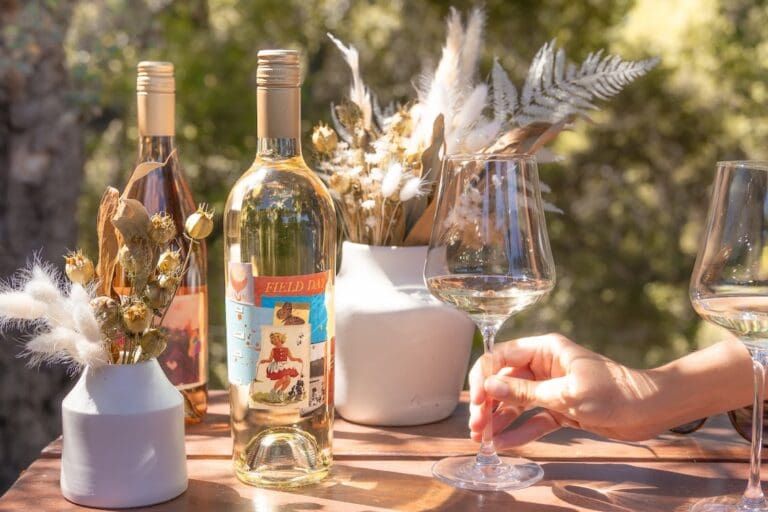
Graeme Offord’s view of drinks design is shaped by global movement and market context, reflected in his work at Denomination and echoed at London Packaging Week, where global voices in packaging, branding and retail come together to examine how brands are built, expressed and experienced.
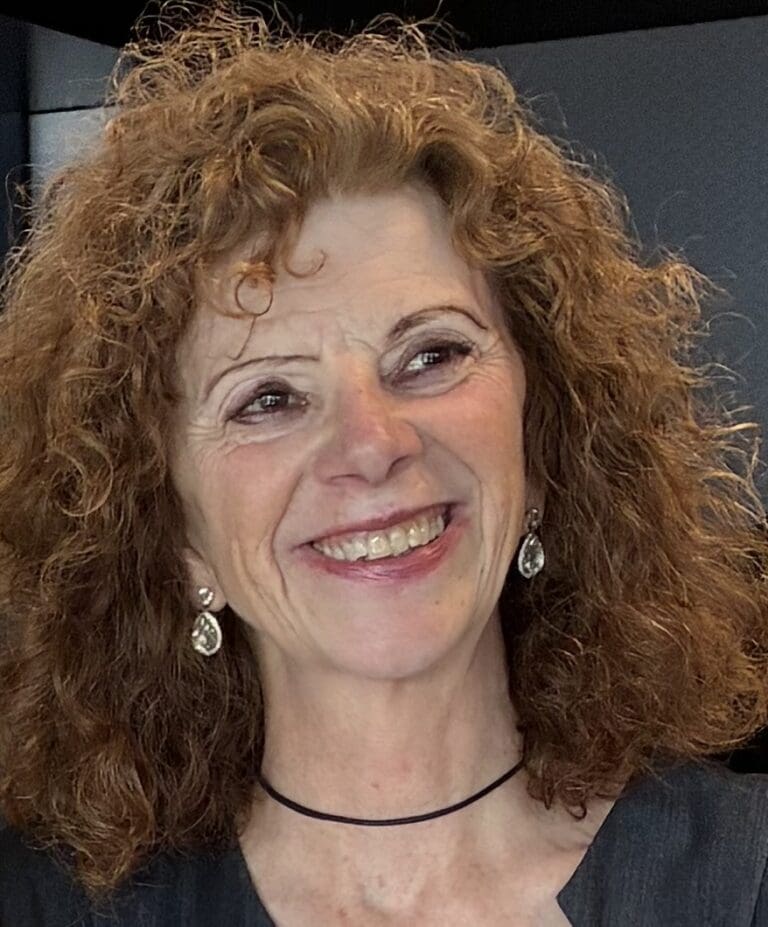
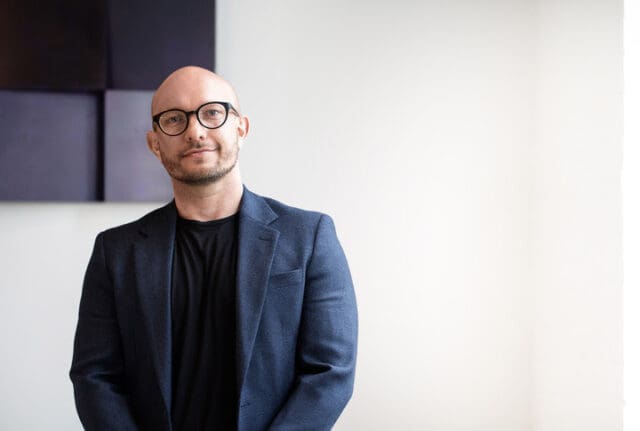
Graeme Offord grew up in a small rural town in New Zealand. It was the kind of place where horizons were long and reference points were limited. That early sense of distance has stayed with him. Not as nostalgia, but as method. A way of looking outward before deciding what matters.
Today he is Executive Creative Director at Denomination, the global drinks design consultancy with studios in Sydney, London, California and New York. Since 2002, the company has worked across strategy, storytelling and design for the drinks industry, moving between brand identity, packaging and the construction of entire brand worlds.
Graeme’s own route to that position has taken him through the USA, Asia and Australia, and to more than 80 countries along the way. His work spans Pernod Ricard, Diageo, Treasury Wine Estates, Beam Suntory, LVMH, Accolade Wines, Carlton United Breweries and others. The names are familiar. The contexts rarely are.
“In Australia, you naturally operate within a narrower lens,” he says. “The market is smaller, more concentrated, and shaped by a handful of dominant retail players who ultimately control what reaches the shelf. That inevitably limits diversity in both packaging and brand expression.”
It is a limitation that has pushed him to look elsewhere.
“Coming to something like this (Pentawards Meets) opens that up completely,” he says. “You start to see not just what is happening in your own category, but how different markets are approaching similar challenges in entirely different ways.”
Those comparisons are often most visible when brought together in one place — in conversations, in judging environments, in industry gatherings where approaches sit side by side rather than across geographies. London Packaging Week (16 & 17 September 2026, Excel London), he notes, is one of the few moments where that kind of cross-market reading becomes possible in real time.
Where context does the work
The work, in his view, is not about importing ideas. It is about understanding how they shift.
Drinks is a category where context does most of the work. A whisky is never just a whisky. It sits inside geography, ritual, price architecture and habit. The same product can read differently depending on where it is placed, and who it is for.
Graeme’s practice sits inside that movement. He spends a large part of his time moving between markets, and watching how those differences show up in retail.
“I make a point of visiting bottle shops and bars wherever I am,” he says. “I am always looking at what people are drinking, how products are positioned, and what is actually making it onto shelves across the spectrum. My camera roll is essentially a record of that.”
It becomes a private index of how the category is shifting. Not through reports or forecasts, but through shelves.
One of the clearest changes in recent years, he says, is sustainability. Not in principle, but in execution.
“In the past, sustainable formats often felt like early-stage solutions,” he says. “They were functional, but clearly compromises. What feels different now is the progression. New structures, new materials, new approaches that no longer feel like trade-offs.”
The reference point is no longer reduction, but design quality.
“You are seeing things that feel considered, desirable, and in some cases genuinely premium.”
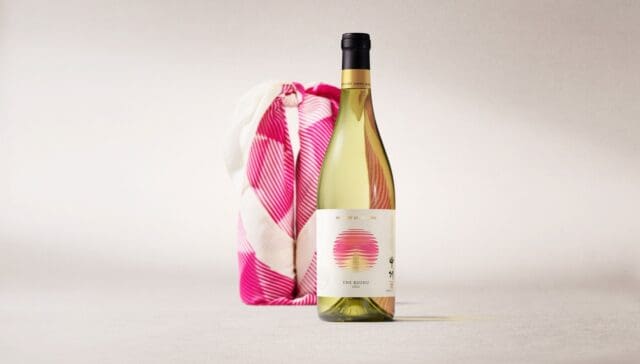
He points to work such as the lightweight glass bottle developed by Johnnie Walker.
“It is not just the reduction in weight that is interesting, but the thinking behind it,” he says. “It was developed over years of research and then shared openly so others can build on it. That kind of work has a legacy beyond the product itself.”
From object to system
The industry, he suggests, is increasingly shaped by this kind of shared progression. Less about isolated breakthroughs, more about direction-setting.
At the same time, pressure on brands has not eased. If anything, it has become more constant.
“Cost of living pressures are real, and they affect how people spend,” he says. “But I do not think brands necessarily have to work harder than before. They just have to work differently.”
That difference is structural. Packaging alone is no longer enough.
“A strong idea needs to sit behind the design,” he says. “Something that allows the brand to exist across digital, social, and different touchpoints. It cannot rely solely on shelf presence.”
The object becomes one expression within a wider system.
Storytelling, too, has shifted. Not in importance, but in credibility.
“Brands are constantly reinventing themselves,” he says. “But audiences are far more aware of that process now. Especially younger consumers. They can sense when something feels constructed or disconnected from reality.”
Authenticity, in this sense, is not a tone. It is coherence.
“We are not interested in creating something that exists purely as a visual exercise,” he says. “It needs to feel grounded rather than decorative. Something that actually belongs to the brand.”
Packaging carries that weight more than ever. Particularly in drinks, where objects rarely disappear after purchase.
“These are objects that often live with people for a long time,” he says. “They are gifted, kept, collected, remembered. That means they carry meaning well beyond the initial transaction.”
In whisky, wine and champagne especially, the object sits inside ritual.
“It sits within moments of celebration, gifting and shared experience,” he says. “That context shapes how we think about design from the beginning.”
But it remains a commercial object.
“These projects are significant investments,” he says. “So there has to be a return. Everything needs to be strategically considered as well as aesthetically strong.”
London, from his perspective, makes that balance visible.
“It has always had a strong packaging culture,” he says. “But what stands out now is the visibility of it. Even a supermarket shows a level of design consideration that is not always as present elsewhere.”
Own-label ranges are part of that shift.
“They are not treated as secondary,” he says. “They feel considered, desirable, part of a wider brand world.”
Luxury, meanwhile, is no longer fixed.
“It can be quiet and restrained, or expressive, or even casual,” he says. “What matters is not the style, but whether there is coherence and intent behind it.”
Graeme returns, often, to the idea of perspective. Not as positioning, but as practice.
Being based in Australia, he says, sharpens that need to look outward. Travel reinforces it. Observation sustains it.
And in a category defined by heritage, ritual and constant reinvention, that outward-looking discipline has become its own kind of creative language.
Not a style. Not a signature. Something closer to a way of seeing.
For those working across drinks branding, packaging and retail experience, that broader conversation continues in London Packaging Week, taking place on 16 & 17 September 2026 at Excel London. The event brings together global perspectives on how brands are built, expressed and experienced across categories.
About Easyfairs
Easyfairs organises and hosts events, bringing communities together to visit the future.
We currently organise 110 market-leading event titles in 12 countries (Algeria, Belgium, Finland, France, Germany, Italy, the Netherlands, Portugal, Spain, Sweden, Switzerland and the United Kingdom) and manage eight event venues in Belgium, the Netherlands and Sweden (Antwerp, Ghent, Mechelen-Brussels North, Namur, Gorinchem, Hardenberg, Malmö and Stockholm).
We are passionate about “easifying” the life of our customers and increasing the return on investment and return on time for professional communities through our all-in formulas, advanced technology and customer-centric approach. Our digital features and initiatives provide these communities with excellent opportunities to network effectively and do business throughout the year.
The Easyfairs Group employs 800 highly committed talents, deploys the best marketing and technology tools and develops brands with a strong appeal to our stakeholder communities.
For the fifth year running, Deloitte conferred “Best Managed Company” status on Easyfairs in 2023.
Easyfairs is ranked 11 of the world’s top exhibition organisers, according to the STAX annual ranking.
Visit the future with Easyfairs and find out more onwww.easyfairs.com.