Notable consultants share sustainable efforts for the long run
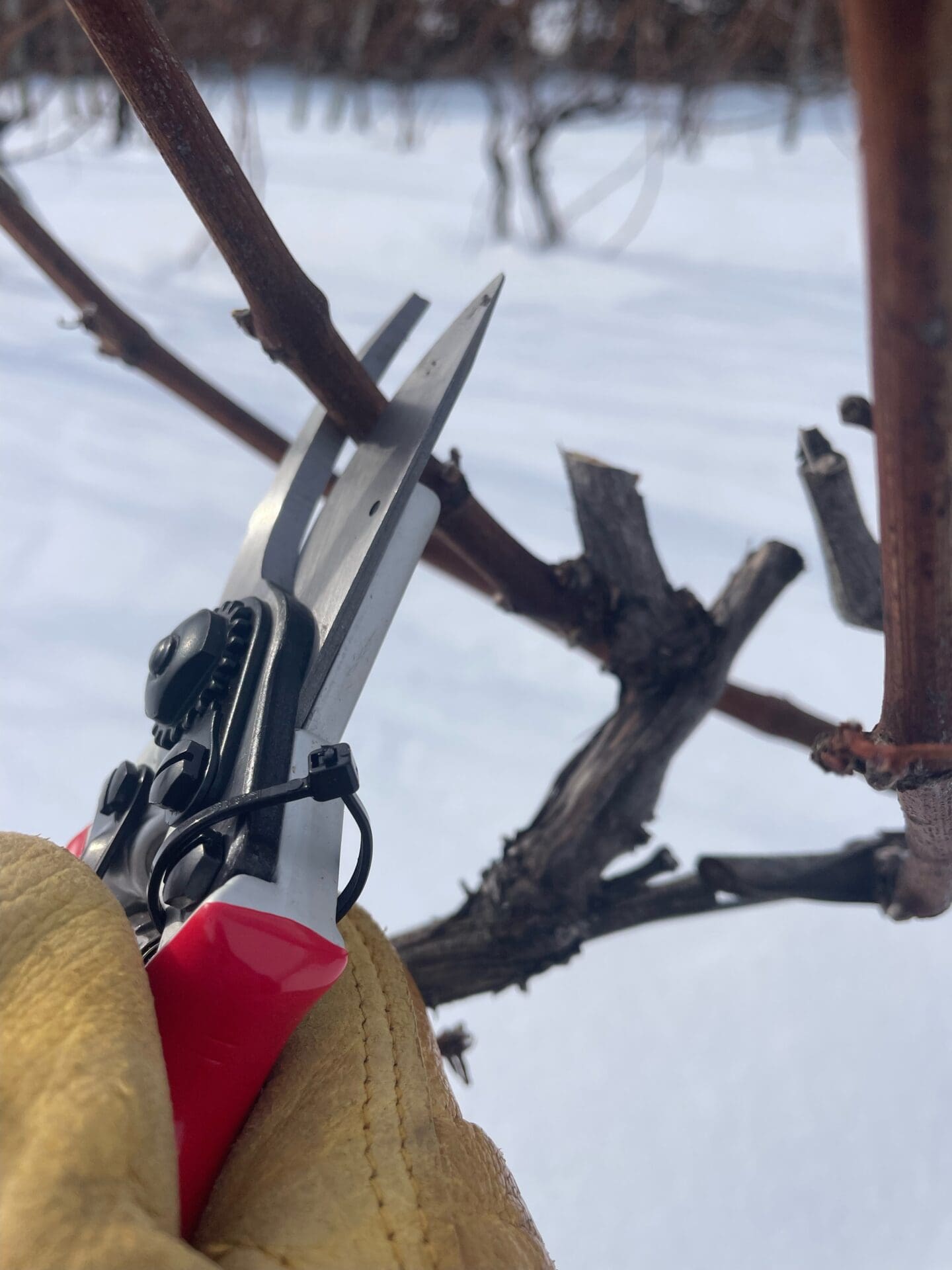
March 17, 2026 (Suttons Bay, MI) — The staff at Shady Lane Cellars never lets a season pass without seeking a way to improve its sustainable winegrowing and winemaking practices.
This month, the team is welcoming international consultants from Simonit & Sirch to refine their pruning techniques.
“Producers around the world talk about vines being 40, 50 or 100 years old,” said Kasey Wierzba, general manager and executive winemaker at Shady Lane Cellars. “Michigan struggles with this. There has been an acceptance of plants impacted by winter temperatures but we treat them so differently here than other countries around the world would.
“Simonit & Sirch consult for vineyards around the world and visited Shady Lane Cellars in September and December 2025 to assess what could be gained by working with them to develop a pruning protocol.”
Vineyard Manager Andy Fles and the Shady Lane Cellars team had already been exploring Sap Flow techniques, also called pruning for permanent structures, to find out how it might impact the longevity of the vines at the estate winery. So the timing seemed perfect.
“I’ve been looking into these techniques for the last couple of years for spur pruning,” he said. “It’s a way to preserve the vine’s structure so it’s very whole and functions very efficiently.”
Spur pruning involves cutting back one-year-old wood during the dormant season in the vineyard.
Fles explained that sap flow techniques they are exploring will “allow the structure to flow on the zylem and cambium – the arteries and veins of the vines so to speak – to function as best as they possibly can.”
Jacopo Miolo of Simonit & Sirch returned to Shady Lane Cellars March 2, to further enhance their efforts at the very start of pruning season.
“He’s been coaching us on these techniques vineyard-wide,” said Fles.
More Vineyard Trials
Alongside this added expertise, Fles is also working on a few other vineyard trials.
He’s exploring whether there are more efficient ways to task labor with pruning as a process. For example, Fles said the team began pruning the bottom of the vines last fall, when there is more labor at the vineyard, rather than waiting for winter or spring.
Next on his list?
Fles will begin to sample the buds for cold damage. The past winter provided plenty of snow to insulate the vines, he said, but temperatures below -4 can cause damage.
“At sub-zero temperatures, that’s where we see damage,” said Fles. That kind of weather can damage cold-sensitive varieties, like Gruner Veltliner or Merlot.
However, the team takes protective measures. Some cold damage is expected and about 5 percent is considered normal. Above those levels, though, Fles said they will leave more buds on to balance the vines.
As the season progresses, the professionals at Shady Lane Cellars will evaluate how these trials and training impact the vines – and the wines they craft – in Leelanau County.
“Jacopo is helping us with vine long-term sustainability,” Fles said. “That is always our goal. We’re focused and proactive growers, focused on improving.”
ABOUT SHADY LANE CELLARS
Shady Lane Cellars produces one of the largest percentages of estate-grown wine in its region. Offering hilltop views of the Leelanau Peninsula in northern Michigan, the winery and its staff create a comfortable approach to wine. The winery was founded in 1999. Since 2017 all Shady Lane Cellars wines are 100 percent estate-grown. In 2020, Shady Lane Cellars’ vineyard earned Sustainability in Practice – or SIP Certified – status.