November 5, 2025 (Paris, France) — The Perrin family is proud to announce that the architectural project of Château de Beaucastel has been awarded the 2025 AMO Prize, selected from among 132 entries across France. This annual distinction honors an exemplary collaboration between architects and clients, recognizing a project remarkable for its innovation, quality, and environmental commitment. The winners were unveiled on Monday, November 3, in Paris, in the presence of the jury, members of the Architecture et Maîtres d’Ouvrage association (AMO), and over 300 stakeholders in urban development.
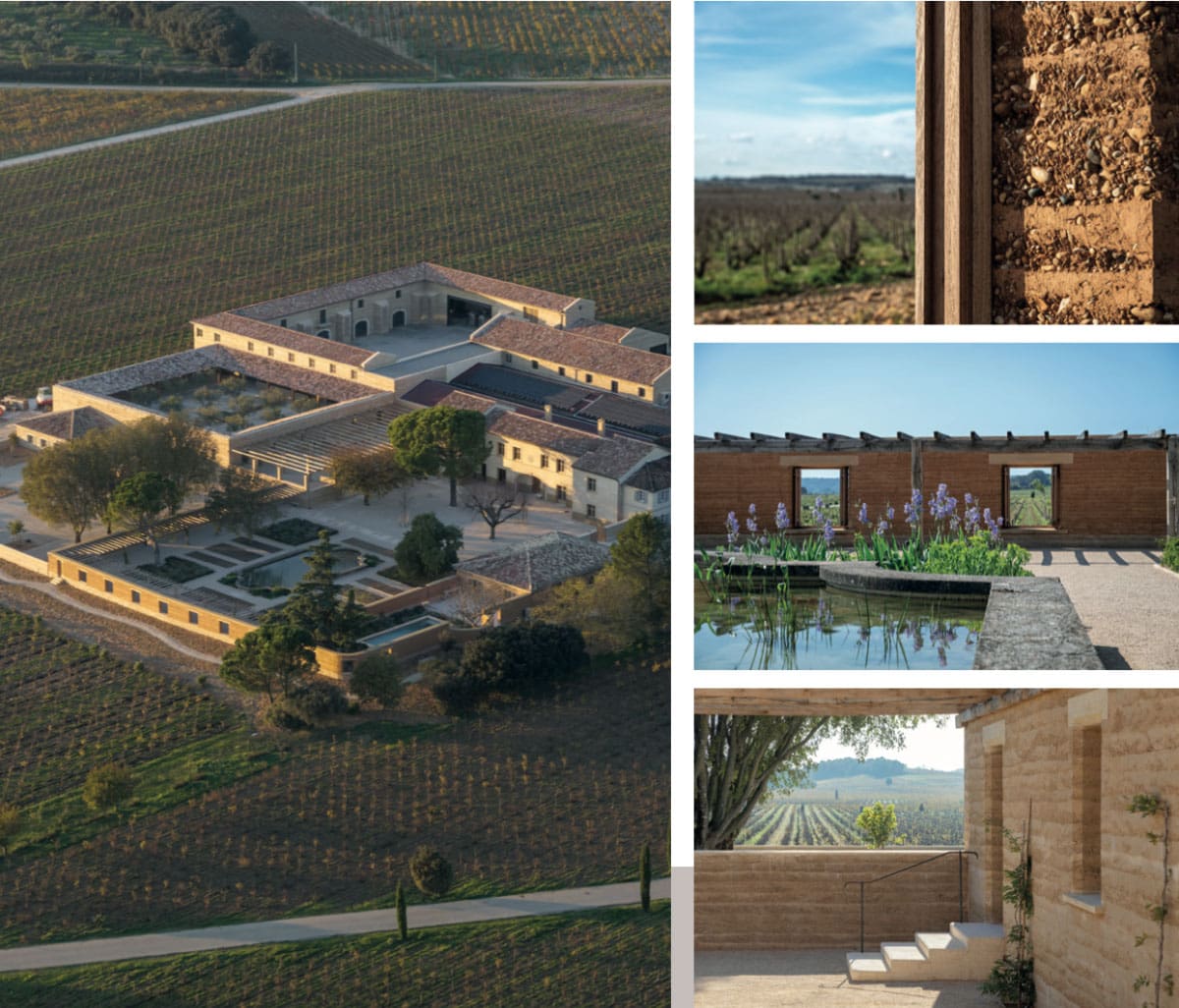
Located some twenty kilometers from Avignon, Château de Beaucastel entrusted the Indian architect Bijoy Jain — chosen from among 500 international submissions including three Pritzker Prize laureates — together with Louis-Antoine Grégo from Studio Méditerranée, specialists in eco-responsible construction, to initiate this project in 2021. “We are a family, and this approach resonated deeply with our history. We were pioneers of organic and biodynamic viticulture in the region, and innovation is part of our tradition. We sought not a spectacular architectural gesture, but a profound ecological reflection in harmony with our values,” stated Charles Perrin.
Defining his architecture as “a natural gestation of the landscape,” Bijoy Jain conceived a project deeply rooted in the earth: 6,000 square meters of preserved buildings, 4,000 square meters of newly excavated cellars, and repurposed materials from the site — siliceous soils, pebbles, red clays, sand, and gravel. The energy system relies on natural resources — rainwater, air, sun, and earth. At the heart of the design, nine meters underground, a 2,000 cubic meter basin collects filtered rainwater, while the air, propelled by the Mistral wind, circulates through wind towers (puits provençaux), naturally cooling before ventilating the subterranean vinification and storage areas. Operational in 2025, the new cellar is nearly 80% self-sufficient in water, electricity, heating, and cooling.
This accolade celebrates the quality and uniqueness of an architectural venture uniting heritage, nature, and innovation — a work both visible and subterranean, poised within the enduring temporal horizon borne by Château de Beaucastel.