Conducting a Sake Masterclass for Sommeliers in Singapore
August 29, 2025 (Japan) — The Japan Sake and Shochu Makers Association (JSS) has further strengthened its collaboration with the Association de la Sommellerie Internationale (ASI) by conducting a sake masterclass in Singapore to convey the latest knowledge of sake to promising young sommeliers around the world. This initiative is regarded as an important step in establishing sake’s position as a global alcoholic beverage category, alongside wine and spirits.
Rapid Growth in the Asian Market
In 2024, exports of sake to major Asian markets nearly doubled compared to the previous year. In particular, Singapore achieved growth of approximately 2.8 times over the ten years from 2015 to 2024. Alongside Hong Kong, South Korea, and Taiwan, the presence of sake in Singapore is rapidly increasing. Sean Ou, who serves as JSS’s Southeast Asia Support Desk, pointed out:
“From the three-Michelin-star restaurant Odette to high-end wine bars such as 67 Pall Mall, sake is now featured on wine lists. That is because people are asking for it.”
He emphasized that demand for sake is increasing among general consumers, while at the same time its status within the global alcoholic beverage category is steadily rising.
Sake Masterclass at the ASI Bootcamp
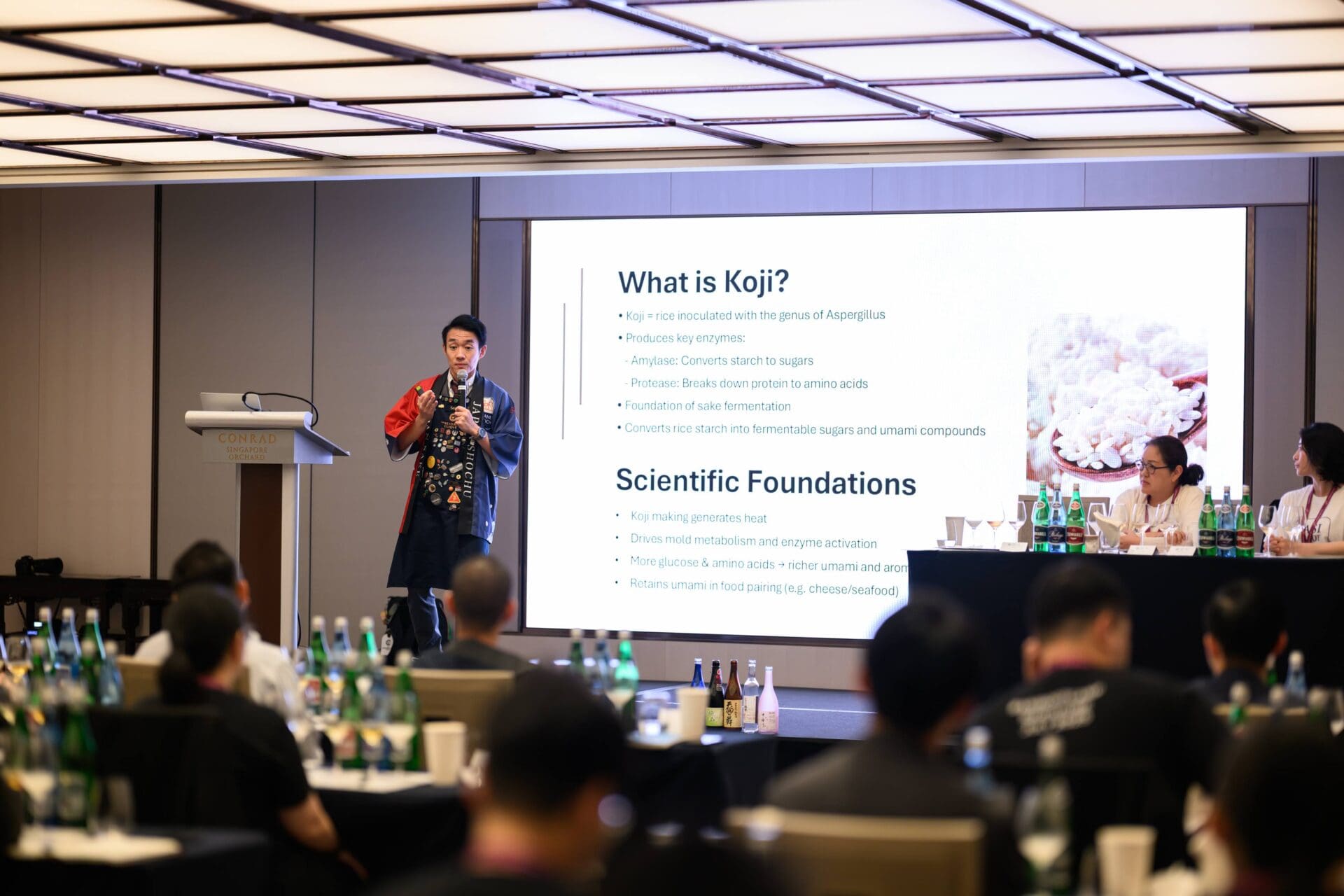
The sake masterclass was conducted as part of the educational program for young sommeliers known as the “ASI Bootcamp.” Led by Sean Ou, the class focused on the role of koji in sake fermentation, explaining how koji mold generates the enzymes that break down starch into sugar and protein into the amino acids that create umami. Koji is now widely recognized not only within the alcoholic beverage industry but also in the world of fine dining, attracting significant interest. In December 2024, it was inscribed on the UNESCO Intangible Cultural Heritage list under the title “Traditional knowledge and skills of sake-making with koji mold in Japan”, further increasing its recognition. The masterclass also highlighted sake’s strong potential for unique food pairings beyond those typically encountered with wine. It was explained that sake’s low acidity at about one-fifth that of wine, and its abundance of amino acids, which are umami components, open a new spectrum of food-pairing opportunities. Participants deepened their understanding through this explanation.
ASI Introduces a New Evaluation Standard
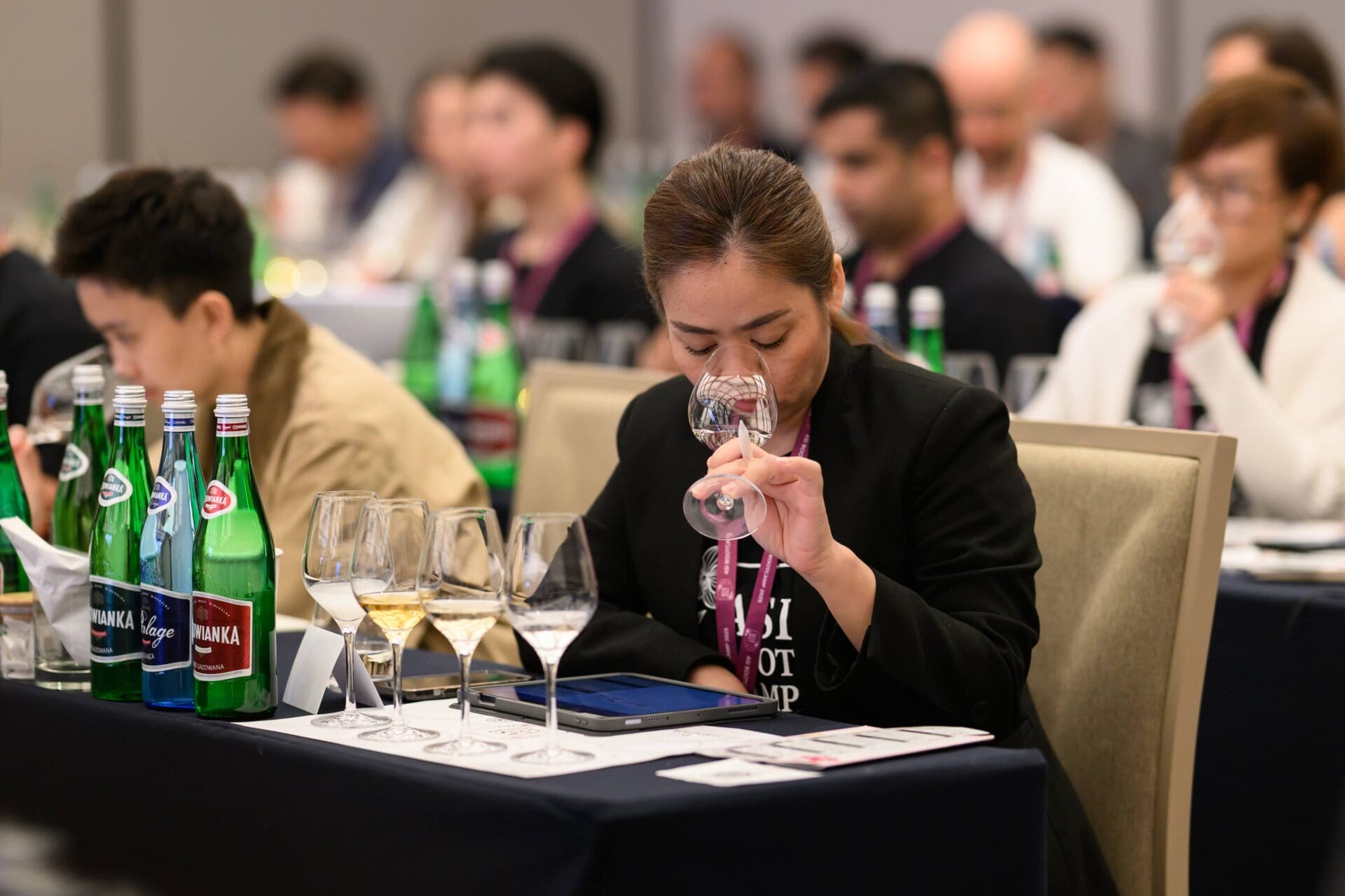
ASI has developed a “Sake Tasting Grid” to systematically evaluate sake. By standardizing indicators such as appearance, aroma, taste, and intensity, sommeliers around the world can now more easily understand sake.
JSS Director Hitoshi Utsunomiya stressed the significance of the partnership with ASI, saying: “Sake is not merely a traditional Japanese beverage, but a complex and diverse drink that deserves to be evaluated globally. Through our collaboration with ASI, we aim to properly communicate sake in sommelier education settings and spread its appeal to consumers worldwide.”
Sören Polonius, ASI Education & Exam Committee co-director and ASI Bootcamp content co-director, also stated:
“We feel that the perception of sake has shifted from being seen as an ‘esoteric, weird drink’ to now being something encountered routinely in restaurants. Sake is a very complex and profound beverage, and it should hold a solid place in the world of drinks.”
He further added:
“Unlike wine, which relies on acidity, sake is based on amino acids and umami. This creates entirely new possibilities in food pairing, achieving an ‘umami synergy’ that wine cannot. The appeal of sake will surely be increasingly understood by sommeliers worldwide.”
The JSS aims to further strengthen its collaboration with ASI and, through activities that convey the appeal of sake to sommeliers around the world, ensure that sake is recognized as a peer among the world’s prominent alcoholic beverage categories.