From the hills between Trisobbio and Castino, Chardonnay and Pinot Noir meet Piedmont’s traditional-method sparkling wine heritage
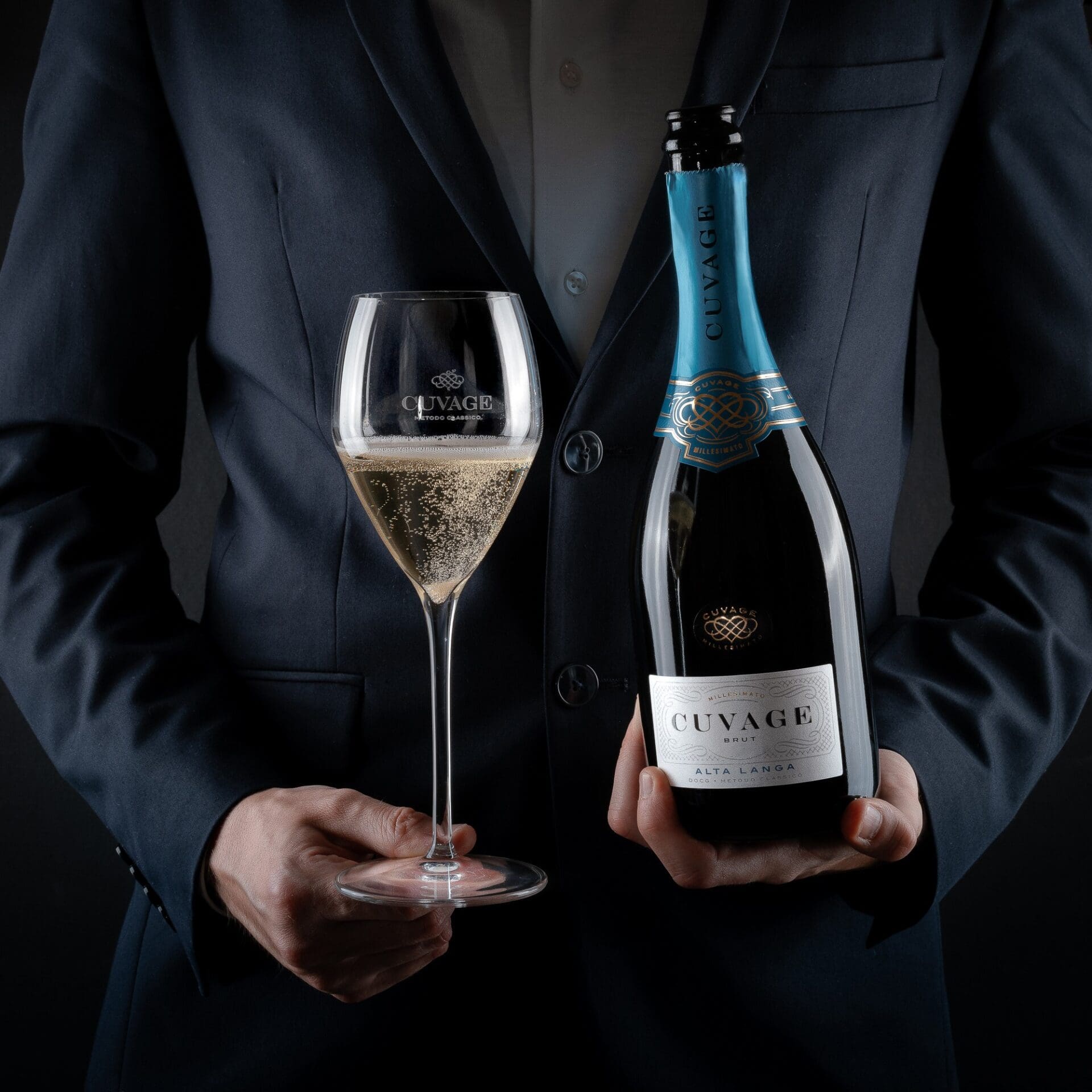
November 19, 2026 (Acqui Terme, Italy) — Cuvage presents the 2022 vintage of its Alta Langa DOCG Brut, a cuvée of Chardonnay and Pinot Noir that expresses the house’s connection to Piedmont’s sparkling wine tradition. The new vintage stands out for its structure, aromatic intensity and the interplay between freshness and volume on the palate: qualities that broaden its food-pairing possibilities, from regional specialities to dishes with bold flavours and pronounced spice.
Founded in Acqui Terme in 2011, Cuvage has built its identity around showcasing the region’s winemaking heritage. In this approach, Alta Langa plays a central role, carrying forward Piedmont’s sparkling wine tradition through vineyard selection and carefully considered viticultural and winemaking practices.
A CUVÉE FROM DIFFERENT SITES
Cuvage Alta Langa DOCG Brut brings together vineyards with distinct characteristics, highlighting the contribution of each site. The grapes come from approximately six hectares along the hill ridges between Trisobbio and Castino, overlooking the Bormida and Belbo valleys, at elevations of up to 530 metres above sea level. Mature vines and viticultural practices attentive to balanced vine growth are common to all the sites.
The diversity of the soils contributes to the composition of the cuvée: from the limestone of Trisobbio to the clay soils of Acqui Terme, the sands of Sessame and the more complex soil compositions of Fontanile and Castino. Chardonnay and Pinot Noir express these differences, yielding base wines that together shape the final character of the Alta Langa.
WINEMAKING AND TIME ON THE LEES
Winemaking follows a clear principle: “remove as little as possible and add as little as possible”, preserving the expression of the grapes and their individual origins. Gentle whole-bunch pressing is a crucial stage, during which the different juice fractions are separated. Grapes from the same lot can therefore yield fractions with distinct characteristics, providing further scope when assembling the cuvée.
Following cold static settling, fermentation takes place at temperatures of around 15°C. The base wines then mature for seven months in stainless steel on their own lees, without malolactic fermentation, retaining acidity and developing the structure that will support the subsequent secondary fermentation in bottle.
Tirage, usually carried out in April, initiates the secondary fermentation. The wine then ages on the lees for at least 36 months, before disgorgement à la glace and a further period of rest in bottle, allowing its different components to integrate.
THE CHARACTER OF THE 2022 VINTAGE
The 2022 has a distinctive identity, which the winemaking seeks to preserve by bringing out the complexity of the grapes. Structure and aromatic intensity are the vintage’s defining traits, supported by acidity that balances the breadth of the palate. The colour also reflects the character of the vintage, with an intense straw-yellow hue shading towards gold.
The mousse is exceptionally fine and persistent. On the nose, initial notes of bread crust unfold into floral aromas, gradually revealing hints of flint and salinity, with a delicate touch of graphite. The palate shows pronounced structure and volume, accompanied by crisp acidity and a long finish. A dosage of less than 4 grams per litre preserves freshness and contributes to the wine’s lively character.
ALTA LANGA AT THE TABLE
The character of the 2022 opens up new pairing possibilities for Cuvage Alta Langa DOCG Brut. Raw meat dishes and Robiola di Roccaverano cheese, both rooted in Piedmontese tradition, sit alongside shellfish and fish dishes. The vintage’s structure also lends itself to white meats, such as rabbit roulade, and mature cheeses. Its persistence and aromatic intensity complement boldly flavoured vegetarian and vegan dishes, while Asian-inspired cuisine offers opportunities to explore pairings with intense flavours and assertive spices. The recommended serving temperature is 6–7°C.