October 30, 2026 — We frequently receive questions about the difference between custom crush (contract manufacturing) and alternating proprietorship arrangements. Understanding which arrangement applies to your operations is important because each has different regulatory, reporting, and tax responsibilities for the parties involved.
What is a Custom Crush Arrangement?
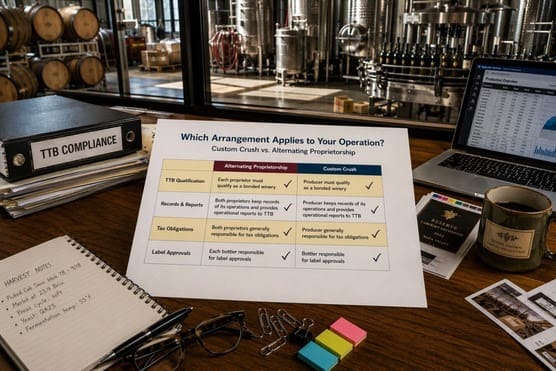
In a custom crush arrangement, a customer hires a winery to produce wine on its behalf. The wine producer is authorized by TTB to make wine and is entirely responsible for producing the wine and for all related processing steps and regulatory requirements, which may include tax payment (unless the wine is transferred in bond to another bonded wine premises for these activities).
Even if the customer owns the grapes or is involved in business decisions concerning production and marketing, TTB generally considers the producer, not the customer, responsible for regulatory compliance.
What is an Alternating Proprietorship?
An alternating proprietorship exists when two or more businesses take turns using the same bonded wine premises and equipment to produce wine. Typically, an existing proprietor-owner of a bonded wine premises rents space and equipment to another proprietor.
Each proprietor independently qualifies and operates as its own bonded winery and is responsible for meeting TTB requirements, including recordkeeping, reporting, label approvals, and tax obligations. TTB must approve the arrangement before operations begin.
What About Breweries and Distilleries?
“Custom crush” is primarily a wine industry term, but similar distinctions apply to breweries and distilled spirits plants operating under contract manufacturing or alternating proprietorship arrangements.
Where Can I Learn More?
For more information, see:
- Industry Circular 08-04: Alternating Proprietors at Bonded Wine Premises
- Industry Circular 05-02 -Alternating Proprietors at Brewery Premises
- 27 CFR Part 19 Subpart E – Alternation of Plant Proprietors
Note: Industry Circulars 08-04 and 05-02 have not been updated to reflect Craft Beverage Modernization Act tax credits and reduced tax rates. They refer to earlier tax structures no longer in place.