Castle Rock Winery founder Greg Popovich recalls the dramatic rise in red-wine sales and broader interest in wine—and how it influenced the founding strategy of Castle Rock Winery
August 31, 2026 (Rolling Hills, CA) — Long before Americans routinely ordered Cabernet Sauvignon, Pinot Noir, Chardonnay or other varietals by the glass, Greg Popovich remembers a very different restaurant culture.
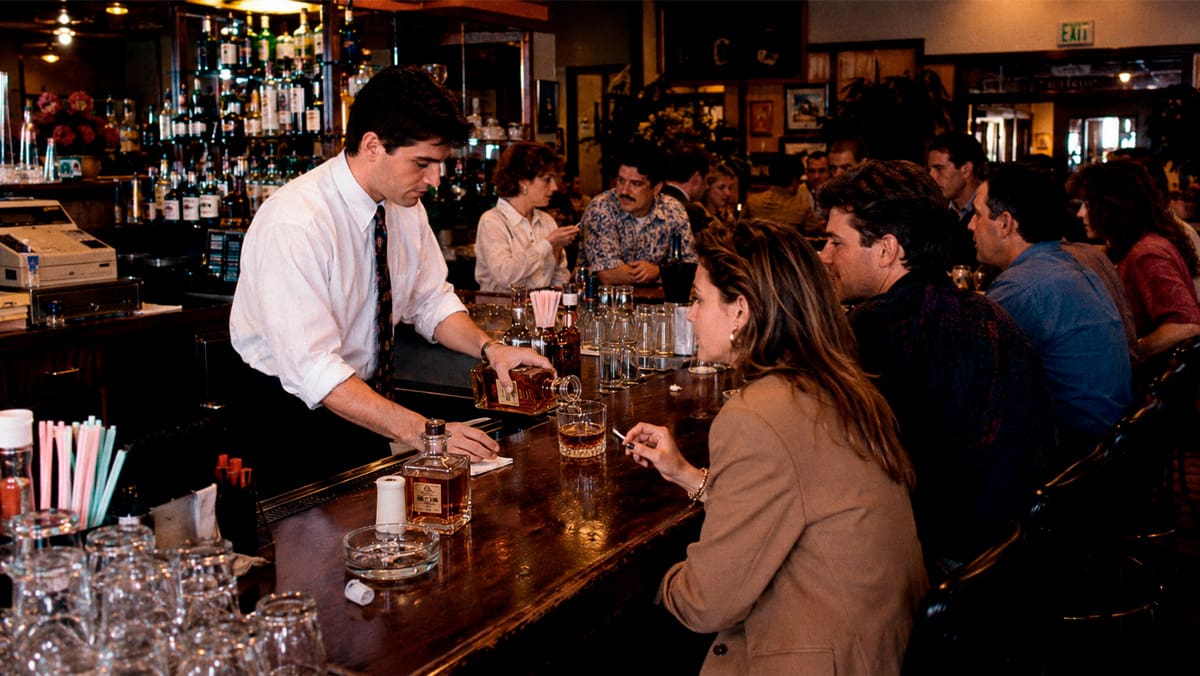
When he was in his early 20s, Popovich spent several years working as a bartender at the Victoria Station Restaurant in Torrance, California.
“Hardly anyone ordered wine,” Popovich recalled. “I spent more time emptying ashtrays at the bar than I did pouring wine.”
The restaurant’s house wines from Parducci came in 18-liter boxes. The red was called Burgundy, the white was called Chablis, and Rosé was also offered. They were served in half-liter and full-liter carafes.
“We would have eight to ten waiters and waitresses working a shift, and I think the entire staff shared maybe two corkscrews,” Popovich said. “That tells you how rarely anyone ordered a bottle of wine.”
The bottled-wine selection included California producers such as Jordan, Heitz Cellars and Robert Mondavi, imported wines including Lancers and Mateus Rosé, and a small selection of Champagnes. Even so, cocktails and beer dominated, and many customers had little familiarity with grape varieties or wine regions.
A decade later, American wine culture underwent a dramatic transformation.
On November 17, 1991, 60 Minutes aired Morley Safer’s landmark report, “The French Paradox.” The segment examined why the French appeared to experience comparatively low rates of heart disease despite diets rich in butter, cheese and other high-fat foods. It raised the possibility that moderate red-wine consumption might be part of the explanation.
The report featured French researcher Dr. Serge Renaud, who discussed several possible explanations, including lifestyle, diet and alcohol consumption. But for millions of viewers, the glass of red wine Safer raised during the broadcast became the enduring symbol of the French Paradox.
An estimated audience of roughly 22 million watched that evening. U.S. red-wine consumption was reported to have increased from approximately 25 million cases annually during the 1980s to 34.8 million cases in 1992. By 1993, red-wine sales were reportedly 44% above pre-broadcast levels.
Whatever the continuing debate over wine and health, there was no mistaking the broadcast’s effect on American wine culture—and Popovich witnessed it firsthand from inside the industry.
“At the time, I was working at La Crema Winery, and our Pinot Noir sales doubled,” Popovich said. “The change wasn’t theoretical to us. We could see it in the sales. People became interested in red wine, but they also wanted to learn more about different grape varieties, regions and wine in general.”
When Popovich founded Castle Rock Winery in 1994, he remembered both sides of that transformation: the restaurant customers who rarely ordered wine and the new generation whose interest had been energized by the 60 Minutes broadcast.
Value-priced Pinot Noir became Castle Rock’s flagship offering, while high-quality, affordable varietal wines for restaurant by-the-glass programs became an important part of its original strategy.
“I saw an opportunity to give consumers a high-quality Pinot Noir and other varietal wines at prices that made them easy to try and enjoy,” Popovich said. “Castle Rock was founded on the belief that good wine didn’t have to be intimidating or out of reach.”
A second cultural turning point arrived in 2004 with the film Sideways. Its celebration of Pinot Noir brought the varietal to an even broader audience, while its famously dismissive treatment of Merlot contributed to declining demand for that varietal.
“Sideways had another huge positive impact on our Pinot Noir sales at Castle Rock,” Popovich said. “At the same time, we saw a major negative impact on Merlot sales. It was another powerful example of how television and film could change what consumers ordered almost overnight.”
More than three decades after Castle Rock’s founding, Popovich believes the industry again faces the challenge of making wine relevant, welcoming and accessible to a new generation.
That philosophy continues through Kosmic Kitty Wines, the family-owned contemporary California wine brand produced in Santa Rosa.
“The way people discover wine continues to change, but curiosity is still what brings them into the category,” said Adriana Popovich, Director of Social Media for Castle Rock Winery and Kosmic Kitty Wines. “Kosmic Kitty invites a new generation to explore wine in its own way. The presentation is fun and modern, but the quality in the bottle is serious. We want people to feel welcomed, not overwhelmed.”
Kosmic Kitty’s message—“A New Generation of Wine, Without the Attitude”—reflects the principle that helped launch Castle Rock Winery: Wine discovery should be enjoyable, accessible and free from intimidation.
“The wine industry successfully introduced a new generation to wine before, and it can do it again,” Greg Popovich said. “I remember when hardly anyone ordered wine at the bar. Ten years later, I watched our Pinot Noir sales double after one television report captured the public’s imagination. Then Sideways created another surge in Pinot Noir interest. Those lessons remain just as relevant today.”
View the original 1991 60 Minutes segment: The French Paradox — CBS News
About Castle Rock Winery and Kosmic Kitty Wines
Founded in 1994 by Greg Popovich, Castle Rock Winery is a family-owned winery producing premium wines in Santa Rosa, California, from grapes grown in respected wine regions throughout the West Coast. The company is committed to exceptional quality and value while making wine approachable and enjoyable.
Kosmic Kitty Wines carries that philosophy forward for a new generation. Guided by the message “A New Generation of Wine, Without the Attitude,” Kosmic Kitty combines distinctive packaging, approachable California varietals and serious wine quality in a fun, welcoming brand.