July 9, 2026 — On June 19 and 20, 2026, the 17th Sake Fair, organized by the Japan Sake and Shochu Makers Association (JSS), was held in Tokyo for the first time in two years.*1 The Sake Fair included two tasting events, the “All Japan Sake Fair” offering approximately 1,200 types of sake from 45 prefectures, and the official “Public Tasting” of all the sake that was submitted to the Annual Japan Sake Awards 2026, which is the oldest and most prestigious sake competition in Japan. These two events together make the Sake Fair one of the largest sake festivals in the world, and this year the fair attracted more than 5,600 visitors.
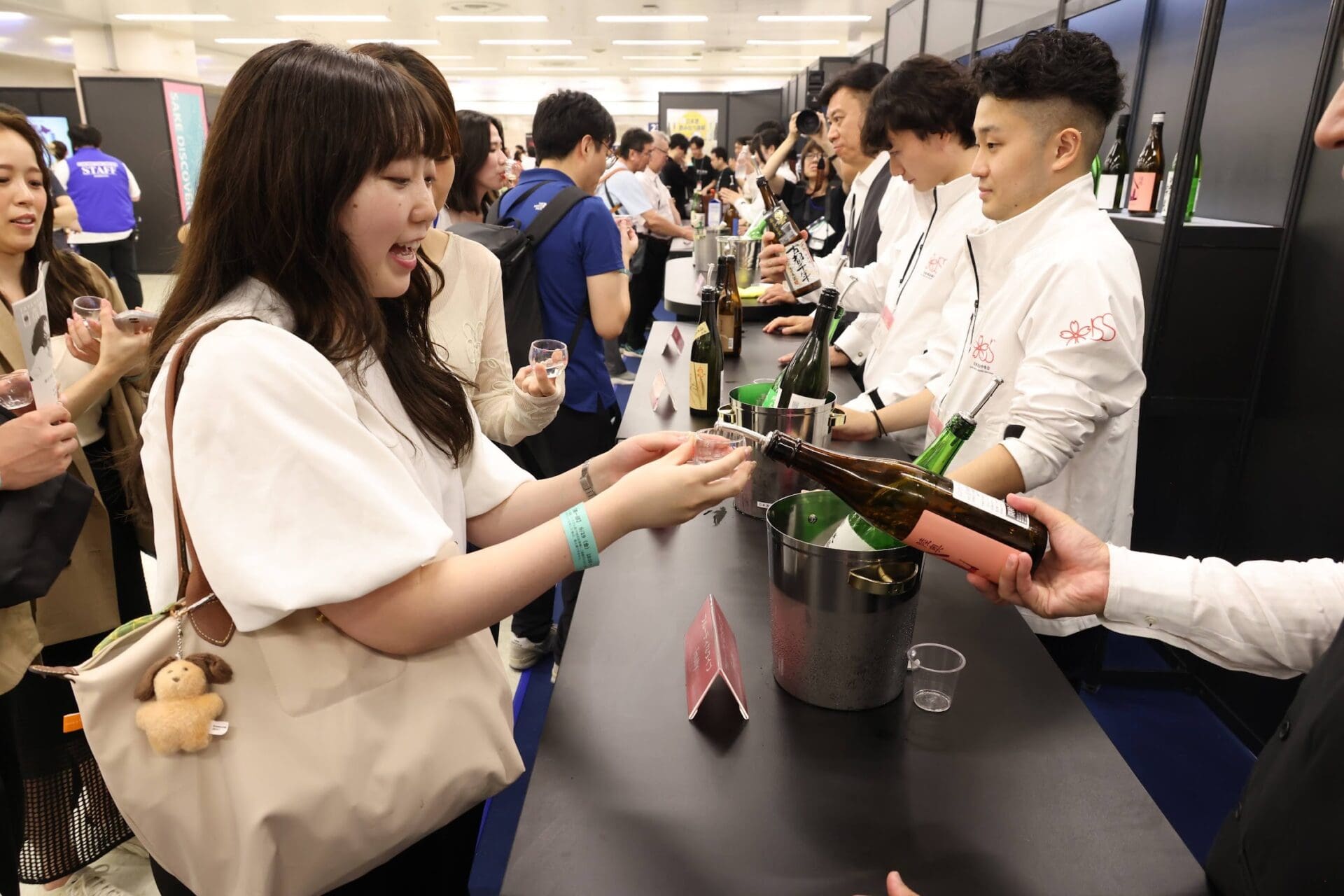
At this year’s Sake Fair, two new initiatives were introduced to expand demand for sake.
The first initiative was aimed at creating new points of contact with younger generations. For the first time, JSS introduced age-based ticket categories—one for people aged 20 to 39, and another for those aged 40 and above—to create more opportunities for younger generations to experience sake in a casual and accessible way. Domestic demand for sake has continued to decline, just as it has for traditional alcoholic beverages in many other countries. To pass this traditional beverage on to future generations, it is essential to create more opportunities for younger people in Japan to drink sake. As a result of this initiative, visitors under the age of 40 accounted for more than 50% of all attendees. According to the Ministry of Internal Affairs and Communications’ estimated population figures, people under the age of 40 account for approximately 25% of Japan’s legal drinking-age population. This means that people under 40 attended the Sake Fair at approximately twice their share of the drinking-age population. Mr. Hitoshi Utsunomiya, Director of the JSS, said: “This
initiative was not simply about attracting younger generations by lowering ticket prices. Since the COVID-19 pandemic, opportunities for intergenerational drinking gatherings in companies and local communities—which traditionally existed in Japanese society—have declined, and we felt that younger generations, in particular, had fewer opportunities to come into contact with sake. The true purpose of issuing these tickets was to create opportunities for this generation to encounter attractive sake through the Sake Fair. At the venue, we heard many comments from younger visitors saying they had discovered delicious sake, which gives us confidence in the initiative.”
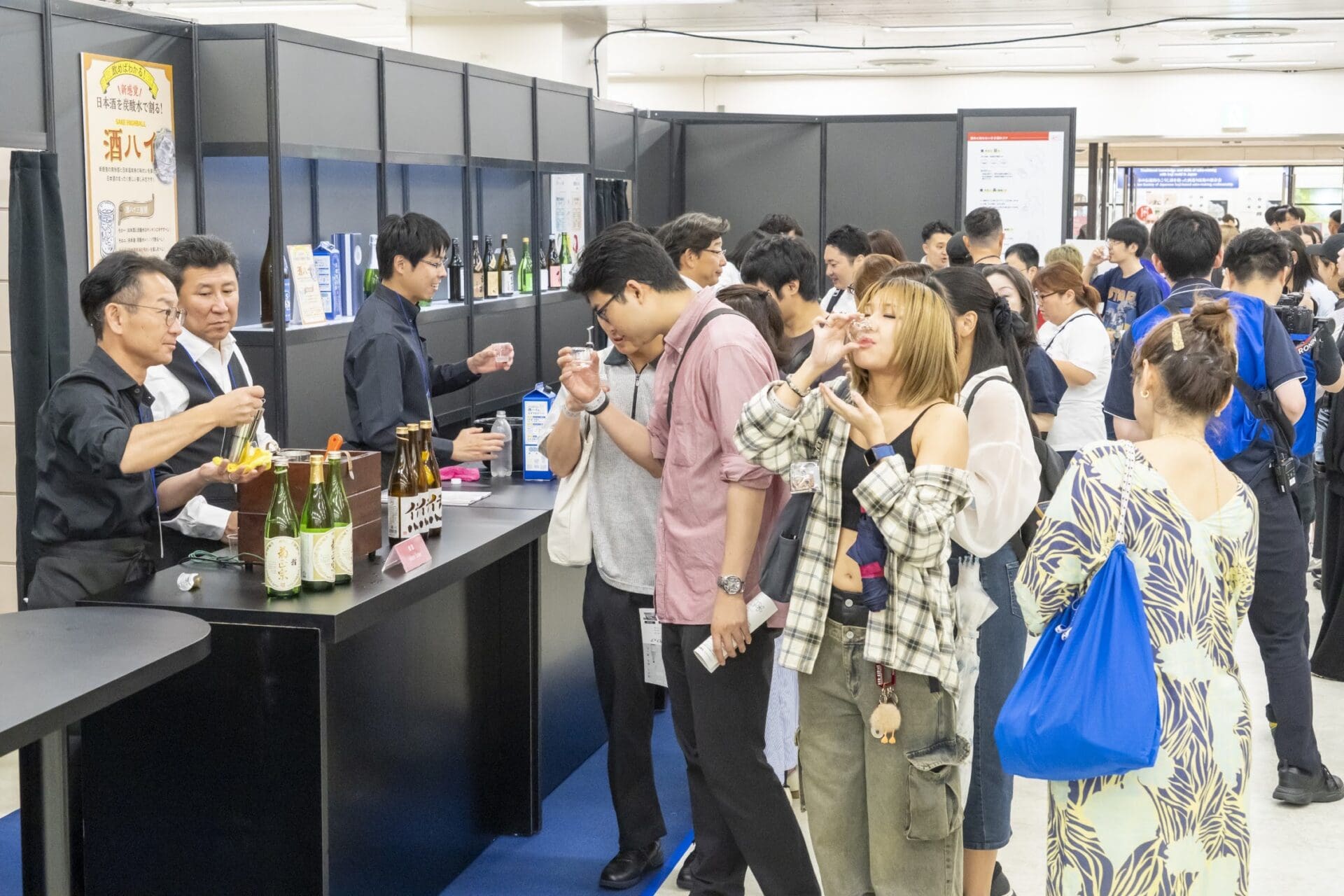
In another effort to engage younger visitors and beginners, the Sake Fair featured a booth serving the increasingly popular sake-based highballs known as “Sake Highs.” Sake Highs are served by mixing sake and carbonated water in a 1:1 ratio, reducing the alcohol content from 15% to approximately 7%, thereby giving them broader appeal. This Sake High initiative officially began in 2024 as a way to lower the barrier to drinking sake, and Sake Highs are already available at more than 10,000 establishments across Japan.
Mr. Kensuke Shichida, Chairperson of the Demand Development Committee of the JSS, expressed his expectations for the Sake High initiative, saying, “This is an initiative started by the three layers of sake makers, wholesalers, and retailers as a way to create demand for sake. It began with the idea that, by lowering the alcohol content, sake would become easier to enjoy, especially during Japan’s summers, which have been becoming increasingly hot. Some sake breweries are also releasing products specifically designed for Sake Highs.” Mr. Taichiro Fukumitsu, the 14th-generation president of Fukumitsuya Sake Brewery in Ishikawa Prefecture, also said, “As part of Ishikawa Prefecture’s efforts, we have continuously worked to promote Sake Highs. We have expectations for Sake Highs as an entry point for people who drink alcoholic beverages but do not drink sake.”
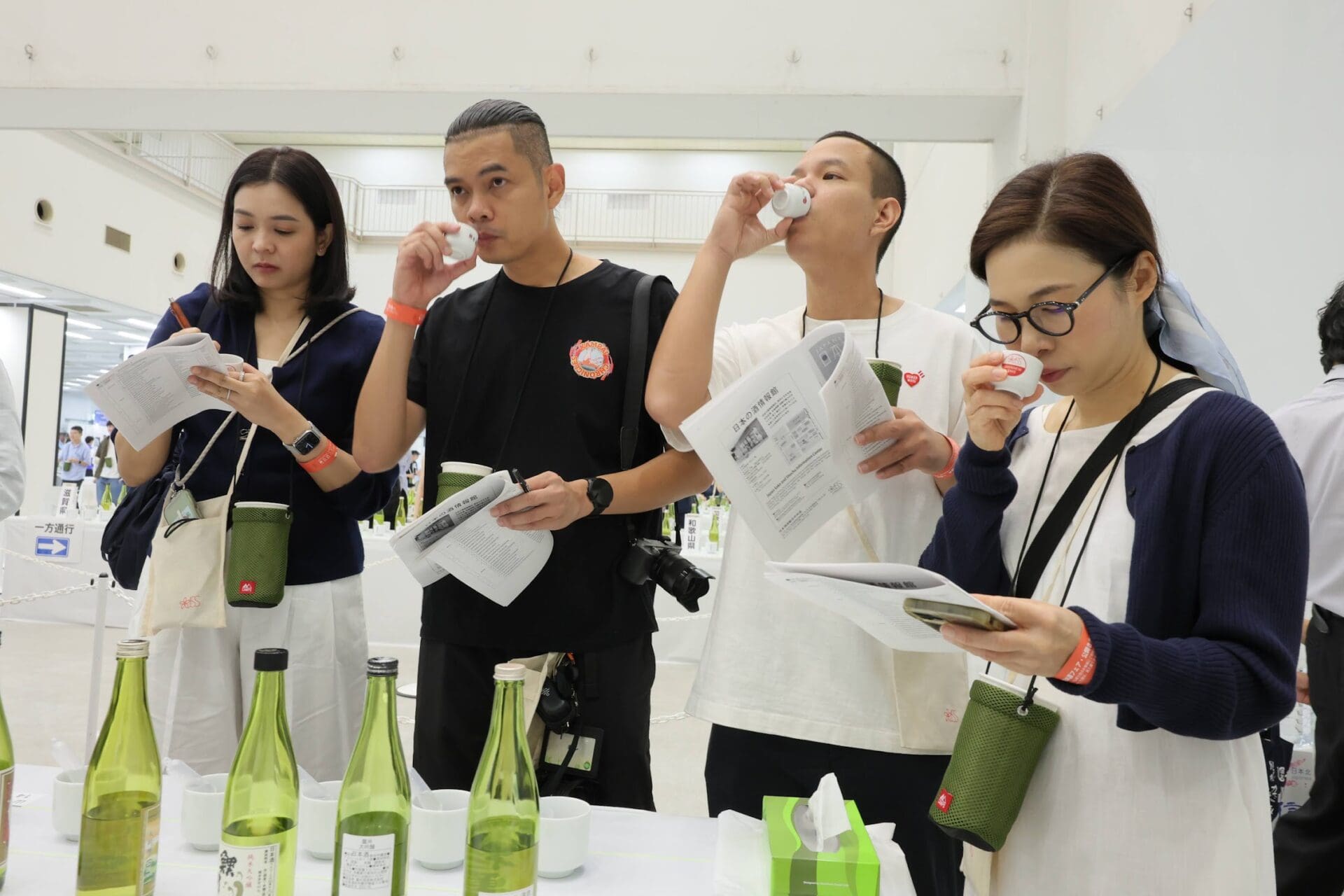
The second initiative focused on expanding overseas markets. This year, JSS invited eight sake and wine professionals from Vietnam and Thailand to tour several sake-related businesses in Tokyo and Niigata, and to experience the Sake Fair. Vietnam and Thailand are two markets with strong growth potential for sake within Asia, which accounted for approximately 63% of Japan’s sake export value in 2025.
Mr. Ratthapon Doungthip, who is involved in sake education and event organization in Thailand as a Sake Culture Advocate, spoke with excitement about his participation in the Sake Awards Public Tasting, saying, “The sight of the finest sake that each brewery is proud of, all gathered in one place and offered for someone like me who purely loves sake, felt as if a dream had come true.” He also added, “What I found most interesting was the Japanese consumer trends that could be seen from it. As soon as the venue opened, I saw many visitors heading straight toward specific booths. From that sight, I could clearly understand which regions and labels Japan’s sake fans themselves are strongly attracted to.”
He also pointed out that it became a very important opportunity to realize the fact that international recognition and reputation do not necessarily match the preferences and evaluations of sake enthusiasts within Japan.
Mr. Lincoln Vû, Head Sommelier at Da Loc Co., Ltd., a major wine and spirits importer in Vietnam, showed his enthusiasm for promoting sake in Vietnam, saying, “Sake is still a small presence within Vietnam’s overall alcoholic beverage market. However, it is also a category that continues to grow. By more actively proposing and promoting sake and food pairings at the restaurants and establishments I am currently involved with, I would like to communicate the potential and appeal of sake to more people.”
As recognition of the word “sake” expands in overseas markets, and as more sake is brewed outside Japan, what JSS places importance on is correctly communicating the origin and regionality of “Nihonshu.”
Nihonshu is protected as a geographical indication (GI) for alcoholic beverages. The geographical indication “Nihonshu” is limited to sake made in Japan using rice grown in Japan. “Nihonshu” is an important indication showing that the sake is rooted in Japanese ingredients, climate, and techniques. At this year’s Sake Fair, the diversity of Nihonshu born from differences in each region’s water, rice, climate, and brewing methods was introduced through booths representing 45 prefectures across Japan. Communicating this regionality is also important in overseas markets so that “Nihonshu” is understood not simply as “sake,” but as a beverage with distinct characteristics from each place of origin.
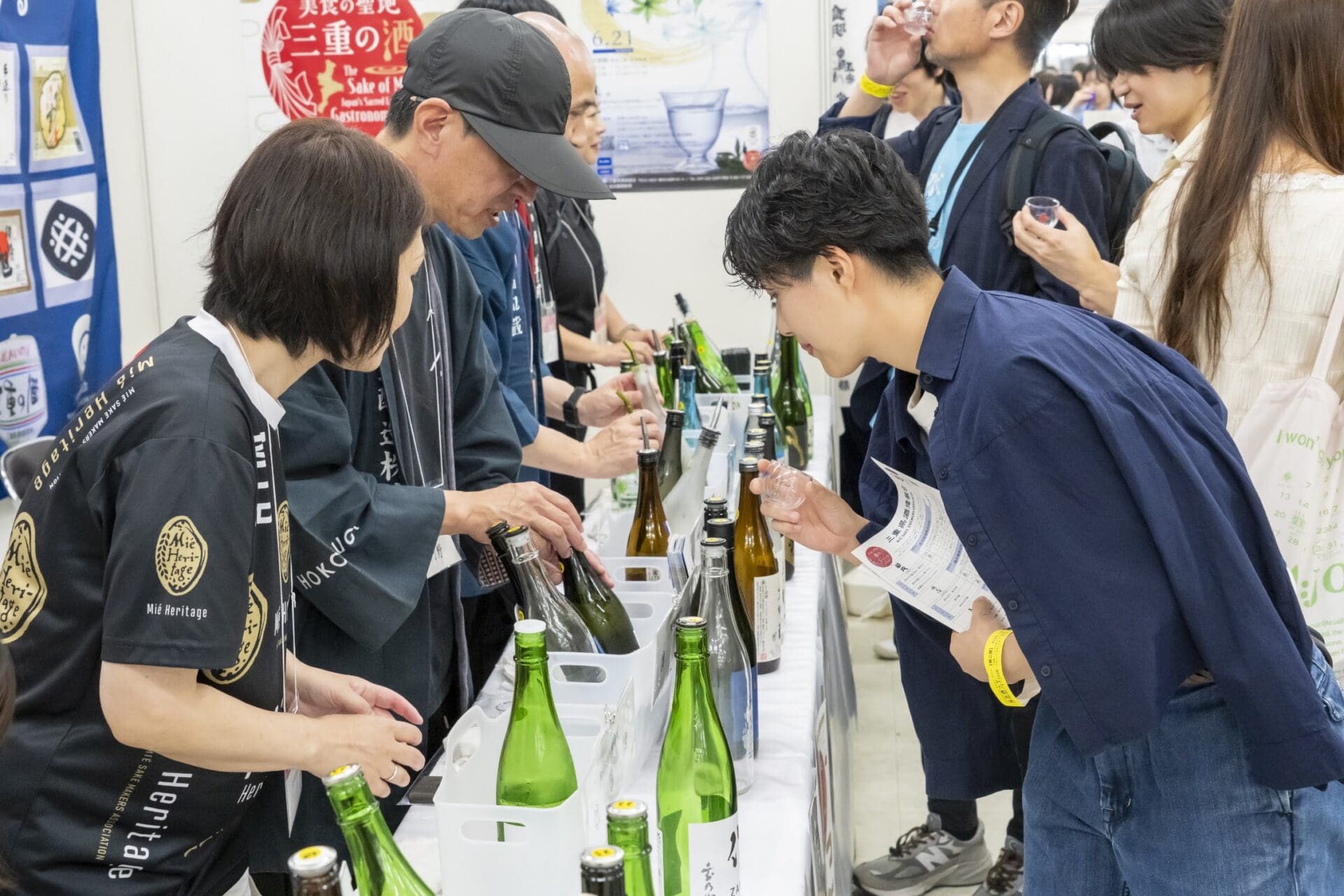
One example is an initiative in Yamagata Prefecture. Mr. Masumi Nakano, President of Dewazakura Sake Brewery and one of the advisors to the Yamagata Prefectural Sake Brewers Association, said, “In Yamagata Prefecture, sake breweries conduct promotional activities overseas together with selected sake rice producers who grow high-quality sake rice.”
Such cooperative initiatives that include growers are highly unusual even in the wine industry, where the terroir of the grape is often emphasized. For the rice growers, it provides a valuable opportunity to see how the rice they have grown is transformed into sake and marketed overseas, further motivating them to produce even better rice. For overseas trade professionals, who rarely have the opportunity to hear directly from rice producers about sake rice cultivation, it also serves as an excellent opportunity to deepen their understanding.
Mr. Nakano added, “Most recently, we carried out this initiative in Hong Kong. As we continue to develop new initiatives like this, and as exports increase, working in the sake industry is becoming more attractive to young people in regional areas.”
The joint overseas promotion undertaken by both rice farmers and sake breweries is attracting attention as a regionally integrated export strategy that is unique to the sake industry.
Sake exports have performed extremely well in recent years. In 2025, Japan’s customs-cleared sake exports reached 45.9 billion yen in value, an increase of 6% year on year. In volume terms, exports reached 33.55 million liters, equivalent to 3.73 million cases on a 9-liter basis, an increase of 8% year on year. Both value and volume exceeded the previous year’s levels, marking the second-highest export performance on record. Compared with 2020, export value has approximately doubled.
Through the Sake Fair, the JSS will continue working to communicate the initiatives of sake breweries across Japan and the diversity of each region, while striving to expand the number of sake consumers both in Japan and overseas.
*1 In 2025, the Sake Fair was held in Osaka during the Expo 2025 Osaka World Exposition and was named the “Kokushu Fair.” Kokushu is a collective term for sake, honkaku shochu, awamori, and other beverages born from traditional sake-making with koji mold, which was inscribed on UNESCO’s Intangible Cultural Heritage list in December 2024.
*2 Source: Preliminary population estimates by the Ministry of Internal Affairs and Communications as of June 1, 2026.