February 6, 2026 (Japan) — According to Japan’s customs-based export statistics, sake exports in 2025 totaled 45.9 billion yen in value terms, representing a 6% increase compared to the previous year. In volume terms, exports rose by 8% year on year to 33.55 million liters (equivalent to 3.73 million cases on a 9-liter basis). Both value and volume exceeded the previous year’s figures, making 2025 the second-highest export performance on record.
Meanwhile, the average export unit price per 750 ml bottle declined slightly by 2% from the previous year to 1,026 yen. Compared with 2020, however, the value of sake exports has approximately doubled, achieving a compound annual growth rate (CAGR) of 14% over the past five years. This positions sake as one of the fastest-growing categories in the global alcohol market.
By region*¹, Asia remained the largest export destination, with export value reaching 28.8 billion yen, an 8% year-on-year increase, accounting for 63% of total export value. North America followed with exports totaling 12.4 billion yen, a 1% decrease year on year, making it the only region to fall below the previous year’s level. Its share of total export value also declined by two percentage points to 27%.
Western Europe continued its steady expansion, recording export value of 3 billion yen, up 4% year on year. Compared with 2020, exports to the region have increased by 157%, significantly exceeding the average growth rate of sake exports overall.
Although current export value remains relatively small, Latin America emerged as one of the fastest-growing regions. Compared with 2020, the market expanded by 288% over the past five years—nearly quadrupling in size—and the number of destination countries in the region reached 10 for the first time.
Sake Export Performance by Country (Top 10, 2025)
Value-based customs statistics (JPY million, rounded)
| Rank | Country | 2020 | 2024 | 2025 | YoY Change | vs 2020 | Share |
|---|---|---|---|---|---|---|---|
| 1 | China | 5,792 | 11,671 | 13,304 | +14% | +130% | 29% |
| 2 | United States | 5,070 | 11,442 | 11,045 | -3% | +118% | 24% |
| 3 | Hong Kong | 6,178 | 5,117 | 4,824 | -6% | -22% | 11% |
| 4 | South Korea | 979 | 3,743 | 4,395 | +17% | +349% | 10% |
| 5 | Taiwan | 1,430 | 2,670 | 2,698 | +1% | +89% | 6% |
| 6 | Singapore | 1,113 | 1,484 | 1,504 | +1% | +35% | 3% |
| 7 | Canada | 429 | 1,041 | 1,312 | +26% | +206% | 3% |
| 8 | Australia | 491 | 782 | 844 | +8% | +72% | 2% |
| 9 | France | 213 | 552 | 628 | +14% | +195% | 1% |
| 10 | United Kingdom | 215 | 637 | 617 | -3% | +187% | 1% |
By country, China was the largest export destination, with export value reaching 13.3 billion yen, up 14% year on year and accounting for 29% of total export value. In contrast, the United States, the second-largest export market, declined by 3% year on year to 11 billion yen, largely due to a significant downturn in the third and fourth quarters.
Among the top ten export destinations, South Korea recorded particularly strong growth, with export value increasing by 17% year on year to 4.4 billion yen—4.5 times higher than in 2020. While the average export unit price to South Korea remains below the overall average, it has risen consistently over the past five years, reaching 601 yen per 750 ml bottle in 2025.
Commenting on the continued growth of sake exports amid challenging conditions for other alcohol categories, Hitoshi Utsunomiya, Director of the Japan Sake and Shochu Makers Association (JSS), stated:
“In 2025, following the registration of traditional knowledge and skills of sake-making with koji mold as a UNESCO Intangible Cultural Heritage in December 2024, we anticipated heightened global interest in koji culture and sake from the beginning of the year. We strengthened our efforts to raise global awareness of sake by exhibiting at ProWein 2025, as well as by hosting promotional fairs at the state guesthouse at the Osaka–Kansai Expo and during Expo-related events. We also continued our partnership with the Association de la Sommellerie Internationale, holding masterclasses for leading and young sommeliers from across Asia and Oceania in locations such as Malaysia and Singapore. I believe that the diversity and uniqueness of sake’s flavor profiles, together with its strong potential for food pairing, are increasingly being recognized by fine-dining chefs, sommeliers, and consumers worldwide.”
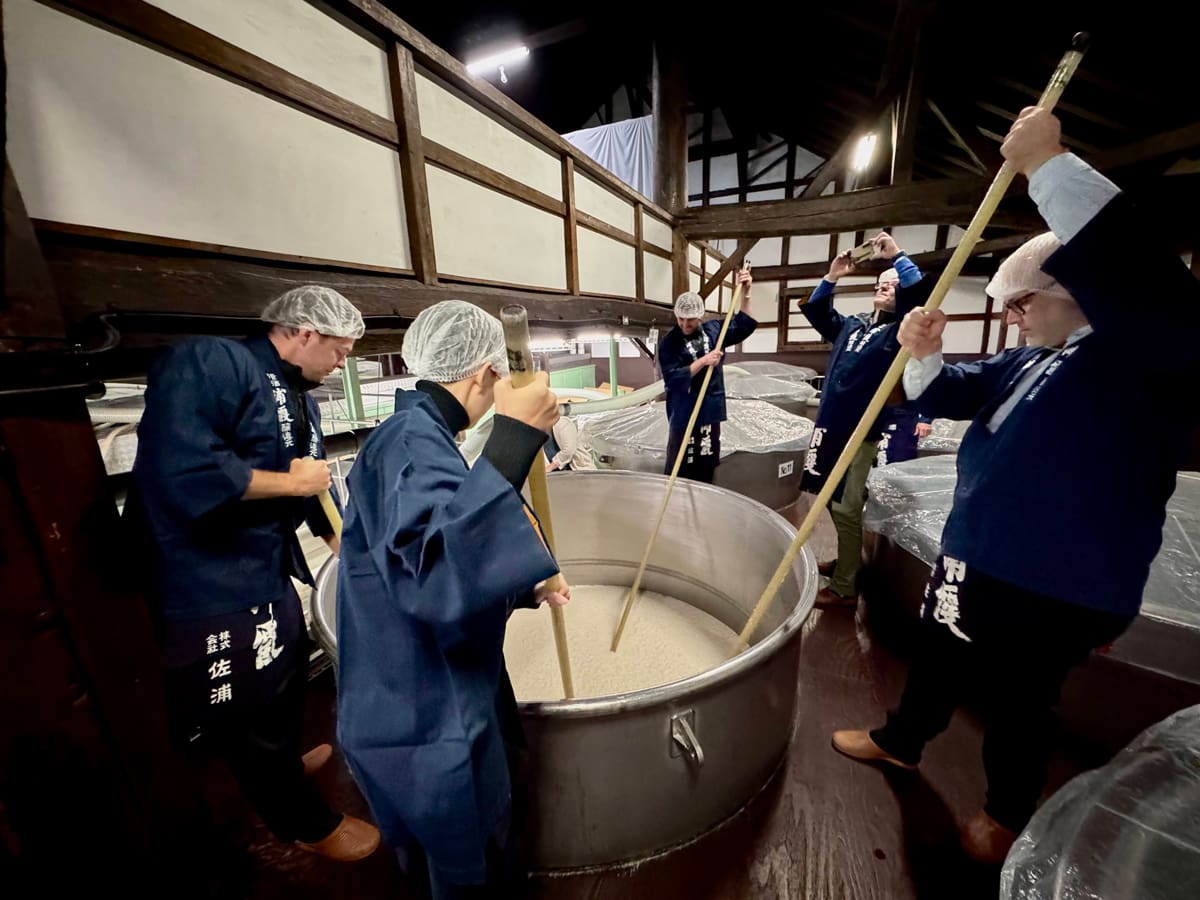
In addition to its activities in key existing markets, the JSS is strengthening initiatives in Central and Eastern Europe and Latin America, where future market expansion is expected. For example, in November 2025, the JSS included Professor Júlio César Kunz, Vice President of the Associação Brasileira de Sommeliers, in an international group of wine professionals on a sake study tour of Japan’s Tohoku region with the aim of expanding awareness of sake in Brazil. Commenting on the potential of sake in Brazil, Mr. Kunz stated: “I believe that both the taste profile and the symbolism of sake have strong potential to resonate with Brazilian consumers. The elegance, versatility, and cultural richness of sake can perfectly match the curiosity and openness of the Brazilian market.”
The Ministry of Agriculture, Forestry and Fisheries has set a target of 76.0 billion yen in sake export value by 2030. Through continued efforts to communicate the appeal of sake to consumers who have yet to encounter it and to expand the global base of sake fans, the JSS will continue its activities in 2026 toward achieving this goal.
*¹ In accordance with Ministry of Finance trade statistics, the JSS classifies countries and regions worldwide into Asia, Africa, Western Europe, Oceania, the Middle East, Central and Eastern Europe/Russia, Latin America, and North America.