August 12, 2025 (Erbusco, Italy) — The cutting of the first grapes in the earliest vineyards marked the onset of a 2025 Franciacorta harvest which will gradually extend out to the various other production zones on 10 August, with larger volumes, and then right after the middle of August to the cooler areas as well. It’s a start date which testifies to the heterogeneity of soils and climates which is so characteristic of Franciacorta, a litmus test of the complexity and true quality of this extraordinary product.
It is a very promising year. The vineyards are in excellent health with a good balance between plant growth and yields and abundant top quality grapes, certain localised hail storms notwithstanding, especially as the area was spared the hail in the first weekend of August which hit other parts of the Brescia area.
In temperature terms it is a vintage of temperatures in line with, or slightly over, the average, with short cold periods in the winter. April temperatures were normal, free of post-budding temperature drops, and the same can be said of May, while June was hot but did not interfere with grape ripening. The heat came to an end in early July, with progressively lower temperatures, culminating in below-average temperatures in July. This meant optimal grape ripening conditions and a phenological advance of around four days as compared to the average.
Where rainfall is concerned, this has been a rainy year with 840 mm falling from January to July, 31% higher than the historic average. Rainfall was plentiful but did not cause significant stress or damage, partly thanks to the water reserves accumulated in the soil and careful vineyard management. 242 mm of rain fell in July alone, as compared to a historic average of 101 mm (+140%).
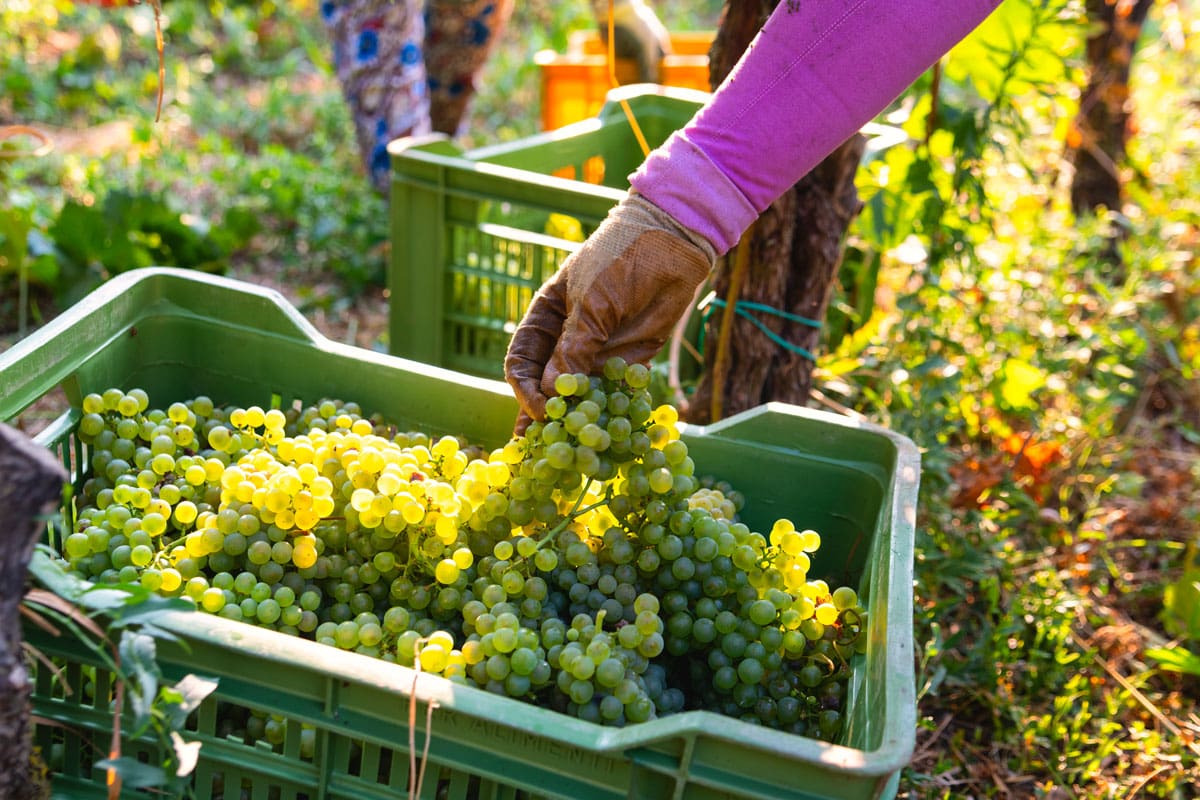
This combination of heat, cool temperatures and water meant good vine development and nutrition and an absence of stress, producing grape ripening with higher than average sugars and the optimal acidity levels which are so ideal for Franciacorta making. The area is expressing itself to the full, with gradual ripening which should give estates a slower and less frenetic harvest time frame.
Commercially speaking, international turbulence and recent US customs duties which have not spared European wines notwithstanding, Franciacorta exports are growing strongly, with peaks of 17.4% of the total, an increase of 7%.
‘The harvest which is about to begin is one which makes us very optimistic’, said Emanuele Rabotti, President of the Franciacorta Consortium. ‘Nature has given us balance and abundance: healthy grapes, good ripening and extraordinary aromatic riches. In an ever more complex climate these results are the fruit of the expertise, hard work and sustainability commitment of the whole chain. While we are aware of the uncertain international situation, including the US customs duties, we are approaching this vintage with great determination and sense of responsibility for Franciacorta’s future.’
About The Franciacorta Consortium
The Franciacorta Consortium is the body which guarantees and monitors Franciacorta production standards, as the first Italian wine produced exclusively with the bottle refermentation process to have obtained the Protected and Guaranteed Designation of Origin (DOCG) denomination in 1995. The Consortium’s work takes various forms, ranging from safeguarding its brand and region, promoting its products via ongoing work on its production regulations and denominations, consumer information campaigns and promoting Franciacorta as an expression of an area, a wine and a production method. Founded on 5 March 1990 its head offices are in Erbusco, in the heart of Franciacorta. The Consortium is presided over by Emanuele Rabotti and has over 120 associates